
Reviewed · TASHKENT TOURS
Tashkent Modern Tour
Tashkent reveals its layers quickly. This six-hour private tour is a useful way to see the Uzbek capital beyond its famous old city, with visits to the 375-meter TV Tower, the Railway Museum, churches, monuments, and the ornate Tashkent Metro. I especially like the mix of recent history and everyday city life, plus the flexible pickup from your hotel, airport, or railway station. The main drawback is that entrance tickets are not included, and a museum or church may be closed when you arrive.
The tour costs $180 per private group of up to two people, so it is not the cheapest sightseeing option for a solo visitor. For two people, however, the price includes a vehicle, guide, hotel pickup and drop-off, and six hours of attention, making it a fair choice if you want context rather than a quick list of photo stops.
Guides can speak English, Spanish, German, French, or Russian. The strongest part of the experience is the human side: Din adapted the route when needed, Shokat kept a rainy day enjoyable, and one German-speaking guide was a former German teacher who understood how to explain Uzbekistan to a German audience. Clear WhatsApp communication with Asli Travel also helped make the arrangements easy.
In This Review
- Six useful things to know before booking
- Why modern Tashkent deserves a full half-day
- Starting at the TV Tower for a sense of scale
- Remembering repression at the Victims Museum
- Minor Mosque and the changing face of Tashkent
- The 1966 earthquake at the Monument of Courage
- Orthodox and Catholic Tashkent
- Railway Museum: old trains and Central Asian connections
- Riding through the underground museum
- Broadway Alley and Independence Square
- Guides, transport, and the private format
- Is $180 good value for two people?
- Who should book this Tashkent tour?
- Should you book the Tashkent Modern Tour?
- FAQ
- How long does the Tashkent Modern Tour last?
- How much does the tour cost?
- What does the price include?
- Are entrance tickets included?
- Where can pickup take place?
- Which languages are available?
- Is this a private tour?
- Is the tour wheelchair accessible?
- What should you bring?
Six useful things to know before booking
- The tour is built around modern Tashkent: Expect Soviet monuments, Russian imperial buildings, religious sites, and post-independence landmarks rather than a full tour of the city’s ancient quarter.
- The TV Tower gives the broadest city view: At 375 meters, it is the tallest tower in Central Asia and sits on Tashkent’s highest point, 453 meters above sea level.
- The route crosses several faiths and cultures: You visit an Orthodox church, a Catholic cathedral, a mosque, and the Museum of Victims of Repressions.
- The Railway Museum is a rare regional attraction: Its old locomotives and railway equipment offer a different look at Central Asian history.
- You pay entrance fees separately: The $180 price covers the guide, air-conditioned vehicle, pickup, drop-off, fees, and taxes, but not admission tickets.
- Keep the route flexible: The tour can begin at your hotel, airport, or railway station, and your guide may adjust the order or substitute a stop if something is closed.
Why modern Tashkent deserves a full half-day
Tashkent is not simply an Uzbek version of Samarkand or Bukhara. Those cities are known for medieval architecture and grand Islamic monuments. Tashkent feels more layered and more urban, with an old quarter beside broad Soviet avenues, Russian imperial buildings, modern public squares, churches, metro stations, and recently built mosques.
That mix is the real subject of this tour. You are not only checking off monuments. You are following the city through several political and cultural periods: tsarist Russia, the Soviet Union, the devastating earthquake of 1966, and independent Uzbekistan.
I like this approach because it explains why Tashkent looks the way it does today. The route also works well if you have already visited the historic cities and want to understand the capital on its own terms. A private vehicle saves time between scattered sites, while the guide gives the stops a common thread.
The six-hour duration is long enough to cover a lot without turning into a full-day endurance test. Still, the schedule is ambitious. You should expect a steady rhythm of driving, short walks, sightseeing, and museum visits. If you want extended time inside every museum or church, you may need to trim the route.
A few more Tashkent trips worth weighing up
- Best of Tashkent Mountains: Amirsoy, Chimgan & Charvak Trip
★ 4.8 · 567 reviews - Samarkand One Day Tour – Departure From Tashkent
★ 5.0 · 313 reviews - Samarkand One-Day Tour Departure from Tashkent
★ 4.7 · 171 reviews
Starting at the TV Tower for a sense of scale
The Tashkent TV Tower is the natural opening stop. At 375 meters, it is described as the first and tallest tower in Central Asia, built on the highest point of the city, 453 meters above sea level.
The appeal is simple: you get a broad view of Tashkent before spending the rest of the day at street level. The panorama helps you understand the capital as a large, spread-out city rather than a collection of isolated monuments.
This stop is particularly useful early in your visit. After seeing the city from above, you can better place the squares, wide roads, neighborhoods, and major buildings your guide points out later. Take your camera, but keep in mind that the exact viewing experience depends on access and operating conditions on the day.
The tower is also a good reason to ask about the schedule at the start. If weather or visibility is poor, your guide may suggest putting the stop later or adjusting the order. The tour is private, so you have more room for that kind of change than you would on a large group outing.
Remembering repression at the Victims Museum
The Museum of Victims of Repressions is one of the most serious stops on the route. It is described as the only place in Uzbekistan dedicated to people affected by Stalin’s political repression.
This visit gives the modern tour its moral center. Tashkent’s grand squares and monumental buildings can make the Soviet period look tidy and orderly. The museum adds the human cost behind that political system and helps you understand why Uzbek history cannot be reduced to architecture and public ceremonies.
The museum is also near a photogenic view of the TV Tower, making it a useful stop for both history and photography. That contrast can feel uncomfortable, but it is worth noticing. Tashkent presents its past through beauty, power, loss, and rebuilding, often within a short distance of one another.
One practical warning matters here: access is not guaranteed. A scheduled museum visit was unavailable for one booking because it was closed. If this stop is important to you, confirm opening conditions with Asli Travel before the day of the tour, and keep your expectations flexible.
Minor Mosque and the changing face of Tashkent
Minor Mosque is a newer landmark, yet it has already become one of Tashkent’s best-known buildings. Its bright exterior and reflective surfaces make sunglasses useful on a sunny day, especially when the light catches the mosque.
The mosque shows how the city continues to create new symbols alongside its older monuments. It is not included because it is ancient. It matters because it belongs to present-day Tashkent, a capital that uses new religious and civic buildings to express its identity.
Bring your camera here, but dress and behave with respect. The tour information specifically recommends comfortable shoes, and sensible footwear helps throughout the day since you will be moving between vehicle stops and places of worship.
The stop may be most valuable when your guide explains how the mosque fits into the wider city. On its own, it is a striking building. With context, it becomes part of the story of how independent Uzbekistan presents itself.
A completely different sort of day around Tashkent:
- Tashkent: Amirsoy Resort, Chimgan Mountain and Charvak Lake
★ 4.8 · 170 reviews - Explore Amirsoy, Chimgan & Charvak – A Full-Day Mountain Tour
★ 5.0 · 158 reviews - Tashkent City Tour
★ 5.0 · 121 reviews - Tajikistan : Exclusive Seven Lakes Day Tour From Samarkand
★ 4.9 · 102 reviews
The 1966 earthquake at the Monument of Courage
The Monument of Courage Earthquake Memorial recalls the 1966 earthquake that destroyed much of Tashkent. The city you see today was largely rebuilt after the disaster, so this is not just another Soviet monument. It explains the physical shape of modern Tashkent.
The memorial has the formal style you expect from a classic Soviet monument, but the subject is more personal than political. It marks the moment when the city had to recover from ruins and rebuild on a huge scale.
I find this stop especially useful because it links the city’s broad roads, planned districts, and modern appearance to a specific event. Without that context, Tashkent can seem like a city designed all at once. The earthquake helps explain why so much of it feels reconstructed and planned.
Your guide can also help separate earthquake history from Soviet propaganda. That distinction is valuable. The monument commemorates recovery, but the wider rebuilding story also involves the Soviet state, urban planning, and the reshaping of Tashkent’s neighborhoods.
Orthodox and Catholic Tashkent
The Cathedral of the Assumption of the Virgin is described as the largest and one of the oldest Orthodox church buildings in Central Asia. It was built for soldiers of the Russian Empire and is still known locally as the military hospital church.
This stop shows the Russian imperial and Orthodox layer of Tashkent. It also gives you a break from monuments and museums by placing the city’s past inside a working religious setting. If you are interested in architecture, imperial expansion, or the city’s Russian connections, this is one of the most useful visits on the route.
The Sacred Heart of Jesus Cathedral offers a different perspective. It is described as the largest and one of the oldest Catholic cathedral buildings in Central Asia, and the visit introduces the history of the Polish community in Tashkent, which makes up most of Uzbekistan’s Catholic population.
Together, the two churches make the tour more than a Soviet-history circuit. They show how several communities shaped the capital. The Catholic cathedral also gives you a specific story about migration and minority life, rather than presenting religion as a single national tradition.
There is a practical limitation. One booking could not enter a church, so you should treat interior access as subject to opening hours or local conditions. The buildings remain worthwhile from outside, but the explanations and interior details may be the part you value most.
Railway Museum: old trains and Central Asian connections
The Railway Museum is billed as the first and unique museum devoted to Central Asian railway transport. For many people, it will be the most unexpected stop of the day.
The museum presents trains and railway equipment from the 19th and 20th centuries. The older locomotives help you picture a period when railways linked distant parts of the Russian Empire, the Soviet Union, and Central Asia. The display also gives you a break from formal monuments and religious buildings.
You do not need to be a railway enthusiast to enjoy this visit. The museum offers a concrete way to understand how people, goods, armies, officials, and ideas moved across the region. Tashkent’s location and later importance are easier to grasp when you see the machinery that connected it to a much larger network.
The claim that some trains are older than modern countries is a playful way to describe their age, but the larger point is sound: the collection gives you a look at transport technology from another era. Allow your guide to supply the regional context, since old rolling stock can otherwise become a series of objects without a story.
Riding through the underground museum
Tashkent Metro was the first metro system in Central Asia and is one of the city’s signature attractions. The stations are often called an underground museum of Uzbekistan, and that description points to the system’s decorative interiors and public importance.
A metro stop changes the pace of the tour. Instead of viewing history from a vehicle or standing before a monument, you enter the city’s daily transport system. It is one of the few parts of the program where modern Tashkent feels most directly connected to ordinary urban life.
Your guide can help you notice the design, themes, and role of the metro in the city. Because the tour is private, you can ask questions and spend more time at a station that interests you, though the total six-hour schedule may require keeping this visit focused.
The metro also makes a useful comparison with the Railway Museum. One stop looks at historic surface transport and the other at an operating underground system. Together they show Tashkent as a city shaped by movement.
Broadway Alley and Independence Square
Broadway Alley gives you a more relaxed section of the route. In the heart of modern Tashkent, it was once a swamp that was drained and converted into a place for leisure. The space first served as a recreation area for the tsar’s soldiers and later became a place for citizens and visitors.
That evolution captures Tashkent’s changing public life in a compact way. The alley is not presented as an ancient monument. Its value lies in how a former swamp became a social space in the imperial period and remains part of the capital’s entertainment center today.
Independence Square, or Mustaqilliq Maidoni, brings the political story into view. It is the country’s main square, with administrative offices for the Cabinet and Senate. Today it represents Uzbekistan’s independence, but it also served as an administrative center under Russian tsarist and Communist rule.
This is a place where your guide’s explanation matters more than the length of your visit. The square’s appearance cannot tell you everything about the different governments that used it. Ask how its name, symbols, and public role changed over time.
Guides, transport, and the private format
The private format is the strongest practical feature of this tour. Pickup can be arranged from your hotel, airport, or railway station, and the start time can be customized. Airport and railway station pickup is offered after 9:00 in the stated schedule, or after 8:00 in summer time, so check the exact arrangement before booking.
You travel in an air-conditioned vehicle, which matters in a city tour with several stops. The route covers enough ground that walking or using taxis alone would make the day less efficient. You should wait in your hotel lobby five minutes before pickup.
The guide quality appears to be a major strength. Din was friendly, organized, and willing to change the route around places already seen. Ali adapted the day to different requests, while Shokat kept the experience worthwhile even in rainy weather. A German-speaking guide was a former German teacher and had lived in Germany, which allowed him to explain local life with a useful cultural reference point.
Those details suggest that you should tell the company what you have already visited and what interests you most. The more information you give before pickup, the easier it will be for the guide to shape the day.
English, Spanish, German, French, and Russian are available. The tour is also listed as wheelchair accessible, though the exact access conditions at each museum, church, tower, and metro station should be confirmed in advance.
Is $180 good value for two people?
At $180 for a group of up to two, this tour is best judged as a private transport and guiding service, not as a cheap sightseeing pass. For two people, that works out to $90 each before entrance tickets. The cost includes the guide, air-conditioned vehicle, hotel pickup and drop-off, fees, and taxes.
You still need to budget for admission tickets. Since the program includes the TV Tower and museums, the final cost will be higher than the headline price. The benefit is that you are not paying for a large group excursion, and you have a guide who can explain the political, religious, and social background of each stop.
For a solo visitor, $180 is harder to justify unless you value convenience, a customized start point, and personal guiding. For two people arriving by train or plane, the pickup alone may make the arrangement useful, especially if you have only one day in Tashkent.
Free cancellation up to 24 hours before the tour and reserve-now, pay-later booking also reduce the risk when your transport schedule is uncertain. These policies are useful, but they do not solve the issue of closures, so confirm priority stops before the day.
Who should book this Tashkent tour?
I would choose this experience if you want modern Tashkent explained in one organized half-day. It suits first-time visitors, people arriving at the airport or railway station, and anyone interested in Soviet planning, Russian imperial influence, religious communities, transport, and Uzbekistan after independence.
It also works well as a companion to exploring independently on foot, by metro, or with Yandex. One German-speaking customer used the tour as an addition to self-guided visits, which is a sensible strategy. Let the private vehicle cover the distant sights, then return to the areas you like for slower exploration.
I would be more cautious if your main goal is ancient Islamic architecture, bazaars, or a food-focused tour. This route is about the capital’s modern identity. It also packs in many stops, so you may prefer to ask for fewer visits if you want long museum sessions or extended time inside the churches.
Should you book the Tashkent Modern Tour?
Book it if you want a clear introduction to the city’s last two centuries, especially with a private guide and flexible pickup. The strongest reasons are the range of subjects, the useful vehicle service, and the guides’ apparent willingness to adapt the day to your interests.
Before paying, ask Asli Travel to confirm which museums and churches are open, how much entrance tickets will cost, and whether the TV Tower is operating at your chosen time. If you do that, the tour offers a practical, well-rounded look at Tashkent that is difficult to assemble in six hours on your own.
FAQ
How long does the Tashkent Modern Tour last?
The tour lasts six hours. Starting times can be checked when you make the booking, and the time can be customized.
How much does the tour cost?
The price is $180 per private group of up to two people.
What does the price include?
The price includes a professional guide, an air-conditioned vehicle, hotel pickup and drop-off, and all listed fees and taxes.
Are entrance tickets included?
No. Entrance tickets are not included, so you should budget separately for admissions.
Where can pickup take place?
Pickup is available from your hotel, airport, or railway station. Airport and railway station pickup is scheduled after 9:00, or after 8:00 during summer time.
Which languages are available?
Guiding is available in English, Spanish, German, French, and Russian.
Is this a private tour?
Yes. It is offered as a private group experience for up to two people.
Is the tour wheelchair accessible?
The activity is listed as wheelchair accessible. You should still confirm access at each individual stop before booking.
What should you bring?
Bring comfortable shoes. Sunglasses are also useful at Minor Mosque because of the glare from the building.
Recently added around Tashkent
- Tashkent: 3-Day Horseback Riding Tour in Chimgan Mountains★ 4.4 · 3 reviews
- Samarkand: Uloq-Kopkari (Buzkashi) Game Day Tour★ 5.0 · 3 reviews
- Tashkent Mountain Tour Amirsoy with Transport★ 3.5 · 3 reviews
- Private Tashkent City Tour★ 5.0 · 3 reviews
- Amirsoy & Chimgan mountain tour from Tashkent★ 5.0 · 3 reviews
- Transfer Tashkent Airport / Railway Station – Hotel★ 3.5 · 3 reviews
- Heliocomplex “Institute of the Sun” – Remnants of USSR★ 5.0 · 3 reviews
- Half-day excursion around Tashkent★ 5.0 · 3 reviews
Tashkent Tours, compared.
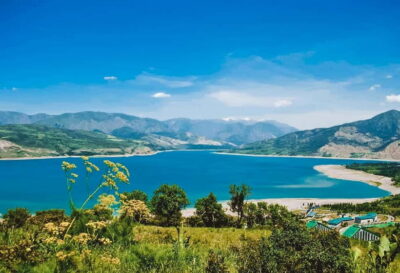
Best of Tashkent Mountains: Amirsoy, Chimgan & Charvak Trip
Read our review →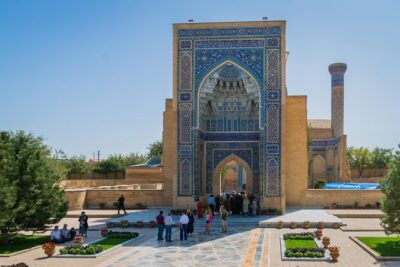
Samarkand One Day Tour – Departure From Tashkent
Read our review →Samarkand One-Day Tour Departure from Tashkent
Read our review →Amirsoy Resort, Chimgan Mountain and Charvak Lake
Read our review →Explore Amirsoy, Chimgan & Charvak – A Full-Day Mountain Tour
Read our review →
Tajikistan : Exclusive Seven Lakes Day Tour From Samarkand
Read our review →Explore Amirsoy, Chimgan, Charvak Adventure Tour
Read our review →Browse the lists this tour appears in