
Reviewed · TASHKENT TOURS
Tashkent-Samarkand-Bukhara tour-3nights/4 days
Three cities, one fast-paced journey. This private four-day tour links Uzbekistan’s major Silk Road sights with comfortable transfers, included entrance tickets, breakfast, and a personal guide. I especially like the private format, which lets you set the pace within a tightly planned schedule, and the use of Afrasiyab high-speed trains, which saves long hours on the road. The main drawback is the packed itinerary: you will see a great deal, but Bukhara and Samarkand each deserve more time than this tour allows.
The price is $1,200 per person, based on two people sharing hotel rooms. That is not a bargain tour, but it covers three hotel nights, breakfasts, private car transfers, three long-distance train rides, entrance tickets, and guiding. You should also know that lunches, dinners, tips, personal expenses, and some site photography fees are extra.
In This Review
- Key points before you book
- Why this four-day route works
- Day one in Tashkent: old city sights and local color
- Day two: an early train to Bukhara and the Palace of Moon-like Stars
- Day three: Bukhara’s mosques, citadel, and trading quarter
- Day four in Samarkand: Timur, science, and dazzling tilework
- What the $1,200 price really covers
- The practical side of a private tour
- Who should book this Uzbekistan tour?
- Should you book it?
- FAQ
- Where does the tour start?
- What time does the tour start?
- Where does the tour end?
- Is this a private tour?
- How long is the tour?
- Are hotel stays included?
- Are breakfasts included?
- Are train tickets included?
- Are lunch and dinner included?
- Can I cancel for a full refund?
Key points before you book
- A private route through three major Uzbek cities: You travel only with your own party, rather than joining a large coach group.
- Fast rail connections save time: The Tashkent to Bukhara, Bukhara to Samarkand, and Samarkand to Tashkent legs use Afrasiyab economy-class train tickets.
- The tour begins in old Tashkent: Hazrati Imam, Chorsu Bazaar, Kokaldash Madrasah, and the Applied Arts Museum provide a useful introduction to Uzbekistan.
- Bukhara gets a concentrated afternoon and morning visit: You see the Palace of Moon-like Stars, Lyab-i Hauz, the Kalon complex, Magoki Attori Mosque, and the Ark.
- Samarkand’s headline sights are included: Gur Emir, Registan, Ulugh Beg Observatory, Shah-i-Zinda, and Bibi Khanum all appear in the program.
- Meals are your responsibility: The guide can recommend authentic Uzbek food, but lunch and dinner are not included in the tour price.
Why this four-day route works
Uzbekistan is a large country, and its three best-known historic cities are spread far apart. This tour solves the basic transport problem by combining a comfortable private car with high-speed rail. You are not left figuring out station transfers, hotel changes, or entrance tickets on your own.
The private arrangement matters most in the historic districts. You can ask for more explanation at a mosque or move on when your attention fades. That flexibility is useful, since the tour includes several religious buildings, mausoleums, museums, and archaeological sites in a short period.
The schedule is still demanding. Day one begins in Tashkent, day two transfers you to Bukhara, day three combines more Bukhara sightseeing with a train to Samarkand, and day four covers Samarkand before the evening return to Tashkent. I would treat this as a strong first look at Uzbekistan, not a slow cultural holiday.
The experience has a 5.0 rating from five published ratings, including praise for the friendly and thoughtful team. That is a small sample, so I would not use it as the only reason to book, but it does support the impression of attentive service.
More four-day trips from Tashkent:
- Hiking tour to Hayat, Uhum and Asraf villages – 4 days
★ 5.0 · 12 reviews
Day one in Tashkent: old city sights and local color
The stated meeting point is Hotel Uzbekistan at Mirzamakhmud Musakhanov Street 45, with a 7:00 a.m. start. Pickup is available if that is easier for you. Confirm the exact pickup arrangement before the morning begins, since the tour information gives both a meeting point and pickup as options.
Your first major stop is the Hazrati Imam Ensemble, the religious center of old Tashkent. The complex includes Barak Khan Madrasah, built in the 16th century, and the Kaffal Shashi mausoleum. You have about an hour here, which gives your guide time to explain the buildings and the role of the site without making the visit drag.
This is a good opening stop because it introduces the architectural language you will keep seeing in Samarkand and Bukhara: tiled facades, madrasah courtyards, domes, and Islamic scholarship. Pay attention to how the complex feels different from the broad Soviet-era avenues in central Tashkent.
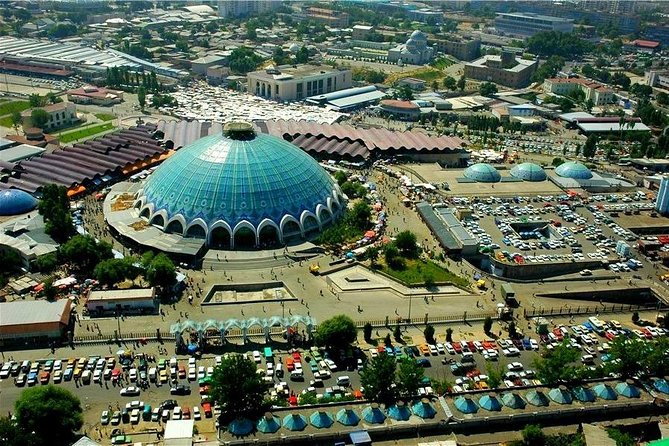
Next comes Chorsu Bazaar, one of Central Asia’s major covered markets. The visit lasts about 40 minutes and admission is free. That is enough time to walk through the market and see the food and trading side of the city, though you should not expect a long, unhurried market exploration.
Chorsu is especially useful after Hazrati Imam. The religious complex shows ceremonial Tashkent; the bazaar shows everyday commerce. Ask your guide about Uzbek foods before lunch, since meal costs are not part of the tour and the guide is specifically available to suggest authentic local dishes.
Kokaldash Madrasah follows, with about 20 minutes on site. Built in 1569, it was the largest of the 23 madrasahs in old Tashkent. The short stop is enough for an overview and photographs, but not for a detailed architectural study.
The Uzbekistan State Museum of Applied Art gets around 40 minutes. Its collection contains more than 4,000 exhibits covering Uzbek decorative art, including wood carving and other traditional crafts. This is one of the tour’s quieter stops, and I like its place in the schedule because it gives you a break from grand monuments.
You also pass central Tashkent locations connected with state events and public life, including the main national square and Amir Temur Square. These stops help explain the modern capital, where Soviet planning and contemporary Uzbekistan sit beside older neighborhoods.
You spend the night in Tashkent. Breakfast is included at the hotels, but no lunch or dinner is provided. That gives you freedom, but it also means you should plan for meals rather than assuming the full day is covered.
Day two: an early train to Bukhara and the Palace of Moon-like Stars
Day two starts very early. Breakfast is scheduled around 5:30 to 6:00 a.m., followed by hotel checkout at 6:30 and the Afrasiyab high-speed train to Bukhara. The stated rail journey is about 600 kilometers and approximately three hours and 50 minutes, with arrival around 11:15 a.m.
This train is one of the tour’s biggest practical advantages. A private road transfer over the same distance would take much longer and would leave you tired before sightseeing. Economy-class rail is included, so you receive the benefit of speed without paying for a premium cabin.
The early start is the price. If you value late breakfasts and relaxed mornings, this day may feel rushed. Pack your small essentials the night before, keep your train ticket accessible, and expect hotel checkout to happen before most people have settled into the day.
After arriving, you visit Sitorai-Mokhi-Khosa, the Palace of Moon-like Stars. The visit is allocated three hours, making it the longest single stop in the tour. The palace adds a different note to Bukhara, moving beyond medieval religious architecture toward the setting associated with the city’s ruling elite.
A three-hour visit suggests that the guide will have time to explain the palace grounds and details at a measured pace. Since the tour description does not provide a full room-by-room program, ask what parts are open on your date and how much of the allotted time is devoted to the palace itself.
The day’s combination of train travel and one major site is sensible. You reach Bukhara by late morning, see an important attraction, and avoid cramming every old-city monument into a single afternoon.
Day three: Bukhara’s mosques, citadel, and trading quarter
Bukhara is the part of the route where the tour feels most concentrated. The historic core is packed with religious buildings, old trading spaces, and monumental brickwork, and the program takes you through several of the key sights before your afternoon train.
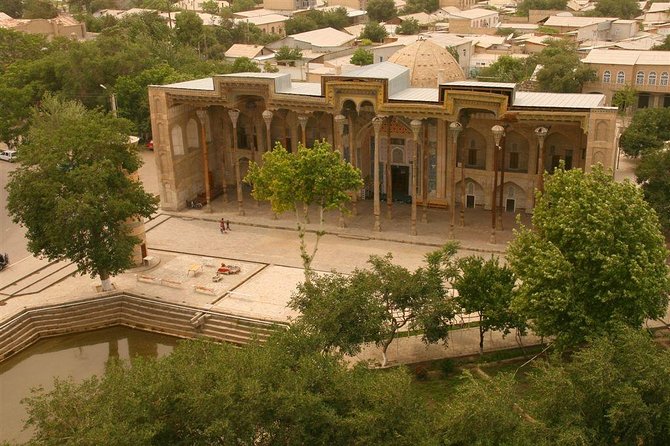
Lyab-i Hauz is one of the city’s best-known gathering places. Its name refers to the pool at the center of the ensemble, and the area is valued for its calm setting and generous scale. The program lists it as a stop without a stated duration, so your exact time there may depend on the guide and the train schedule.
This is a place where I would ask for a few unhurried minutes. You can look at the surrounding architecture, pause by the water, and get a sense of how Bukhara’s public spaces work. The tour’s tight timetable may limit that pause, so tell your guide if you want time for photographs rather than only a quick explanation.
Magoki Attori Mosque and the carpet museum come next, with about 20 minutes. The mosque is a medieval column-domed building in Bukhara’s historic center, and parts of it lie more than 4.5 meters below present ground level. That unusual sunken position is the point of the visit.
Twenty minutes is brief, particularly because the stop combines a mosque and a museum. Still, it is enough to see the unusual level of the building and understand how Bukhara has accumulated layers over time. If carpets interest you, ask how much of the stop will focus on the museum.
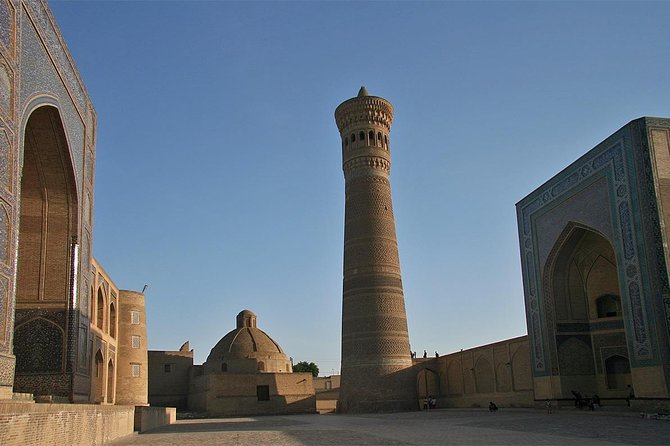
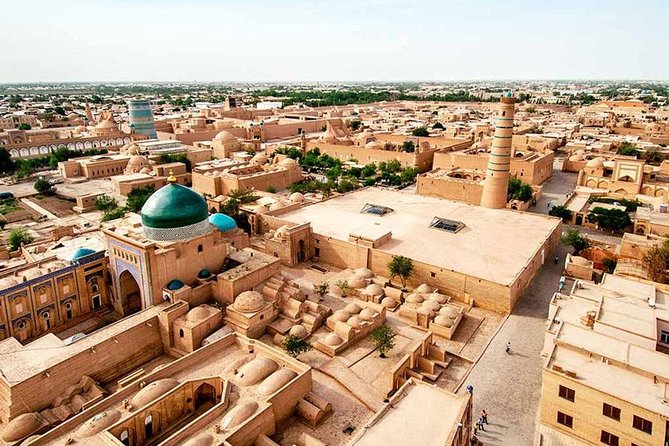
The Great Minaret of the Kalon receives about 40 minutes. The Poi Kalyan complex includes the Kalyan minaret, Kalyan Mosque, and Mir-i Arab Madrasah, with buildings dating from the 12th through 16th centuries. This is one of the most visually striking portions of the route.
The minaret gives the complex its focus, but do not look only upward. The surrounding courtyard, patterned brick, tiled surfaces, and relationship between the three buildings are what make the visit work. Your guide can help separate the individual buildings, since their names can blur together after several days of similar-sounding monuments.
The Ark of Bukhara is the final major stop, with one hour included. This massive citadel rises almost 20 meters above the surrounding area and covers about four hectares. It was the seat of power in Bukhara, so the visit shifts from religious and commercial life to government, defense, and royal authority.
The Ark is a strong place to end the Bukhara portion because it gives the city a political dimension. The stop may involve uneven surfaces and steps, although the supplied information does not state specific accessibility details. Most participants can take part, but ask ahead if you have mobility concerns.
At 3:50 p.m., you take the high-speed train to Samarkand, arriving at about 5:15 p.m. The schedule leaves little room for delay. Keep your belongings organized, follow the guide’s station instructions, and do not wander far from the group before departure.
You spend the night in Samarkand. This overnight is important because it lets you begin the city’s major sights without another long arrival transfer.
A few more Tashkent trips worth weighing up
- Best of Tashkent Mountains: Amirsoy, Chimgan & Charvak Trip
★ 4.8 · 567 reviews - Samarkand One Day Tour – Departure From Tashkent
★ 5.0 · 313 reviews - Samarkand One-Day Tour Departure from Tashkent
★ 4.7 · 171 reviews - Tashkent: Amirsoy Resort, Chimgan Mountain and Charvak Lake
★ 4.8 · 170 reviews
Day four in Samarkand: Timur, science, and dazzling tilework
Samarkand’s program begins with the Gur Emir Mausoleum, the burial place of Tamerlane, his mentor Mir Sayyid Barak, and members of the Timur family. You have one hour here. The mausoleum is a useful introduction to the Timurid period, when Samarkand became a center of political power, architecture, and scholarship.
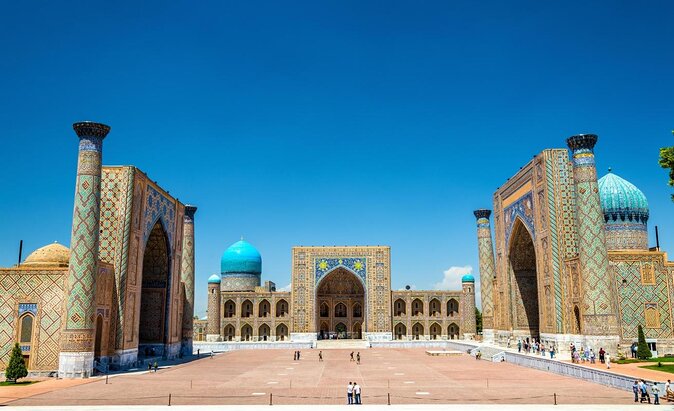
Registan follows, also with one hour. The square is framed by three madrasahs: Ulughbek from the 15th century, Shir Dor from the 17th century, and Tilla-Kari from the 17th century. This is the visual centerpiece of the entire route, and an hour gives you time to see the facades and hear the basic story of the square.
I would use the first few minutes simply to take in the scale. Then ask your guide to point out the differences among the three madrasahs. Their repeated arches and tile patterns can seem similar at first, but each building has its own design details and period.
The Ulugh Beg Observatory takes about 40 minutes. It was built between 1424 and 1428 by Ulugh Beg on Kuhak Hill near Samarkand. This stop adds astronomy and mathematics to a tour otherwise dominated by rulers, religion, and monumental architecture.
The observatory is valuable because it shows that Timurid Samarkand was not only a place of ceremony. Ulugh Beg was also a scholar, and the site connects the city to the scientific work of the medieval Islamic world.
Shah-i-Zinda receives one hour. This ensemble of mausoleums served members of the Karakhanid and Timurid nobility, and the surviving complex contains eleven mausoleums. The sequence of tombs makes it one of the most detailed architectural visits of the day.
You should expect stairs or changes in level here, although the provided details do not specify the exact access conditions. Wear practical shoes and keep your pace steady. One hour is enough for a meaningful visit, but the site rewards close attention to tilework more than a quick checklist approach.
Bibi Khanum Mosque is also included as a stop, though no duration is given. Built from 1399 to 1404, it was Tamerlane’s grand congregational mosque and is decorated with tiles, carved marble, and murals. Ask the guide how Bibi Khanum fits into the day’s timing, since it follows several substantial visits.
At 5:30 p.m., you take the Afrasiyab train back to Tashkent. The journey is listed at about two hours and ten minutes, with arrival around 7:40 p.m. The tour ends back at the meeting point.
That final rail trip is efficient, but the day is long. You will have visited four major Samarkand sights, possibly Bibi Khanum, and then completed the return to the capital. If you want a slow evening in Samarkand, this schedule will not provide it.
What the $1,200 price really covers
At $1,200 per person, this is a premium-priced short tour. The value comes from combining private guiding, hotel accommodation, local transport, admission tickets, breakfast, and three high-speed train journeys in one booking.
The price is based on twin accommodation, so it assumes two people sharing rooms. A solo participant may need to confirm whether a single-room supplement applies, because the supplied details do not state one.
Your included costs are:
- Three hotel nights in Tashkent, Bukhara, and Samarkand
- Three breakfasts
- Private car trips and transfers according to the schedule
- Afrasiyab economy tickets between Tashkent and Bukhara, Bukhara and Samarkand, and Samarkand and Tashkent
- Entrance tickets listed for the sightseeing stops
- Taxes as stated in the inclusions
You pay separately for lunch, dinner, tips, personal purchases, international flights, early check-in, late checkout, extra hotel services, and photography or video fees at sites where those charges apply.
There is a wording conflict in the cost information: taxes are listed as included, while the exclusions also refer to fees and taxes. I would ask the operator to confirm exactly what is covered before paying. That small clarification could prevent an unpleasant surprise.
The practical side of a private tour
The private format is the strongest reason to choose this experience over a cheaper group departure. Only your party participates, so you can ask questions freely and request restaurant suggestions from the guide. The operator also highlights a friendly and thoughtful team, which matters on a route with early starts and several train connections.
Pickup is offered, and the stated start point is Hotel Uzbekistan. Confirmation is provided at booking. The experience is near public transportation, service animals are allowed, and most people can participate.
The tour is usually booked about 46 days ahead. That does not guarantee that you must reserve that early, but it is a useful planning signal for a route dependent on hotels and fixed train seats.
Free cancellation is available until 24 hours before the scheduled start time. Inside that window, cancellations and changes are not accepted for a refund.
Who should book this Uzbekistan tour?
I would choose this tour if you have four days, want the major Silk Road cities, and prefer someone else to handle the transport details. It suits first-time visitors who want a clear route and private guidance rather than a self-guided rail trip.
It also works well for couples, families, or friends who value their own vehicle and schedule. The guide can help with meal choices, explain the religious sites, and adjust the amount of discussion to your interests.
I would hesitate if you want long museum visits, leisurely meals, late mornings, or several free hours in each city. Bukhara and Samarkand are both worth lingering in, and this route gives you a fast but useful introduction rather than a full stay.
Should you book it?
Book it if your priority is efficient coverage of Uzbekistan’s three headline cities with private service and organized rail travel. The included trains are a major benefit, and the entrance tickets and transfers reduce the number of details you must manage yourself.
Skip it, or ask for a longer version, if you can add extra nights. The schedule is rewarding but tight, especially with the early Bukhara departure and the long final day in Samarkand.
Before booking, confirm the hotel names, exact pickup details, single-room pricing if needed, and the question about fees and taxes. If those points are clear, this is a practical way to see a remarkable stretch of Uzbekistan in only four days.
FAQ
Where does the tour start?
The stated meeting point is Hotel Uzbekistan at Mirzamakhmud Musakhanov Street 45 in Tashkent. Pickup can also be requested.
What time does the tour start?
The stated start time is 7:00 a.m.
Where does the tour end?
The activity ends back at the meeting point in Tashkent after the return train from Samarkand.
Is this a private tour?
Yes. Only your own party participates.
How long is the tour?
The experience lasts approximately four days and includes three hotel nights.
Are hotel stays included?
Yes. Accommodation on a twin-sharing basis is included in Tashkent, Bukhara, and Samarkand.
Are breakfasts included?
Yes. Three breakfasts are included.
Are train tickets included?
Yes. Economy tickets on Afrasiyab high-speed trains are included for Tashkent to Bukhara, Bukhara to Samarkand, and Samarkand to Tashkent.
Are lunch and dinner included?
No. Lunches and dinners are not included.
Can I cancel for a full refund?
Yes, if you cancel at least 24 hours before the experience start time. Cancellations made less than 24 hours before the start are not refunded.
Recently added around Tashkent
- Tashkent: 3-Day Horseback Riding Tour in Chimgan Mountains★ 4.4 · 3 reviews
- Samarkand: Uloq-Kopkari (Buzkashi) Game Day Tour★ 5.0 · 3 reviews
- Tashkent Mountain Tour Amirsoy with Transport★ 3.5 · 3 reviews
- Private Tashkent City Tour★ 5.0 · 3 reviews
- Amirsoy & Chimgan mountain tour from Tashkent★ 5.0 · 3 reviews
- Transfer Tashkent Airport / Railway Station – Hotel★ 3.5 · 3 reviews
- Heliocomplex “Institute of the Sun” – Remnants of USSR★ 5.0 · 3 reviews
- Half-day excursion around Tashkent★ 5.0 · 3 reviews
Tashkent Tours, compared.
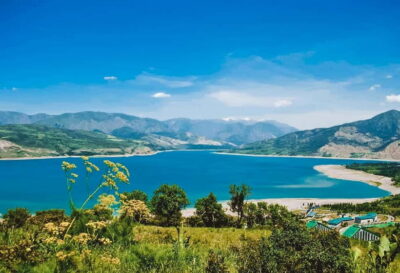
Best of Tashkent Mountains: Amirsoy, Chimgan & Charvak Trip
Read our review →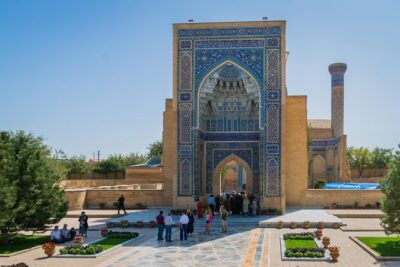
Samarkand One Day Tour – Departure From Tashkent
Read our review →Samarkand One-Day Tour Departure from Tashkent
Read our review →Amirsoy Resort, Chimgan Mountain and Charvak Lake
Read our review →Explore Amirsoy, Chimgan & Charvak – A Full-Day Mountain Tour
Read our review →
Tajikistan : Exclusive Seven Lakes Day Tour From Samarkand
Read our review →Explore Amirsoy, Chimgan, Charvak Adventure Tour
Read our review →Browse the lists this tour appears in