
Reviewed · TASHKENT TOURS
Tashkent Soviet Architecture (Modernism) and Subway station tour.
Look beneath Tashkent’s broad avenues. This private walking tour makes the city’s Soviet modernist buildings, earthquake monuments, and ornate metro stations easier to understand. I like the small-group format, which lets your guide adjust the route, and I like the chance to ride the Tashkent Metro while learning why its stations were built as public works of art. The main consideration is that the route details are not perfectly consistent, so you should confirm whether Chorsu Bazaar and the promised hotel views are included on your date.
The tour costs $50 per person and lasts about two hours and 15 minutes to two and a half hours. That is fair value for a private experience, especially for a group of up to 20, but transport costs and some fees are not included. Guides named in the feedback include Aziza, Mirwaheed, Mirvoxid, Waheed, and Miss A Curly, with Aziza receiving especially warm praise for her flexible pace and friendly explanations.
In This Review
- Key things to know before booking
- Why Soviet Tashkent deserves a closer look
- Meeting at the Uzbekistan Hotel
- Amir Temur Square and the Uzbekistan Hotel
- Independence Square and the Palace of Duke Romanov
- Riding the metro through Tashkent’s underground art
- The Courage Monument and the memory of the earthquake
- Friendship of Nations Square and Palace
- How flexible is the private format?
- Chorsu Bazaar, food stalls, and route expectations
- Is $50 good value?
- Best suited to architecture fans and first-time visitors
- Should you book this Tashkent walking tour?
- FAQ
- How long does the Tashkent architecture and metro tour last?
- Where does the tour start and finish?
- Is this a private tour?
- Is metro admission included?
- Can the tour focus more strongly on Soviet architecture?
- What is the cancellation policy?
Key things to know before booking
- The metro is the star attraction: You visit three or four especially attractive stations, with some tours reaching five or six, including the Cosmonaut station.
- The route connects Soviet and Uzbek eras: Amir Temur Square, Independence Square, the Palace of Duke Romanov, the earthquake monument, and Friendship of Nations Square all help explain Tashkent’s changing identity.
- It is genuinely private: Your group alone takes part, with bookings available for anywhere from one to 20 people.
- The guide can shape the walk: Groups interested in Soviet remnants or architecture have been able to request a more focused route.
- The pace is manageable: The walk includes roughly 35 minutes at Amir Temur Square, 15 minutes around Independence Square, 30 minutes for the metro, and 20 minutes at Friendship of Nations Square.
- Check the final route: Chorsu Bazaar and views from the Uzbekistan Hotel are described as part of the wider experience, but they are not clearly listed among the timed stops.
Why Soviet Tashkent deserves a closer look
Tashkent can seem spacious and modern at first glance. Wide roads, open squares, large government buildings, and monumental public spaces give the city a formal feel. Yet the details tell a more complicated story: imperial architecture, Soviet planning, Uzbek national symbols, and post-earthquake rebuilding all sit close together.
That is why a guide helps. You can certainly walk past a huge concrete building on your own, but it is harder to understand why it looks that way, what period it belongs to, or how it fits into the city’s past. This tour gives you a way to read Tashkent’s architecture rather than simply photograph it.
The focus is not limited to famous sights. You also hear about Soviet remnants and local places that may not be obvious to a first-time visitor. Several guides have adjusted the walk around specific interests, including modernism, subway design, and the city’s recent past.
The strongest theme is the contrast between grand public architecture and ordinary city life. A formal square may lead to a metro entrance. A Soviet-era building may sit near a distinctly Uzbek landmark. The result is a useful introduction to Tashkent before you explore the city on your own.
A few more Tashkent trips worth weighing up
- Best of Tashkent Mountains: Amirsoy, Chimgan & Charvak Trip
★ 4.8 · 567 reviews - Samarkand One Day Tour – Departure From Tashkent
★ 5.0 · 313 reviews - Samarkand One-Day Tour Departure from Tashkent
★ 4.7 · 171 reviews
Meeting at the Uzbekistan Hotel
The tour starts and usually ends at the Uzbekistan Hotel on Mirzamakhmud Musakhanov Street 45. This is a practical meeting point because it gives the walk a clear landmark and places you near several central sights.
Arrive a few minutes early. One past booking had confusion over the meeting arrangement and started late, so it is sensible to confirm the exact meeting instructions before the day of the tour. Another group was picked up from its hotel, but you should not assume that hotel pickup is standard unless it is arranged directly.
The Uzbekistan Hotel itself forms part of the architectural story. Its Soviet-era design provides an immediate example of the large-scale style the tour examines. The experience may also include panoramic views from the hotel, according to the tour description, though this is worth confirming because the timed itinerary gives most of its attention to the outdoor squares and metro.
Since the tour ends at the same hotel, you can use the finish as a launch point for lunch, more sightseeing, or a return to your accommodation. The end point is usually the Uzbekistan Hotel, but routes can vary when the guide customizes the walk.
Amir Temur Square and the Uzbekistan Hotel
The first main stop is Amir Temur Square, with about 35 minutes devoted to the square and the architecture around the Uzbekistan Hotel. This is the longest single stop, and rightly so. It gives your guide time to explain both the buildings and the political changes reflected in the area.
Amir Temur is a major figure in Uzbek national identity, and the square is one of the city’s central public spaces. Here, the tour begins to show how Soviet-era planning was later given new national meaning. The architecture is not presented as a collection of isolated buildings. Instead, you get a sense of how monuments, hotels, roads, and public squares work together.
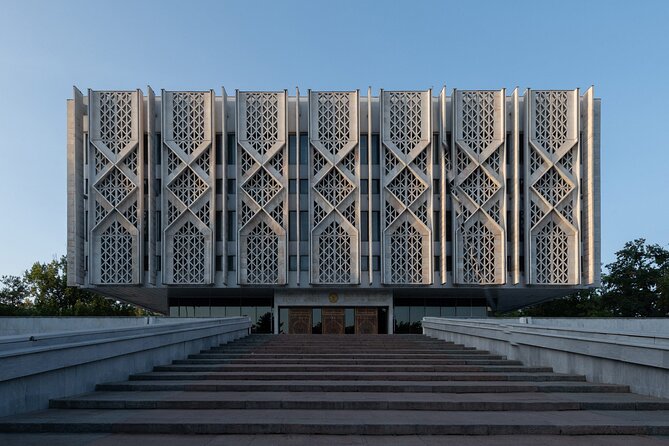
I would pay close attention to the contrast between scale and detail. Large Soviet projects often feel stern from a distance, but closer views can reveal patterned stonework, decorative panels, unusual angles, and carefully planned entrances. This is where a guide’s commentary adds real value.
The stop is also a useful orientation point. If this is your first visit to Tashkent, you begin learning how the central districts connect. If you already know the city, the architectural explanation may help you see familiar streets differently.
Independence Square and the Palace of Duke Romanov
The walk continues to Independence Square, also called Mustakillik Square. The scheduled visit here is shorter, about 15 minutes, so expect a focused explanation rather than a long museum visit.
The square is important because it reflects Uzbekistan after Soviet rule. Its open scale and official character make it a place where national identity is presented through architecture and public design. Your guide can help separate the Soviet planning inherited by the city from the symbols and meanings added later.
The nearby Palace of Duke Romanov adds another layer. It connects Tashkent to the Russian imperial period, before the Soviet era. This is one of the tour’s strengths: you are not shown Soviet architecture as if it appeared from nowhere. The palace helps place the twentieth century into a longer sequence of political change.
The Museum of History of Uzbekistan is also identified as part of this area. The schedule does not promise an extended interior visit, so do not book this expecting a full museum tour. Instead, think of the square and its surrounding buildings as a short historical chapter within a walking route.
A completely different sort of day around Tashkent:
- Tashkent: Amirsoy Resort, Chimgan Mountain and Charvak Lake
★ 4.8 · 170 reviews - Explore Amirsoy, Chimgan & Charvak – A Full-Day Mountain Tour
★ 5.0 · 158 reviews - Tashkent City Tour
★ 5.0 · 121 reviews - Tajikistan : Exclusive Seven Lakes Day Tour From Samarkand
★ 4.9 · 102 reviews
Riding the metro through Tashkent’s underground art
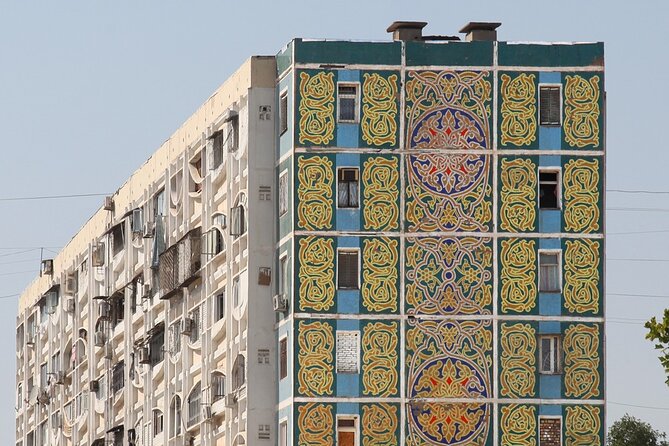
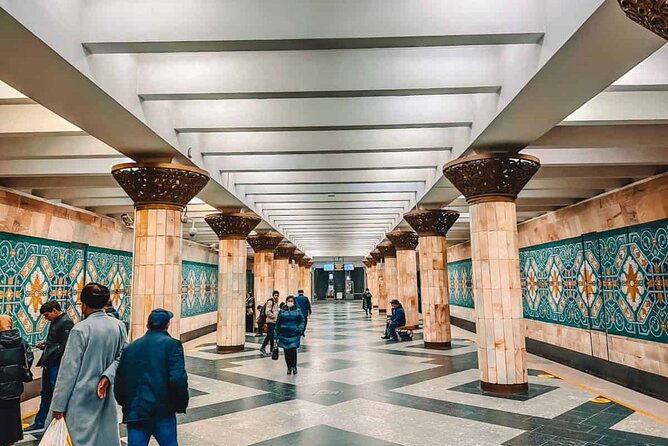
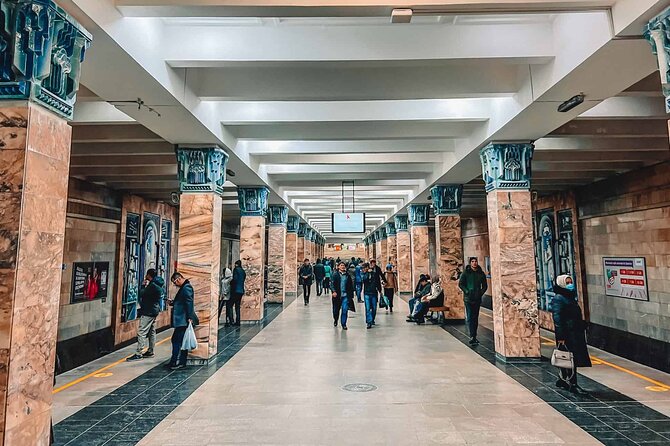
The metro portion lasts about 30 minutes and is likely the most memorable part of the experience. Tashkent’s subway system is known for decorative stations, and this tour uses the ride to explain both the transport network and its architecture.
You visit three or four notable stations as part of the planned route. Some past tours reached five or six, depending on timing and the guide’s choices. The Cosmonaut station is a particular draw for architecture fans, and it has been included on some routes. Station names and designs may reflect science, national figures, space exploration, or broader Soviet themes.
The metro is valuable because it changes the way you experience the city. Above ground, Tashkent’s monumental buildings can feel spread out. Underground, the stations bring the design close to you. Columns, ceilings, mosaics, lighting, and wall decoration are easier to study at walking speed than from a passing car.
You should also treat the metro ride as a working part of city life, not only as an architectural gallery. That gives the stop a more grounded feel. You are looking at public art in a system that people use to get around.
The tour price includes the metro admission, according to the supplied details, but the general information also says transport fees are not included and that all fees and taxes are separate. Ask your guide or booking contact exactly what you need to pay on the day. This small clarification prevents an avoidable surprise.
The Courage Monument and the memory of the earthquake
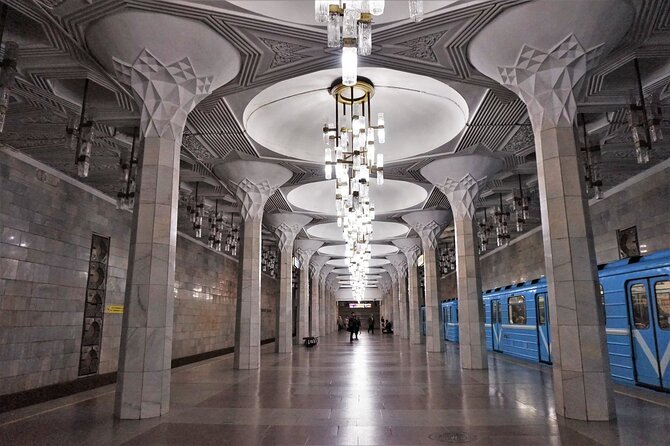
One additional stop focuses on the Monument of Courage and Soviet architecture connected with the earthquake. This is an important part of the route because it moves beyond style and asks what buildings mean to the people who live around them.
The monument commemorates the devastating earthquake that struck Tashkent and the rebuilding that followed. That rebuilding helps explain why so much of central Tashkent has a planned, monumental appearance. The city’s modern form was shaped not only by Soviet ideology, but also by the practical need to reconstruct.
This stop adds human weight to the architecture. Concrete, broad avenues, and large public buildings can seem abstract until you connect them to a city rebuilt after disaster. Your guide’s explanation is especially useful here, since the meaning of the monument is not always obvious from its form alone.
Allow yourself time to look at the setting, not just the monument. The surrounding buildings and open space are part of the story. They show how memorials and urban planning can work together.
Friendship of Nations Square and Palace

The final timed stop is Friendship of Nations Square and the Friendship of Nations Palace, with about 20 minutes allocated. The site continues the theme of public architecture used to express political ideals.
The phrase friendship of nations reflects the Soviet effort to present the union as a partnership of different peoples. In practice, the history was more complex, and that tension makes the site interesting. The palace and square give your guide another chance to explain how official architecture carried political messages.
This is also a good place to compare the tour’s earlier stops. Amir Temur Square reflects Uzbek national identity. Independence Square presents the post-Soviet state. The metro shows art and public service below ground. Friendship of Nations Square brings you back to the Soviet language of unity and shared purpose.
Because the tour is short, the stop will not provide an exhaustive account of Uzbekistan’s modern politics. It does, however, give you a clear framework for understanding the buildings you pass afterward.
How flexible is the private format?
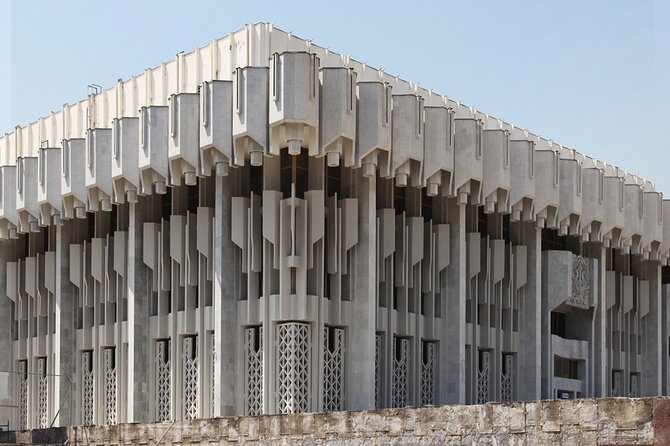
Flexibility is one of the best reasons to choose this experience. Only your own group takes part, and the tour can accept groups from one to 20 people. A solo visitor gets a more personal outing, while a family or group of friends can divide the cost across several people.
The guide can also adjust the emphasis. One group requested a stronger focus on Soviet architecture and received a tailored route. Another guide added sights when it became clear that the visitors were new to Tashkent. You can ask for more detail on metro stations, modernism, earthquake rebuilding, or the city’s broader story.
The published timing is compact, so do not expect an all-day city tour. You are getting a concentrated introduction. That is useful on a first morning or early in a Tashkent stay, when you want context before visiting more sites independently.
The route is on foot, with the metro used as transportation and as an attraction. Wear comfortable shoes and be ready for some outdoor walking. The experience is near public transportation, and most people can participate. Service animals are allowed.
Chorsu Bazaar, food stalls, and route expectations
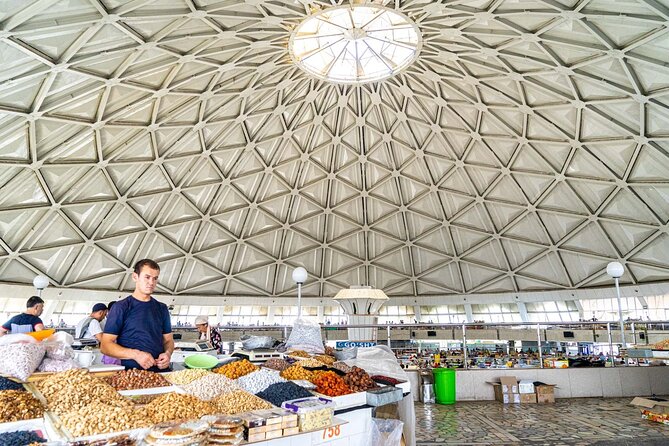
The wider tour description includes a visit to the food stalls of Chorsu Bazaar. Chorsu is a very different kind of Tashkent experience from a Soviet square. Its market life, food, and daily commerce would add a welcome local counterpoint to the formal architecture.
However, Chorsu Bazaar does not appear among the detailed timed stops supplied for this tour. The same is true of the panoramic views from the Uzbekistan Hotel. This may reflect a flexible route, a shortened version, or a description that combines possible highlights.
That does not make the tour a poor choice. It simply means you should ask before booking if Chorsu is essential to you. If you want a strict Soviet modernism and metro tour, the listed stops already offer a coherent route. If you want food stalls as well, confirm that the market can fit within the two-hour-15-minute schedule.
Is $50 good value?
At $50 per person, the tour is reasonably priced for a private experience. You are paying for a guide who explains the city, adapts the walk, and takes your group through several central areas and metro stations. For one person, the cost is higher than joining a large group. For six people, the private format becomes much better value per person.
The value depends on what you want from Tashkent. If you only need directions between the main squares, you can walk much of this route yourself. If you want the meaning behind Soviet buildings, the history of the earthquake, and help choosing the best metro stations, the guide earns the fee.
Group discounts are available, which strengthens the case for families and friends. Keep the extra costs in mind, since transport fees and all fees and taxes are not included in the stated price. Metro admission is listed as included, but I would still confirm the payment details.
The tour has a five-star rating from 15 reviews, with 100 percent recommending it. That is a small sample, so I would not treat it as proof that every departure will be perfect. Still, the praise is consistent: Aziza is described as warm, informative, and flexible, while Mirwaheed, Mirvoxid, and Waheed are also praised for their history and architecture explanations.
Best suited to architecture fans and first-time visitors
I would choose this tour if you are curious about Soviet modernism, public monuments, or the way Tashkent was rebuilt. It also suits a first-time visitor who wants a quick orientation without joining a large group.
The route works especially well for:
- People interested in Soviet design and urban planning
- Visitors who want to see several metro stations in one outing
- Small groups seeking a private guide
- First-time visitors who want practical suggestions for the rest of their stay
- Guests who prefer a moderate walking pace and short, focused stops
It may be less suitable if your main goal is a long food tour, a full museum visit, or a detailed tour of every major Tashkent sight. The walk is focused and time-limited. You also need to confirm the place of Chorsu Bazaar if that is a priority.
Free cancellation is available up to 24 hours before the start time for a full refund. Changes made within 24 hours are not accepted, and late cancellations are not refunded. Poor weather or failure to meet the minimum number of participants can lead to a new date, another experience, or a full refund.
Should you book this Tashkent walking tour?
Book it if you want Tashkent to make more sense. The metro stations, earthquake memorial, grand squares, and mixed imperial, Soviet, and Uzbek architecture form a strong introduction to the capital.
I especially recommend it for a private group that can request a clear theme. Ask for Soviet modernism, the Cosmonaut station, or earthquake rebuilding if those are your priorities. Before paying, confirm the start time, transport charges, and whether Chorsu Bazaar and the Uzbekistan Hotel views are included.
Skip it if you want a full-day food and sightseeing tour. For a focused two-hour introduction to Tashkent’s architecture and metro, though, this is a practical and well-supported choice.
FAQ
How long does the Tashkent architecture and metro tour last?
The experience lasts approximately two hours and 15 minutes, while the wider description gives a duration of about two and a half hours.
Where does the tour start and finish?
It starts at the Uzbekistan Hotel, Mirzamakhmud Musakhanov Street 45, in Tashkent. It usually ends at the same hotel.
Is this a private tour?
Yes. Only your group participates, and private bookings can include anywhere from one to 20 people.
Is metro admission included?
The tour details list metro admission as included. They also state that transport fees and all fees and taxes are not included, so confirm the exact arrangements before the tour.
Can the tour focus more strongly on Soviet architecture?
Yes. The route is flexible, and groups have requested a stronger focus on Soviet architecture and received an adjusted experience.
What is the cancellation policy?
You can cancel at least 24 hours before the start time for a full refund. Cancellations or changes made less than 24 hours before the start time are not accepted, and poor weather or an unmet minimum number of participants may result in a different date or a full refund.
Recently added around Tashkent
- Tashkent: 3-Day Horseback Riding Tour in Chimgan Mountains★ 4.4 · 3 reviews
- Samarkand: Uloq-Kopkari (Buzkashi) Game Day Tour★ 5.0 · 3 reviews
- Tashkent Mountain Tour Amirsoy with Transport★ 3.5 · 3 reviews
- Private Tashkent City Tour★ 5.0 · 3 reviews
- Amirsoy & Chimgan mountain tour from Tashkent★ 5.0 · 3 reviews
- Transfer Tashkent Airport / Railway Station – Hotel★ 3.5 · 3 reviews
- Heliocomplex “Institute of the Sun” – Remnants of USSR★ 5.0 · 3 reviews
- Half-day excursion around Tashkent★ 5.0 · 3 reviews
Tashkent Tours, compared.
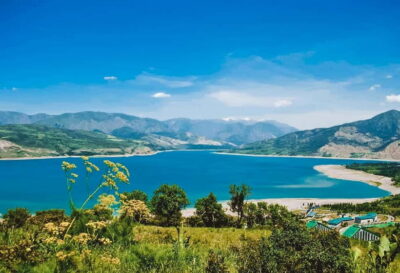
Best of Tashkent Mountains: Amirsoy, Chimgan & Charvak Trip
Read our review →
Samarkand One Day Tour – Departure From Tashkent
Read our review →Samarkand One-Day Tour Departure from Tashkent
Read our review →Amirsoy Resort, Chimgan Mountain and Charvak Lake
Read our review →Explore Amirsoy, Chimgan & Charvak – A Full-Day Mountain Tour
Read our review →
Tajikistan : Exclusive Seven Lakes Day Tour From Samarkand
Read our review →Explore Amirsoy, Chimgan, Charvak Adventure Tour
Read our review →Browse the lists this tour appears in