
Reviewed · TASHKENT TOURS
Uzbekistan in 7 days Tashkent, Samarkand, Bukhara and Khiva
Ancient cities make a great seven-day adventure. This Uzbekistan route links Tashkent, Samarkand, Bukhara, and Khiva with trains, hotels, transfers, guides, meals, and monument tickets included. I like the efficient route and the chance to see both modern Uzbekistan and its Silk Road past. I also like the personal attention from the operator, with Sayeed and his team checking in during the journey. The main concern is pace: the itinerary covers a lot in about six days, and the Bukhara to Khiva train ride takes six to seven hours.
The tour is especially appealing if you want the major sights handled for you. You will not need to arrange separate train tickets, city transfers, or entrance fees. Still, the schedule leaves little room for quiet wandering, and the package title says seven days while the supplied itinerary runs from Day 1 through Day 6. Confirm the exact number of hotel nights and travel dates before paying.
In This Review
- Key points at a glance
- Why this route works for a first visit
- Tashkent: an easy landing on Day 1
- Tashkent’s old city, markets, and modern squares
- Samarkand: grand monuments from the Afrosiyob train
- Bukhara: walkable lanes and old trading domes
- The Amu Darya and the long ride to Khiva
- Khiva: one full day inside Itchan Kala
- Guides, group size, and personal support
- What $1,250 includes and what to confirm
- Who should book this Uzbekistan tour?
- FAQ
- How long does the Uzbekistan tour last?
- Which cities are included?
- Are train tickets included?
- How long is the train from Tashkent to Samarkand?
- How long is the train from Samarkand to Bukhara?
- How long is the journey from Bukhara to Khiva?
- What type of accommodation is included?
- What is the maximum group size?
- Can the tour be canceled for a full refund?
- Should you book it?
Key points at a glance
- Four historic cities in one route: See Tashkent, Samarkand, Bukhara, and Khiva without arranging separate trips.
- Fast trains between the first three cities: The Afrosiyob train takes about two hours 15 minutes from Tashkent to Samarkand and one hour 30 minutes from Samarkand to Bukhara.
- A long final rail journey: The Bukhara to Khiva train takes six to seven hours, with a stop at the Amu Darya River.
- Major sights are covered: Registan, Shah-i-Zinda, the Ark of Bukhara, Itchan Kala, and many other monuments are included.
- Small enough to stay manageable: The maximum group size is 25 people, with pickup and guided touring included.
- Strong service record: The highest praise centers on careful organization, safety, daily contact, comfortable hotels, and helpful city guides.
Why this route works for a first visit
Uzbekistan can be awkward to plan independently because the best sights are spread across several cities. This route solves the main problem: it links the capital with the grand monuments of Samarkand, the compact old center of Bukhara, and the walled city of Khiva.
I like the order of the trip. Tashkent gives you a broad introduction, Samarkand supplies the big visual drama, Bukhara slows the rhythm with walkable old streets, and Khiva finishes the trip inside a preserved medieval-style city core. Each place feels different enough to justify the travel time.
The package includes 3 to 4-star hotels, breakfast, train tickets, transfers, transportation, excursions, and admission to the historic monuments. That matters in Uzbekistan, where a low headline price can rise quickly once you add intercity rail, private transfers, local guides, and entrance fees.
At $1,250 per person, this is not a shoestring trip. But it can be fair value if you want a coordinated package with support in every city. The price is harder to judge without hotel names, room details, and exact group arrangements, so ask for those before booking.
More week-long trips from Tashkent:
- 7-Day Uzbekistan with the Local: From Blue Domes to Mountains
★ 5.0 · 17 reviews
Tashkent: an easy landing on Day 1
Your first day is deliberately light. You receive an airport or arrival transfer, check in at the hotel, and begin sightseeing the following day.
That is a sensible choice after an international flight. You can settle in rather than rushing straight to a monument. Since the package offers pickup, confirm the exact meeting instructions and arrival transfer details in advance.
Tashkent is not simply a gateway to the older cities. It is Uzbekistan’s modern capital, and the tour gives you a useful look at both sides of the city. The schedule is full, so wear comfortable shoes and expect several stops with limited time at each.
Tashkent’s old city, markets, and modern squares
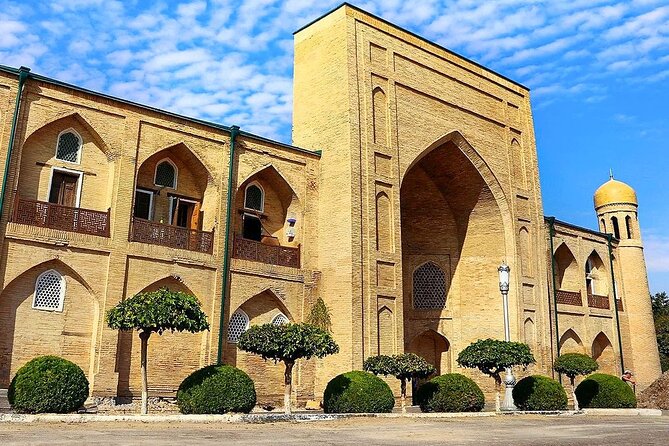
The second day opens at the Ensemble Hazrati Imam, one of Tashkent’s most important religious and historic areas. You spend about 90 minutes around the Barak-Khan Madrasa and related buildings, with admission included.
This is a good opening stop because it introduces the architectural style that appears again in Samarkand, Bukhara, and Khiva. Take time to notice the tilework and the calm atmosphere around the complex. The stop is guided, so you can ask about the buildings rather than simply taking photographs.
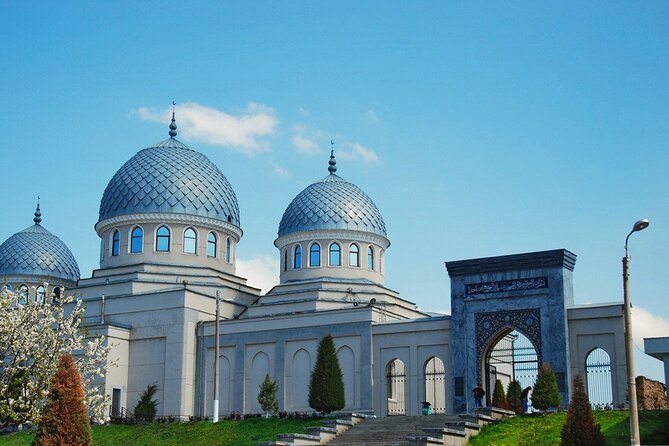
The Juma Mosque follows for about 45 minutes. Its carved wooden columns and traditional Islamic design offer a different experience from the large tiled facades elsewhere in the city.
Next comes the Abdulkasym Medrese, located near Hazrati Imam Square. The visit lasts about 45 minutes. It is another chance to see a historic religious school in the capital, though the number of similar architectural stops may feel repetitive if you prefer museums or everyday city life.
Chorsu Bazaar brings a welcome change of pace. You spend about an hour under the famous blue dome in Tashkent’s old city. This is where the tour feels most grounded in daily life. Look for piles of fruit, nuts, spices, and local sweets, and leave room in your budget for small food purchases or souvenirs.
The afternoon shifts toward modern Tashkent. Amir Timur Square features a statue of Amir Timur on horseback, gardens, and important city buildings. Independence Square adds monuments, fountains, an eternal flame, and a look at the national identity of present-day Uzbekistan.
Tashkent City Park then shows the capital’s newer face, with modern buildings, cafes, and designed public spaces. I appreciate this contrast. If you only visit old monuments, you miss how the country presents itself today.
The day ends with two museums. The State Museum of Applied Art occupies an old mansion and displays ceramics, textiles, wood carving, and other Uzbek crafts. The Amir Timur Museum focuses on the conqueror’s life and legacy, with a decorated interior beneath a large dome.
Nine stops is a lot for one day. The benefit is excellent coverage. The cost is that some visits will feel like introductions rather than long museum sessions. Ask your guide which displays deserve your extra attention.
Samarkand: grand monuments from the Afrosiyob train
On Day 3, you take the high-speed Afrosiyob train from Tashkent to Samarkand. The trip takes about two hours 15 minutes, a major advantage over a long road transfer.
After hotel check-in and a short rest, the tour begins at the Gur Emir Mausoleum. Allow about 40 minutes for the visit. This is the burial place of Amir Timur and a key introduction to Samarkand’s grand style, with a richly decorated interior and a memorable blue dome.
Then comes Registan Square, the centerpiece of the city. You have about an hour to see its three monumental madrasas, towering entrances, minarets, and patterned tilework. This is the place where the scale of Samarkand becomes clear. Try to view the square from several angles rather than taking one quick photograph and moving on.
Shah-i-Zinda follows for about 50 minutes. The avenue of mausoleums is known for detailed blue tilework and religious importance. The site involves walking, and its visual impact comes from the repeated facades gathered along the path.
The Ulugh Beg Observatory gives the day a scientific turn. You spend about 40 minutes learning about Ulugh Beg, the ruler and astronomer, and seeing the remains of his enormous sextant. This stop helps correct the idea that Samarkand’s story is only about conquest and decoration.
Bibi-Khanym Mosque takes about 45 minutes. Its massive domes and courtyard convey the ambition of the old city, although the scale can make it difficult to take in quickly. The nearby Siab Bazaar is a useful follow-up, with fruit, spices, nuts, and sweets.
Samarkand is the most visually intense day of the tour. The schedule covers the essential places, but you should expect a steady run of monuments. If you want more time at Registan or Shah-i-Zinda, tell the operator before the trip so the route can be adjusted.
A few more Tashkent trips worth weighing up
- Best of Tashkent Mountains: Amirsoy, Chimgan & Charvak Trip
★ 4.8 · 567 reviews - Samarkand One Day Tour – Departure From Tashkent
★ 5.0 · 313 reviews - Samarkand One-Day Tour Departure from Tashkent
★ 4.7 · 171 reviews - Tashkent: Amirsoy Resort, Chimgan Mountain and Charvak Lake
★ 4.8 · 170 reviews
Bukhara: walkable lanes and old trading domes
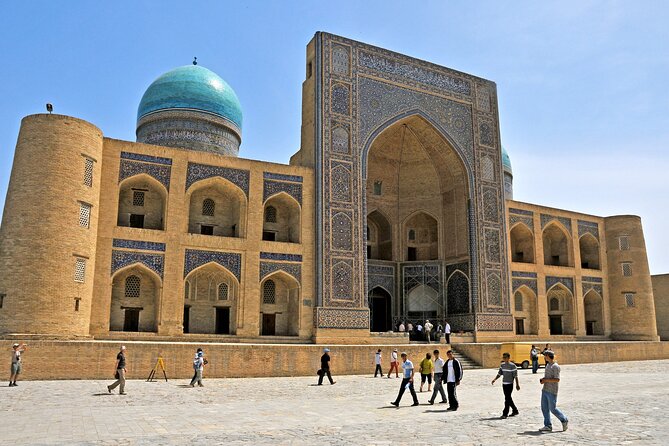
The train from Samarkand to Bukhara takes about one hour 30 minutes. That short ride leaves you in better shape for sightseeing, although the day still includes several major sites.
Lyab-i-Hauz is a relaxed starting point. The square is built around a pool and gives you a pleasant pause before the more concentrated monument visits. Its setting makes it one of the best places on the itinerary to sit, look around, and get a feel for Bukhara’s old center.
Chor Minor is one of Bukhara’s most recognizable buildings, with four small blue-domed towers. The visit lasts about 30 minutes and may include a climb to the roof for a wider view. The rooftop access is worth confirming if stairs are a concern.
The historic trading domes follow. These covered markets once served merchants selling silk, spices, jewelry, and other goods. Today, you can browse crafts and souvenirs while seeing how commerce shaped the city. This is a good place to compare prices and avoid buying the first item you see.
The Great Minaret of the Kalon receives about 50 minutes. The itinerary description repeats the trading-domes wording for this stop, but the intended focus is the famous minaret and its surrounding religious complex. Ask your guide to explain the Kalon ensemble clearly, since the area deserves more than a quick photo stop.
Ulugh Beg Madrasah and Abdullazizkhan Madrasah are viewed together. Their contrasting decoration and design show how architecture changed over time. The pair takes about 50 minutes and works well as a side-by-side lesson.
The Ark of Bukhara occupies about an hour. This fortress was the former residence of Bukhara’s rulers, with courtyards, walls, and museum areas to explore. Because the complex is substantial, an hour gives you a useful introduction but not a full examination of every section.
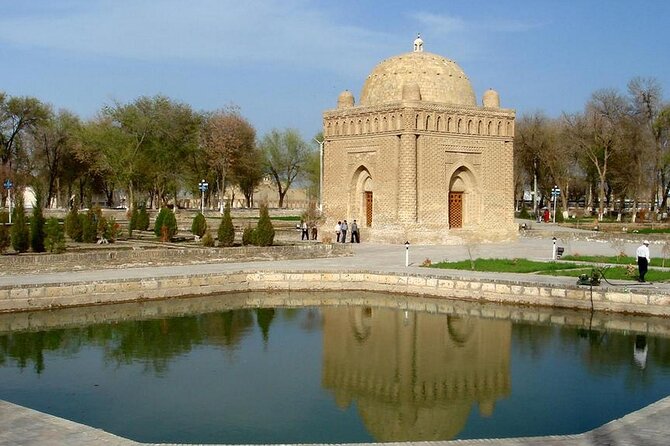
The day ends at the Ismail Samani Mausoleum, a 10th-century building made from baked bricks arranged in geometric patterns. It is quieter and more restrained than the blue-tiled monuments, which makes it a valuable contrast. Look closely at the brickwork. The decoration comes from pattern and shadow rather than colored tile.
Bukhara is likely the most satisfying city for walking, but the itinerary still moves briskly. The compact old center helps, yet you may want to return independently to Lyab-i-Hauz or the trading domes if your schedule allows.
The Amu Darya and the long ride to Khiva
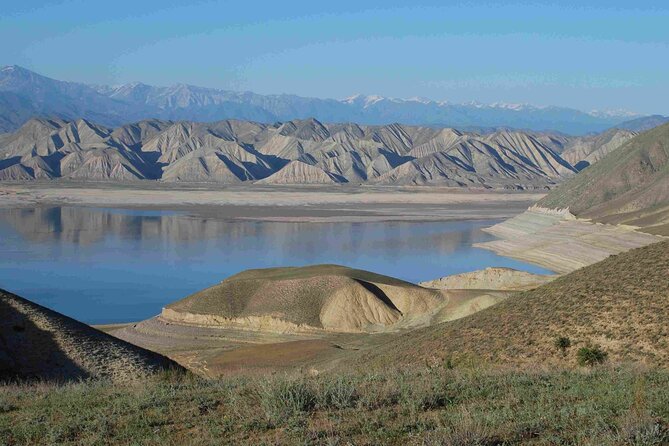
Day 5 is mostly a transportation day. The train from Bukhara to Khiva takes six to seven hours, and the route includes a stop at the Amu Darya River.
This is the tour’s clearest drawback. The long ride is necessary to connect western Uzbekistan with the earlier cities, but it consumes much of a short trip. You should bring water, snacks, reading material, and a charged phone. The package includes transportation, but the supplied details do not specify the train class or onboard facilities.
The Amu Darya is one of Central Asia’s major rivers and flows through several countries, including Uzbekistan. The stop gives the journey a geographical anchor, but do not mistake it for a full sightseeing day. Khiva sightseeing begins on Day 6.
Khiva: one full day inside Itchan Kala
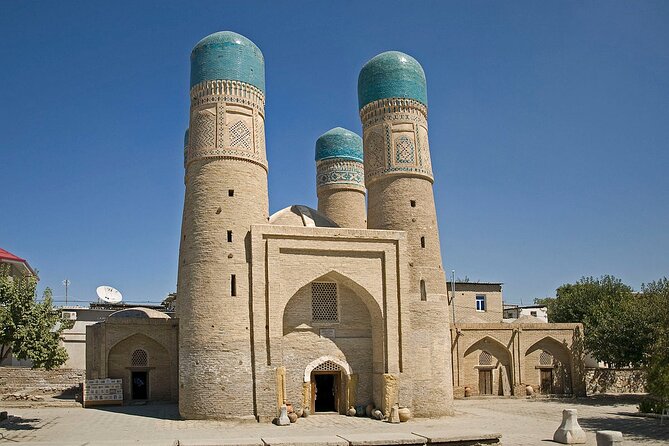
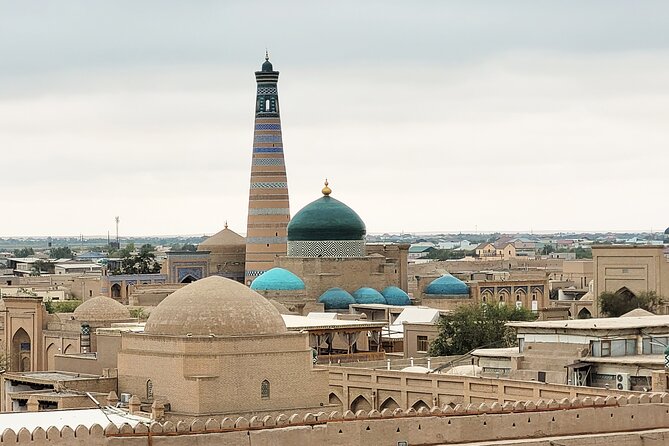
Khiva’s old city, Itchan Kala, is the grand finale. The walled center gathers mosques, madrasas, mausoleums, palaces, and minarets into a compact area. You begin with about two hours at the complex, including the chance to climb a watchtower for a panoramic view.
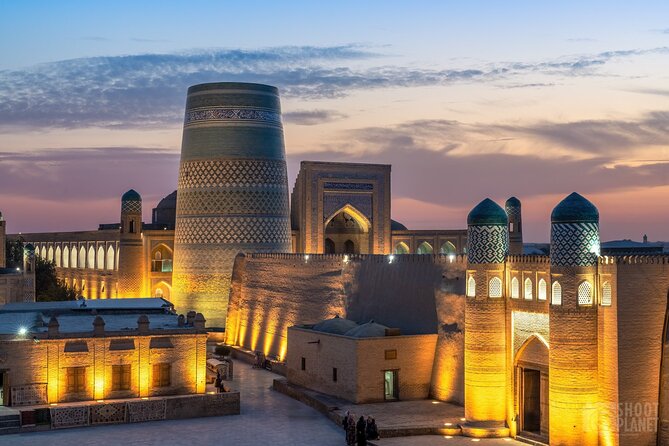
Kalta Minor is one of Khiva’s most memorable sights. The unfinished minaret was begun in 1851 for Muhammad Amin Khan and was intended to be the tallest in the city. Its broad, turquoise-colored form is striking even though the project was never completed.
The nearby Muhammad Amin Khan Madrassah was built between 1851 and 1854 and is described as Khiva’s largest madrassah. You have about 30 minutes there, enough for a guided look at its role in the city.
The Pahlavan Mahmoud Mausoleum receives another 30 minutes. It is Khiva’s most sacred site and honors Pahlavan Mahmoud, a celebrated poet and wrestler. The mood here is more devotional than at the grand squares, so follow local instructions about conduct and dress.
The Islam Khodja Complex includes Khiva’s tallest minaret. You may climb its narrow spiral staircase for a view across the old city. This is optional, but it is one of the most useful viewpoints on the trip. Ask about the climb before starting if tight stairways are difficult for you.
The Juma Mosque is unusual for its 213 carved wooden columns, with some said to date to the 10th century. The interior is atmospheric and very different from the open courtyards of Samarkand and Bukhara.
Tash Hauli Palace reveals the domestic and royal side of Khiva. You see courtyards, decorated rooms, and the harem, where the khan’s wives and concubines lived. The palace helps you picture how power operated behind the city walls.
The final stop is the Allakuli Khan Caravanserai and Tim Market. This 19th-century marketplace once served merchants on the Silk Road and now contains souvenir shops. It is a practical place to make final purchases, though you should compare goods and prices with those at the other bazaars.
Guides, group size, and personal support
The maximum group size is 25 people. That is not a private tour, but it is small enough to keep a guided walk workable. The experience uses guides in each city rather than one continuous guide, so the quality and style may vary from place to place.
The strongest service praise is aimed at Sayeed and his team. One account specifically valued daily contact, safety, comfort, and the effort to solve problems from beginning to end. Another praised the organization, transportation, hotels, and guides, while two women said they felt safe throughout the trip.
That support is important on a route with several hotel changes and train departures. You should still ask who your local guide will be in each city, how transfers are coordinated, and whether the group joins other bookings.
What $1,250 includes and what to confirm
The $1,250 price includes 3 to 4-star accommodations, breakfast, train tickets, transfers, transport services, excursions, and entrance tickets to the historic monuments. If all of those elements are delivered as described, the package removes many of the expensive and time-consuming pieces of planning.
The value depends on the hotel locations and train arrangements. A central hotel can save you time in Bukhara or Khiva, while a less convenient property may require extra transfers. Ask for hotel names, room type, number of nights, train class, and whether meals beyond breakfast are excluded.
The operator also offers group discounts and can customize the route around your preferences. That flexibility may improve the value if you want to reduce museum time, add rest, or adjust the pace. Get any changes written into the booking details.
Free cancellation is available up to 24 hours before the experience start time for a full refund. Changes or cancellations inside that period are not accepted for a refund, and the cutoff follows local time.
Who should book this Uzbekistan tour?
I would recommend it to a first-time visitor who wants the main sights without managing four-city logistics. It is also a good fit if you value hotel transfers, prearranged rail tickets, local guides, and a contact person checking in during the trip.
It suits active visitors who can handle frequent sightseeing days, stairs, station transfers, and one very long train journey. The optional climb at Islam Khodja Minaret and the roof access at Chor Minor add physical demands.
I would hesitate if you want slow mornings, long museum visits, or several free afternoons. The route is designed for coverage, not idling. I would also ask detailed questions before booking because the title promises seven days while the stated duration is approximately six days.
FAQ
How long does the Uzbekistan tour last?
The stated duration is approximately six days, with the supplied schedule running from Day 1 through Day 6. The tour title refers to seven days, so confirm the exact length before booking.
Which cities are included?
The route includes Tashkent, Samarkand, Bukhara, and Khiva.
Are train tickets included?
Yes. The package includes train tickets, including the Afrosiyob journeys and the longer trip from Bukhara to Khiva.
How long is the train from Tashkent to Samarkand?
The high-speed Afrosiyob train takes about two hours and 15 minutes.
How long is the train from Samarkand to Bukhara?
The Afrosiyob train takes about one hour and 30 minutes between Samarkand and Bukhara.
How long is the journey from Bukhara to Khiva?
The train journey takes approximately six to seven hours and includes a stop at the Amu Darya River.
What type of accommodation is included?
The package includes accommodation in 3 to 4-star hotels and breakfast.
What is the maximum group size?
The maximum group size is 25 people.
Can the tour be canceled for a full refund?
Yes. You can cancel at least 24 hours before the experience start time for a full refund. Cancellations or changes made less than 24 hours before the start time are not eligible for a refund.
Should you book it?
Book this tour if you want a well-supported introduction to Uzbekistan’s four headline cities and prefer having trains, hotels, transfers, guides, and monument tickets arranged together. The strongest reasons to choose it are the efficient rail route, wide sightseeing coverage, and personal support associated with Sayeed and the Assalam Travel team.
Before committing, confirm the six-day versus seven-day wording, hotel names, train class, exact pickup plan, and how much free time you receive. If those details suit you, $1,250 can be a reasonable price for a tightly organized first visit. If you want a slower, more independent trip, use this route as a planning outline and arrange fewer cities with extra nights in Samarkand, Bukhara, or Khiva.
Recently added around Tashkent
- Tashkent: 3-Day Horseback Riding Tour in Chimgan Mountains★ 4.4 · 3 reviews
- Samarkand: Uloq-Kopkari (Buzkashi) Game Day Tour★ 5.0 · 3 reviews
- Tashkent Mountain Tour Amirsoy with Transport★ 3.5 · 3 reviews
- Private Tashkent City Tour★ 5.0 · 3 reviews
- Amirsoy & Chimgan mountain tour from Tashkent★ 5.0 · 3 reviews
- Transfer Tashkent Airport / Railway Station – Hotel★ 3.5 · 3 reviews
- Heliocomplex “Institute of the Sun” – Remnants of USSR★ 5.0 · 3 reviews
- Half-day excursion around Tashkent★ 5.0 · 3 reviews
Tashkent Tours, compared.
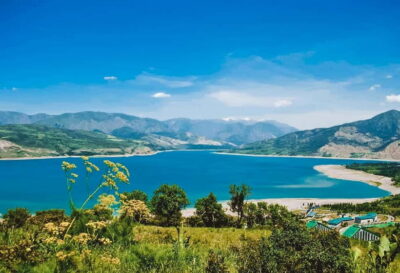
Best of Tashkent Mountains: Amirsoy, Chimgan & Charvak Trip
Read our review →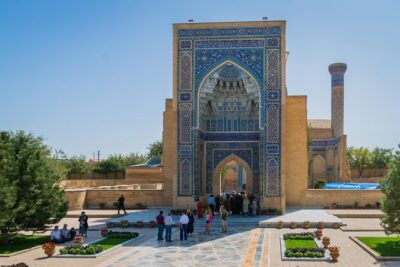
Samarkand One Day Tour – Departure From Tashkent
Read our review →Samarkand One-Day Tour Departure from Tashkent
Read our review →Amirsoy Resort, Chimgan Mountain and Charvak Lake
Read our review →Explore Amirsoy, Chimgan & Charvak – A Full-Day Mountain Tour
Read our review →
Tajikistan : Exclusive Seven Lakes Day Tour From Samarkand
Read our review →Explore Amirsoy, Chimgan, Charvak Adventure Tour
Read our review →Browse the lists this tour appears in