
Reviewed · ARAL SEA TOURS
Aral Sea Tour from Nukus 1 night / 2 days
The Aral Sea leaves a mark. This private trip from Nukus takes you across Karakalpakstan to the dried seabed, Muynak’s ship cemetery, the Ustyurt Plateau, and a desert yurt camp. I especially like the chance to walk across the former sea floor and the quiet night under a clear sky. The main drawback is the road: this is a long, rough ride, and anyone with back or spine problems should think twice.
I also like that the tour includes both the environmental disaster and the older culture of the region, with stops at Mizdakhan and an abandoned caravanserai. Just check the guide language carefully before paying, since one booking had an English-speaking guide promised but a driver who did not speak English.
In This Review
- Key points to know before booking
- Why the Aral Sea still matters
- The long road from Nukus to the desert
- Mizdakhan, the city of the dead
- Muynak and the ship cemetery
- Walking across the former seabed
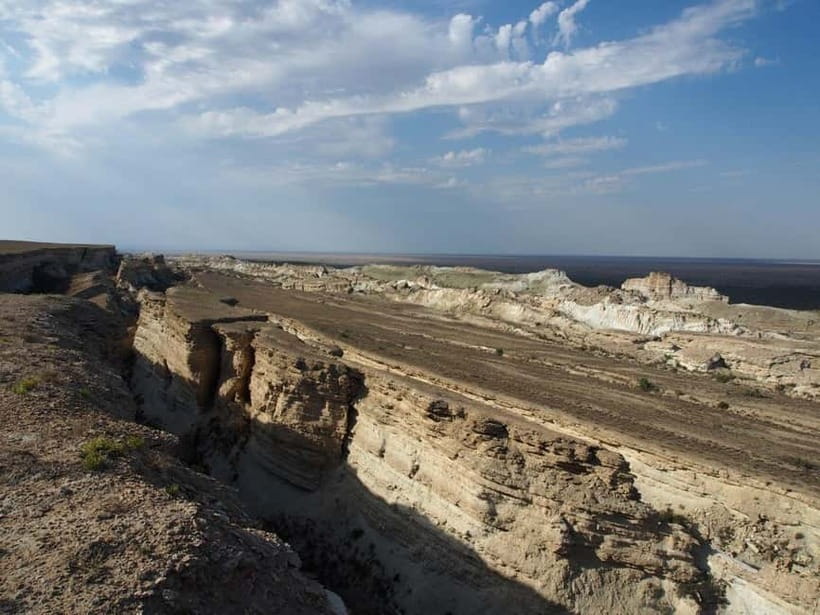
- Ustyurt Plateau and the white canyons
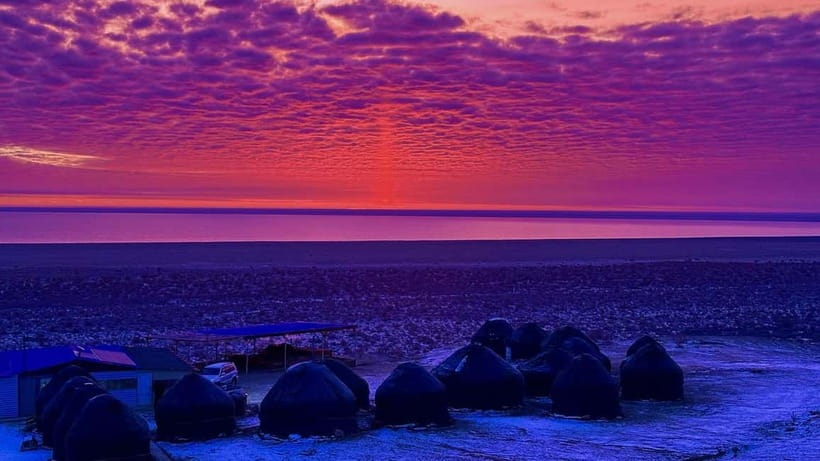
- The yurt camp after sunset
- The return route and Kurgancha kala
- What the $590 price really means
- Guide language, comfort, and practical limits
- Who should book this Aral Sea trip?
- FAQ
- How long does the Aral Sea tour take?
- Where does pickup take place?
- How much does the tour cost?
- Is the yurt camp included?
- Are meals included?
- Can I swim at the Aral Sea?
- Is there mobile or internet service?
- Is the tour suitable for people with mobility or back problems?
Key points to know before booking
- The dried seabed is the main event: You can walk across, touch, and feel the former bed of the Aral Sea.
- Muynak adds the human story: The ship cemetery and ecological museum show how a working port became a desert town.
- Expect 15 hours of driving: The first day takes about seven hours, and the return takes about eight.
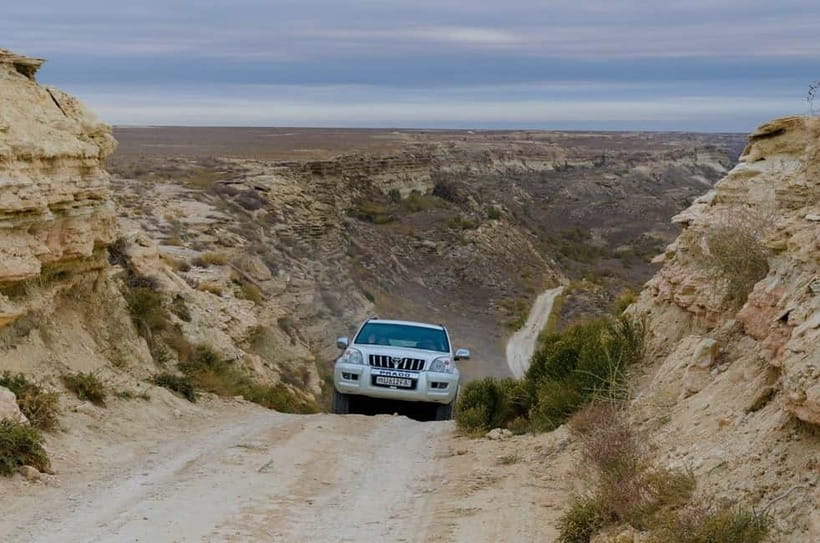
- The 4×4 matters: Roads are rough and full of potholes, but the vehicle is suited to desert conditions.
- The yurt night costs extra: Accommodation is $25 per person, while meals and museum entry are also separate.
- The trip is private for up to four people: That makes the $590 group price far better for three or four people than for one person.
Why the Aral Sea still matters
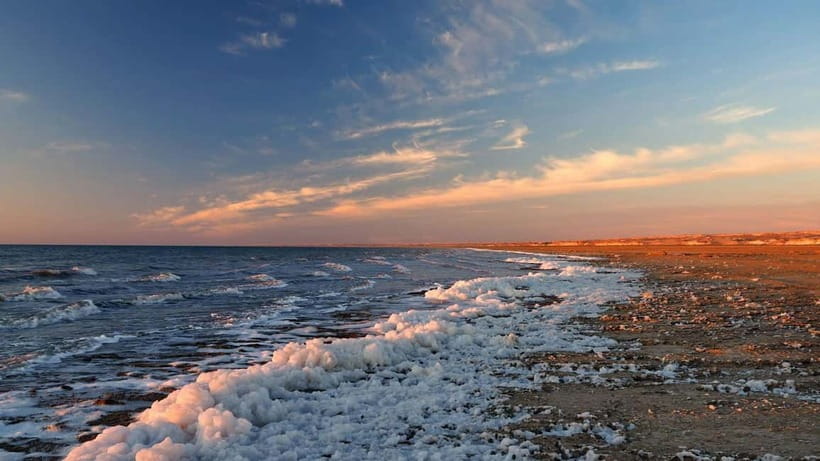
The Aral Sea was once one of the world’s great inland bodies of water. Poor water management caused it to shrink dramatically, leaving behind salt, mud, stranded boats, and a wide desert where fishing communities once worked. This tour gives you a direct look at that change rather than treating it as a distant environmental statistic.
You do not simply stop at a viewpoint and take a photograph. At the dried section of the seabed, you can walk over the exposed ground and feel the scale of the loss. The experience is stark because the sea is not hidden behind a museum display. In places, the former shoreline is now open desert.
That setting also demands realistic expectations. This is not a polished sightseeing route. It is a hard journey through remote country, with long stretches of driving and limited communication. The reward is access to a place few people see, but the cost is time, comfort, and patience.
More Aral Sea trips from Uzbekistan:
- Daytrip from Khiva to Aral Sea Cemetery of Ships. All in one
★ 4.3 · 52 reviews - Muynak Ship Cemetery Tour From Nukus
★ 4.3 · 32 reviews - Aral Sea Adventures (2 day)
★ 5.0 · 30 reviews
The long road from Nukus to the desert
Pickup is available from your Nukus hotel, airport, or railway station. The first day covers about 400 kilometers and takes roughly seven hours with stops. The route is private, so you are not tied to a large group, and the vehicle is an air-conditioned 4×4.
The air conditioning will matter in warm weather, while the 4×4 is more than a luxury. Several sections have poor road conditions and frequent potholes. You should expect a bumpy ride, not a smooth highway transfer. If you have back pain, neck problems, or a spinal condition, this is a serious consideration rather than a minor inconvenience.
Pack light but bring useful clothing. Sturdy sport shoes or hiking boots, long trousers, sunglasses, a hat, sunscreen, and comfortable clothing all make sense. A warm jacket is needed in early spring and late autumn. The desert can feel very different after sunset.
Food is not included in the base price. Lunch is recommended around Kungrad or Muynak on the first day, and a picnic lunch is suggested around Kungrad on the return. Karakalpak food often includes beef, lamb, fish, rice, wheat or sorghum dough, and vegetables. Tell the operator about vegetarian needs or other food preferences after confirmation.
Mizdakhan, the city of the dead
Mizdakhan is the first major cultural stop. This large cemetery complex contains many mausoleums and preserves customs connected with the pre-Islamic period. It offers a useful contrast to the Aral Sea story because it shows that this region is not only about environmental damage.
The site is sometimes described as a city of the dead, and the name fits the atmosphere. Tombs and sacred structures occupy a dry, open setting, giving you a strong sense of age and isolation. You should wear shoes with good grip because the visit involves walking over uneven ground.
Mizdakhan is also a reminder that Karakalpakstan has deep layers of human history. The route does not treat the sea as an isolated tragedy. It places the disaster within a wider region shaped by settlement, trade, faith, and movement across Central Asia.
Muynak and the ship cemetery
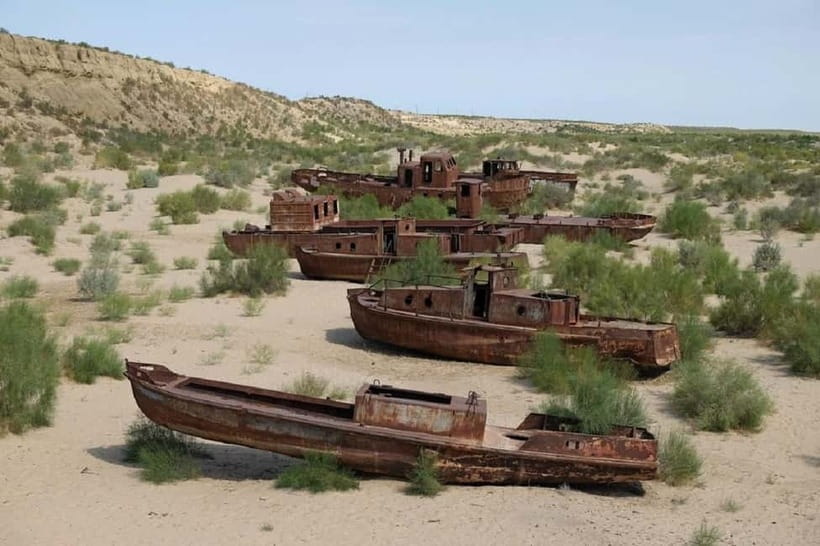
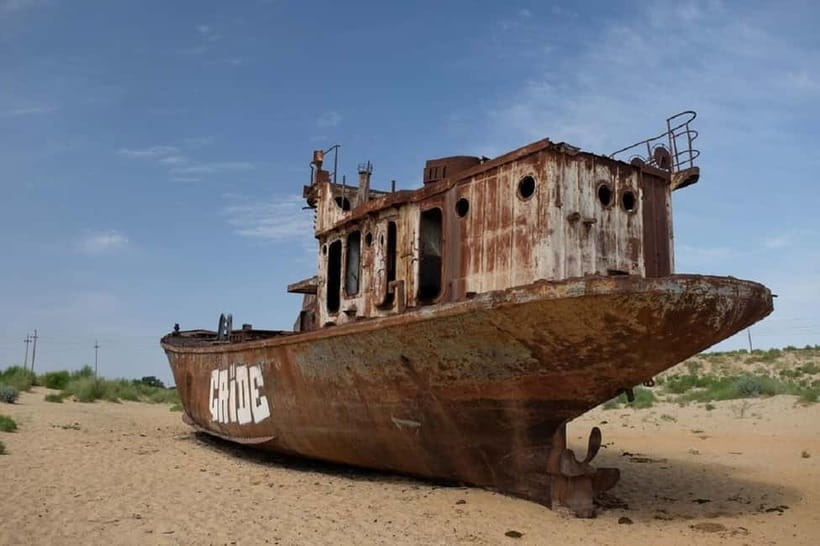
Muynak is the emotional center of the first day. Once connected to the Aral Sea fishing industry, the town is now separated from the remaining water by many kilometers of dry ground. The ship cemetery contains rusting vessels that look stranded in the desert, a visual record of the sea’s retreat.
The ships are not just old machinery. They show how quickly an economy can lose its purpose when nature changes. A port needs water, boats, fish, and workers. When the water disappears, all four vanish or move away.
You also visit the Aral Sea Ecological Museum of Muynak. Entry costs $5 per person and is not included. I recommend paying for it because the outdoor ships show the result, while the museum helps explain the process and the effect on local life.
Muynak is also a sensible place to arrange lunch. Since the drive is long, do not treat meals as an afterthought. Ask in advance about timing, especially if you have dietary requirements.
More Nukus and Savitsky Museum trips from Uzbekistan:
- Daytrip From Khiva to Savitsky Museum & Mizdakhan & Chilpik
★ 4.9 · 13 reviews - Private Daytrip to Muynak and Nukus
★ 5.0 · 10 reviews - 2 Days Private Tour To Aral Sea from Nukus.
★ 5.0 · 4 reviews - Aral Sea One Day Trip from Nukus.
★ 4.0 · 3 reviews
Walking across the former seabed
After Muynak, the route continues through Uchsay village toward the dried part of the Aral Sea. Here the tour becomes less about viewing and more about physical contact with the place. You can walk across the exposed seabed, touch the ground, and see how a sea has become desert.
You should follow practical safety advice from the driver. Wear closed shoes, long trousers, sunglasses, and a hat. Salt and mud may be present, so choose clothes that can handle dust. Sunscreen is important, and the bright open ground can make sunglasses particularly useful.
The description also says swimming is possible at the camp area where water remains. Bring swimwear if you want that option. A fresh shower is available at the camp to wash away salt and mud afterward. Conditions can vary, so ask locally about the exact swimming spot and current water conditions.
This part of the trip can feel strange. You may find yourself looking at a broad, empty surface and having to imagine waves, boats, and a shoreline. That gap between memory and present reality is what gives the stop its power.
Ustyurt Plateau and the white canyons
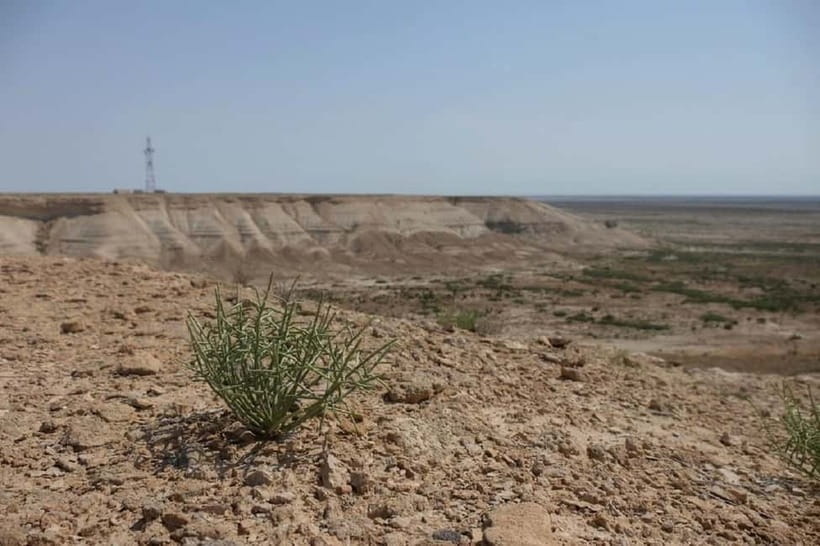
The Ustyurt Plateau provides some of the most striking scenery on the route. The area is described as resembling the Grand Canyons of Uzbekistan, with pale or white-toned cliffs and broad desert views. The plateau feels remote and severe, with few signs of modern life.
The drive across it is not a quick photo stop. You spend time moving through a large, open region, and the road conditions can be rough. That makes the 4×4 essential, but it also means your comfort depends on your tolerance for jolts and long hours in a vehicle.
Along the way, you may see cemeteries connected with local nomadic communities. These stops add a human detail to the stark setting. The plateau is not empty in any meaningful sense. People have crossed, lived, traded, buried their dead, and adapted to this difficult country for generations.
Photography should be excellent in clear weather, especially around the pale cliffs and wide horizons. Still, do not judge the day only by photographs. Much of the value comes from the slow change from settlement to open desert.
The yurt camp after sunset
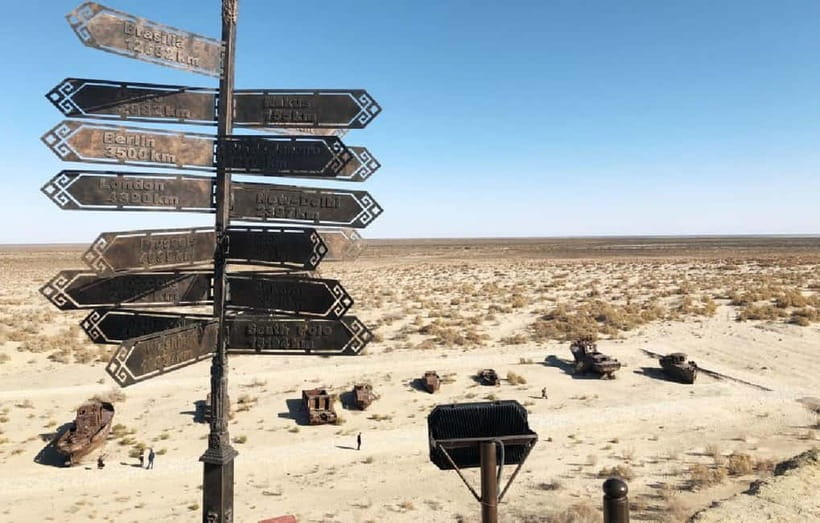
The night is spent at a yurt camp near the Aral Sea, but this costs extra. Accommodation is $25 per person, and one night is included only if you add it after the trip is confirmed. Meals are also separate, with breakfast, two lunches, and dinner priced at $50 in total.
The camp gives the trip a welcome pause after the long first day. You can relax, hike, and sit around a campfire. There is electricity for charging devices and a telephone for local communication, but there is no mobile or internet connection.
That lack of connection is part of the experience, but you should prepare for it. Download anything important before leaving Nukus, tell family where you will be, and do not rely on online maps or messages. The car and camp have local telephone access, which provides a basic backup.
The clear sky can be one of the best parts of the overnight stay. The camp is suitable for looking at the Milky Way, and an early start gives you the chance to see sunrise from the desert. A sunrise from the camp was particularly praised, so bring a warm layer and keep your camera ready.
The return route and Kurgancha kala
Day two begins with breakfast, if you have added the meal package, and a drive back toward Nukus. The return takes about eight hours and covers around 400 kilometers. The estimated arrival in Nukus is around 5 p.m.
The route includes Davlatgirey caravanserai, also known as Kurgancha kala. This abandoned trading caravanserai offers another glimpse of how movement across the region once worked. Traders needed stopping points across the desert, and a ruined caravanserai makes the old routes easier to picture.
The site is not presented as a restored monument with a full visitor center. Its appeal is the abandoned structure and its setting. You should expect a simple stop, not a polished attraction with extensive facilities.
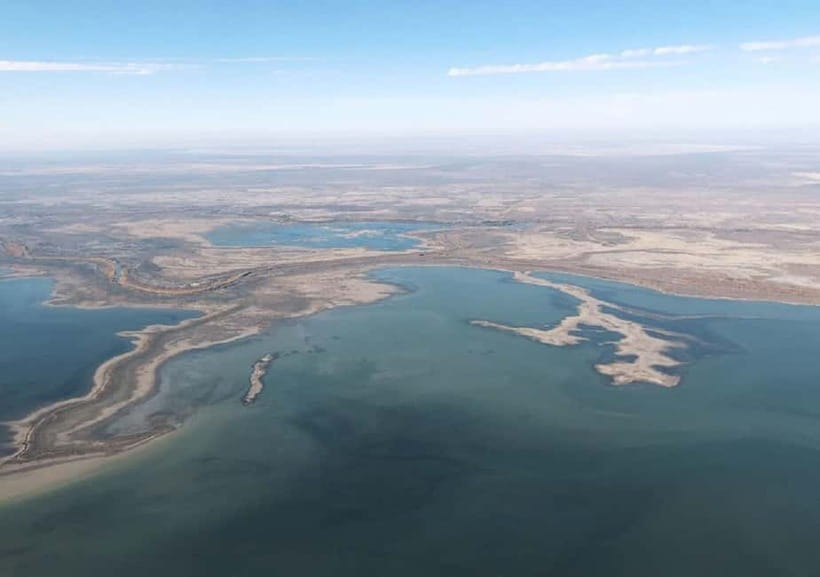
The road then crosses more of the Ustyurt Plateau before reaching Sudochie Lake. The lake is an important stop for migrating birds, including pink flamingos, white swans, ducks, and other species. It is also known as a favorite place for hunters, which gives the area a different character from the dry seabed and cliffs.
Bird sightings depend on season and conditions, so do not book this trip solely for a guaranteed flamingo encounter. The lake is valuable because it shows that water still shapes life in this dry region, even after the Aral Sea’s retreat.
What the $590 price really means
The advertised price is $590 per private group of up to four people. That includes an air-conditioned 4×4, the driver, pickup, and all listed fees and taxes. It does not include the yurt, meals, the $5-per-person museum ticket, or personal expenses.
For four people, the listed extras come to about $170 for the group: $100 for four yurt places, $50 for meals, and $20 for museum tickets. That brings the basic group total to about $760, or roughly $190 per person, before personal spending.
For one person, the same $590 base cost makes the trip expensive. The value improves sharply with three or four people because the vehicle and private service are shared. You should also compare this with the cost of arranging a separate desert vehicle, driver, accommodation, and meals, though no separate prices are provided here.
The price is easier to justify if you value privacy and a direct route from Nukus. It is harder to justify if you want a cheap transfer or a comfortable road journey. This is a specialist excursion to a remote place, not a low-cost city tour.
Guide language, comfort, and practical limits
The listed driver languages are English and Russian. Still, confirm that your driver or guide will actually provide English service if that matters to you. One booking reported that the assigned driver did not speak English despite an English guide being expected.
The group is private, with a maximum of four people. That gives you more control over stops and makes the long ride more pleasant than sitting with a large bus group. It also lets you share the price with companions without losing the quiet, personal nature of the route.
The tour is not suitable for people with mobility impairments. Uneven ground at Mizdakhan, the seabed, the ship cemetery, and the plateau can make walking difficult. The rough road is the bigger concern for anyone with back pain.
Cancellation is free up to 24 hours before departure, and you can reserve now and pay later. Pickup is available from your hotel, airport, or railway station. You should be ready in the hotel lobby five minutes before the agreed time.
Who should book this Aral Sea trip?
I would choose this tour if you want to understand the Aral Sea through places rather than a short museum display. It suits people who can handle long drives, rough roads, basic desert accommodation, and limited communication.
The strongest reasons to go are the dried seabed, Muynak’s ships, the Ustyurt Plateau, and the chance to spend a night away from city lights. The trip also works well for a small private group that wants to continue afterward to Khiva, since a transfer from Nukus to Khiva can be arranged as an additional service.
I would not choose it if comfort is your main goal, if you have serious back problems, or if you expect every stop to have modern facilities. Confirm the English-speaking guide, add the yurt and meals to your budget, and accept that the road is part of the price.
For the right person, this is a memorable and sobering trip. The Aral Sea is not an easy attraction, and that is precisely why the experience matters.
FAQ
How long does the Aral Sea tour take?
The experience lasts about 1.5 days and includes one overnight stay at a yurt camp near the Aral Sea.
Where does pickup take place?
Pickup is available from your hotel, airport, or railway station in Nukus. You should wait in the hotel lobby five minutes before the scheduled pickup.
How much does the tour cost?
The base price is $590 for a private group of up to four people. The yurt, meals, museum entry, and personal expenses cost extra.
Is the yurt camp included?
No. One night at the yurt camp costs $25 per person and can be arranged after the trip is confirmed.
Are meals included?
No. A meal package covering one breakfast, two lunches, and one dinner costs $50 for the group. Vegetarian food and other preferences should be requested in advance.
Can I swim at the Aral Sea?
Swimming is possible at the camp area, and you may bring swimwear. A fresh shower is available for washing off salt and mud.
Is there mobile or internet service?
There is no mobile or internet connection at the camp. A telephone for local communication is available in the car and at the camp, and electricity is available for charging devices.
Is the tour suitable for people with mobility or back problems?
The tour is not suitable for people with mobility impairments. The roads are very bumpy and contain many potholes, so people with back or spine problems are advised to avoid the trip.
More two-day trips from Uzbekistan
- From Bukhara: 2-Day Desert Yurt Camp Tour
★ 4.5 · 57 reviews - 2 Days Tour to Bukhara and Samarkand from Tashkent by train
★ 5.0 · 53 reviews - Yurt stay and Hiking in the Nurata Mountains tour – 2 days
★ 5.0 · 35 reviews - From Khiva To Aral Sea 2-Days One Night In Yurt Stay
★ 4.6 · 20 reviews
More evening trips in Uzbekistan
- Tashkent : Classic City Tour. (Day & Night Shift)
★ 4.8 · 52 reviews - Fergana – Golden Valley From Tashkent 1 night / 2 days
★ 4.5 · 41 reviews - Life As Nomads – Yurt Camp Tour with Night from Samarkand
★ 3.6 · 36 reviews - Yurt Camp Tour with Night from Bukhara
★ 3.8 · 35 reviews
Recently added around Uzbekistan
- Uzbekistan 8 Days Private Guided Tour★ 4.6 · 3 reviews
- Tashkent: 3-Day Horseback Riding Tour in Chimgan Mountains★ 4.4 · 3 reviews
- Samarkand: Uloq-Kopkari (Buzkashi) Game Day Tour★ 5.0 · 3 reviews
- Bird Watching Tours in Samarkand★ 3.6 · 3 reviews
- Bukhara: City Highlights Guided Tour with Pickup★ 5.0 · 3 reviews
- Tashkent Mountain Tour Amirsoy with Transport★ 3.5 · 3 reviews
- 9 Days Private Guided Tour to Uzbekistan★ 5.0 · 3 reviews
- Private Tashkent City Tour★ 5.0 · 3 reviews
Aral Sea Tours, compared.
Daytrip from Khiva to Aral Sea Cemetery of Ships. All in one
Read our review →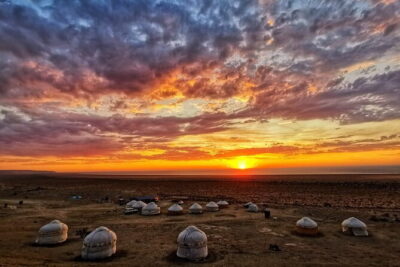
Daytrip From Khiva to Aral Sea Cemetery Of Ships . All In One
Read our review →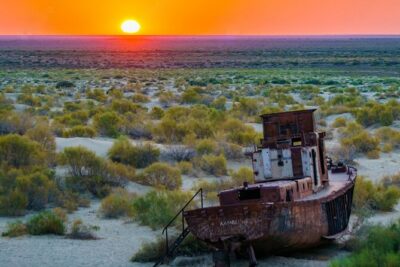
Browse the lists this tour appears in