
Reviewed · ARAL SEA TOURS
Aral Sea Adventures (2 day)
The desert gives this journey its strange beauty. This private trip links Khiva with the Aral Sea through Karakalpakstan’s stark desert, forgotten ports, ancient monuments, and major museums. I like the way it combines the famous Muynak ship cemetery with places many rushed visitors miss, including Chilpik qala, Mizdakhan, the Ustyurt area, and Nukus’s Savitsky Museum.
I also like the small private format, with transportation for your group of up to three and hotel pickup and drop-off included. The main caution is simple: this is an enormous amount of driving, close to 1,000 kilometers in two days. You need to be comfortable with early starts, long hours in a car, and a schedule shaped by distance rather than leisurely sightseeing.
In This Review
- Key points before you book
- Why this trip is worth the hard miles
- Day one: Chilpik qala and the art of Nukus
- Day two: Muynak and the vanished harbor
- The Aral Sea shore and Ustyurt country
- Cars, comfort, and the reality of the road
- What the USD 699 price really covers
- Who will enjoy this two-day route
- Should you book Aral Sea Adventures?
- FAQ
- Where does the tour start?
- How long is the experience?
- How far do you travel?
- How many people can join the private tour?
- Which vehicles are used?
- Is hotel pickup included?
- Is accommodation included in the price?
- Are museum entrance fees included?
- What happens if bad weather cancels the tour?
Key points before you book
- Nearly 1,000 kilometers in two days: The trip covers vast distances between Khiva, Nukus, Muynak, and the Aral Sea shore, so the road is a major part of the experience.
- Two vehicles for desert travel: A sedan and a 4×4 are used during the round trip, with experienced drivers accustomed to desert conditions.
- Six major sights: You visit Chilpik qala, the Savitsky Museum, Muynak’s local museum, the ship cemetery, Mizdakhan Necropolis, and the Aral Sea shore, with Ustyurt Canyons included in the wider route.
- A yurt night is available: Accommodation costs USD 40 per person and includes dinner and breakfast.
- Private and flexible routing: The trip can be arranged to begin or finish in Khiva, Urgench, or Nukus, though you should confirm the exact plan before departure.
- Excellent feedback for organization: Communication, smooth driving, comfortable vehicles, supplied water, and useful audio materials receive particular praise.
Why this trip is worth the hard miles
The Aral Sea is not a quick side trip from Khiva. The distances are too great, and the roads into the western desert make a two-day plan physically demanding. But that same remoteness gives the journey its force.
You are not simply visiting a viewpoint and returning to town. You are crossing a region shaped by one of the world’s most serious environmental disasters. The route passes through old religious sites, Soviet-era industrial history, Karakalpak museums, abandoned port facilities, and broad desert horizons. Each stop adds another piece to the story.
I especially like the fact that the trip does not treat the ship cemetery as the whole destination. Muynak is powerful, but it makes more sense after you have seen the museums and ancient sites around Nukus and along the road. The experience becomes a journey through time as well as distance.
The timing matters. Pickup begins at 6:00 a.m. from the west gate of Ichan Kala in Khiva. That early start helps fit the route into two days, but it also means you should arrange breakfast in advance or ask the operator what is possible. Long days are unavoidable here.
More Aral Sea trips from Khiva:
- From Khiva To Aral Sea 2-Days One Night In Yurt Stay
★ 4.6 · 20 reviews - Daytrip From Khiva to Aral Sea Cemetery Of Ships . All In One
★ 4.5 · 18 reviews - Private Daytrip to Muynak and Nukus
★ 5.0 · 10 reviews
Day one: Chilpik qala and the art of Nukus
The first major stop is Chilpik qala, also called Chilpiq or Shilpiq qala. This round, roofless Zoroastrian monument sits on top of a hill and dates back more than 2,200 years.
The structure is about 15 meters high and 65 meters across. Its open design is tied to Zoroastrian funerary practice, when bodies were placed in elevated structures rather than buried directly in the earth. You get about 30 minutes here, which is enough to see the monument and take in the surrounding desert setting, though not enough for a slow archaeological visit.
Admission is not included. Since the listed tour price does not cover every entrance fee, keep some Uzbek currency or small bills available. Chilpik is a short stop, but it gives you an early sense that this trip is not only about the twentieth-century Aral Sea crisis.
The road then continues toward Nukus and the State Museum of Art named after I.V. Savitsky. Allow about an hour inside, with extra time if art is a major interest for you. The museum is famous for its large collection of Russian avant-garde works, along with art from Central Asia and Karakalpakstan.
This is one of the strongest reasons to choose the two-day route rather than a basic drive straight to Muynak. Nukus is far more than a staging point for the desert. The Savitsky collection gives you a cultural counterweight to the grim industrial history you will see later.
The entrance ticket costs USD 7 per person and is not included. One hour gives you a useful introduction, but art lovers may find the visit too short. If you want more time at the museum, ask whether the schedule can be adjusted, especially if you are starting or ending in Nukus instead of returning to Khiva.
Day two: Muynak and the vanished harbor
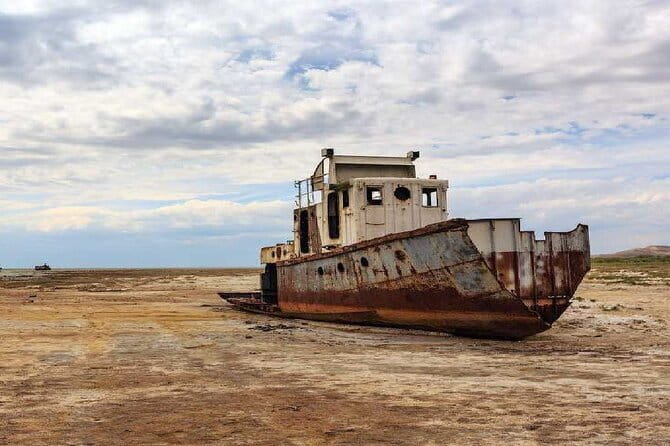
Day two focuses on Muynak, once a port on the Aral Sea. The town supported a large fishing and fish-processing industry before the sea retreated. Today, the ship cemetery offers one of the clearest physical reminders of that change.
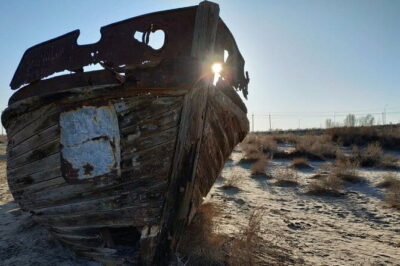
The ships sit on dry ground rather than water. You have about an hour to walk among them and consider the scale of what disappeared. The rusty hulls make strong photographs, but the setting is more than a backdrop. It shows how quickly a working port can lose its purpose when a water source recedes.
The ship cemetery is free to enter. Wear practical shoes and bring protection from the sun if conditions are bright. The itinerary does not promise extensive shade, and the region can feel exposed. Weather can also change the mood completely. In cold or poor conditions, the site may feel severe rather than dramatic.
Before or after the ships, you visit the Muynak Regional Studies Museum, also called the Ecological Museum of Muynak. The stop lasts about 30 minutes, and admission costs USD 3 per person.
This is a modest local museum, not a polished national institution. That is part of its value. The museum helps explain Muynak as a fishing community and places the ship cemetery within the wider ecological and social story. I would not skip it simply because the visit is short. Without this context, the abandoned vessels can become a quick photo stop.
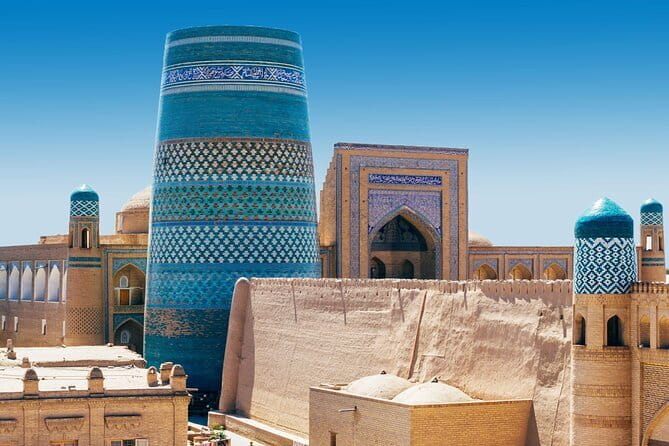
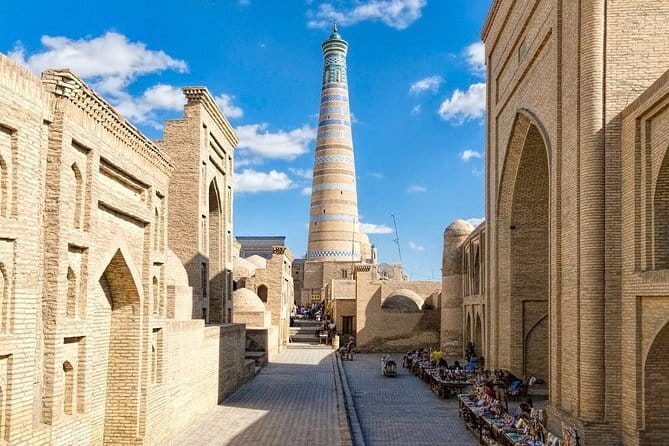
The schedule also includes Mizdakhan Necropolis, a major ancient cemetery and pilgrimage site near the remains of the Gyaur-Kala fortress. You have about 30 minutes here, with no entrance fee listed.
Mizdakhan adds another layer to the route. The necropolis is one of the oldest and most visited pilgrimage places in Karakalpakstan. Its setting near the fortress remains connects religious tradition, ancient settlement, and the present-day desert. You should treat this stop with respect. It is not just another ruin to rush through with a camera.
The Aral Sea shore and Ustyurt country
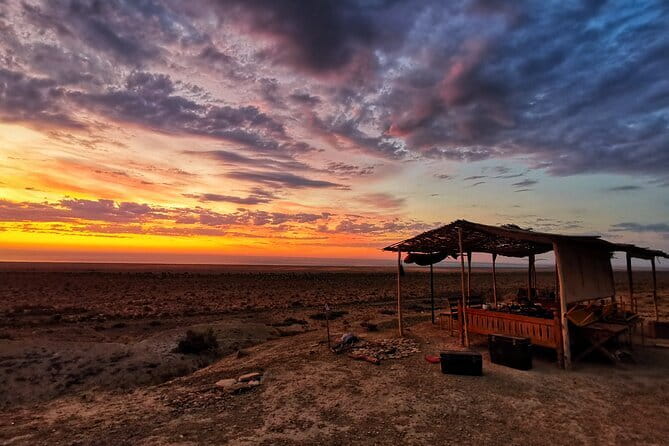
The shore itself is the emotional center of the journey. The exact appearance depends on weather, light, and the condition of the road, but you can expect a broad, spare setting shaped by the sea’s retreat.
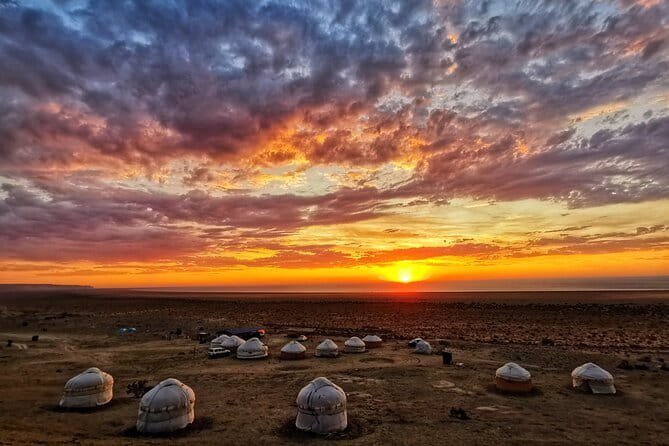
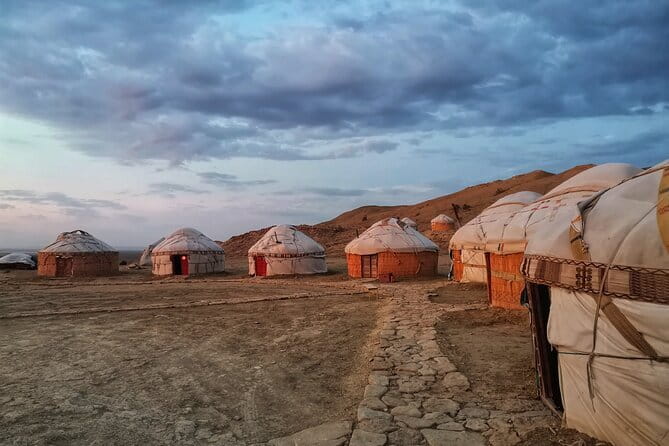
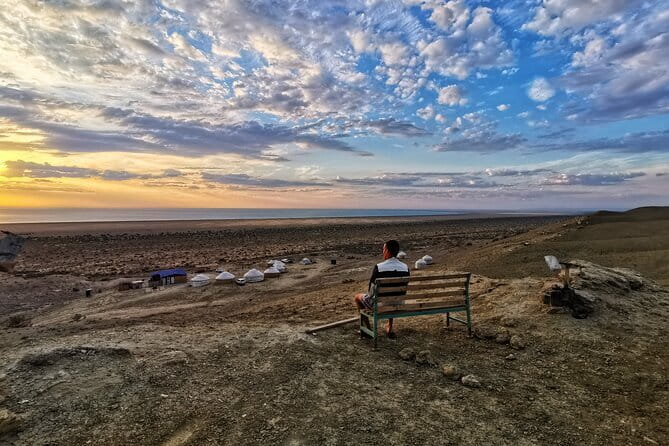
Some departure dates may include a night at a yurt camp near the Aral Sea. The accommodation costs USD 40 per person and includes dinner and breakfast. That fee is separate from the tour price, as are lunch and dinner generally, except for the meals included with the yurt stay.
The yurt night gives the journey a more local feel than a simple out-and-back drive. It also breaks up the distance and lets you see the shore at a quieter time. One particularly useful tip is to rise early if conditions permit. Sunrise over the Aral Sea can be one of the best moments of the trip.
Do not expect a full entertainment program at the camp. The available information points to a well-run campsite, friendly hosts, and plentiful food, but not a long list of evening activities. After dinner, you may have a quiet night rather than organized diversions. Bring a book, enjoy the stillness, and remember that this is a remote stop, not a resort.
The route also includes the Ustyurt Canyons. These formations provide some of the most unusual desert scenery on the trip, with pale rock, open space, and shapes that can make the region feel almost unreal. The tour description places them among the important areas visited, though the detailed stop list does not assign a separate duration.
That distinction matters. You should ask how much time is planned at the canyons and which viewpoint or section you will reach. The route is subject to road conditions and timing, so the Ustyurt portion may not feel like a long hiking excursion. Think of it as a scenic desert stop reached by vehicle.
More two-day trips from Khiva:
- From Bukhara: 2-Day Desert Yurt Camp Tour
★ 4.5 · 57 reviews - 2 Days Tour to Bukhara and Samarkand from Tashkent by train
★ 5.0 · 53 reviews - Fergana – Golden Valley From Tashkent 1 night / 2 days
★ 4.5 · 41 reviews - Yurt stay and Hiking in the Nurata Mountains tour – 2 days
★ 5.0 · 35 reviews
Cars, comfort, and the reality of the road
Two vehicles are used: one sedan and one 4×4. That arrangement suits a route that mixes ordinary roads with rougher desert conditions. The 4×4 is particularly useful for sections where a standard car may be less comfortable or less capable.
The drivers are described as experienced in desert conditions and praised for smooth driving. That is not a minor detail. With so many hours on the road, a calm driver and a comfortable vehicle make a major difference.
Air conditioning, private transportation, and water are included. The private setup means you are not sharing the schedule with a large bus group. You can ask questions, adjust your pace within reason, and avoid waiting for strangers at every stop.
Still, private does not mean short. The distance remains the distance. You should expect long periods when the view is simply road, scrub, sand, or open sky. This is a trip for someone who sees the journey as part of the point.
Audio guide materials are provided. They add useful background during the drive, especially when the guide is not walking with you at every site. The quality of the trip also depends on your communication with the organizer, identified in the tour information as Olimjon. The available feedback gives him credit for clear planning, quick messages, help with practical matters, and explanations before departure.
What the USD 699 price really covers
The price is USD 699 per group of up to three people, not per person. For a full private vehicle arrangement over two days, that can be fair value, especially for a group of three.
The value comes from the amount of ground covered, the private transport, hotel pickup and drop-off, the use of a 4×4 for desert sections, and the range of sites included. Arranging the same route independently could involve finding separate drivers, negotiating desert transport, booking a yurt, and coordinating several stops across a remote region.
You must budget for extras. The Savitsky Museum costs USD 7 per person. The Muynak museum costs USD 3 per person. Yurt accommodation is USD 40 per person and includes dinner and breakfast, while lunch and other dinner costs are not included.
For one person, USD 699 is a much bigger expense. For two or three people sharing the group rate, the numbers become more reasonable. I would compare the total cost with the price of a shorter private transfer to Nukus or Muynak, but do not forget that this trip includes several important stops rather than transportation alone.
Who will enjoy this two-day route
I would recommend it most strongly to people who want to understand western Uzbekistan beyond Khiva’s beautiful old city. It suits you if you are interested in environmental change, Soviet history, desert archaeology, Karakalpak culture, unusual museums, and remote road journeys.
It is also a good fit if your time is limited. The route is short by Aral Sea standards, but it covers the main sights in a tightly organized format. You can start from Khiva and potentially arrange a finish in Khiva, Urgench, or Nukus, depending on the plan agreed with the operator.
I would be cautious if you dislike long drives, have limited mobility, or need a relaxed schedule. The tour requires a moderate level of physical fitness and has a minimum age of 15. Some stops involve walking over exposed ground, and the two-day schedule leaves little room for delay.
Winter can be especially demanding. Cold conditions may make the shore and ship cemetery feel harsh, though they can also create striking light and a more solitary atmosphere. The experience requires good weather, and poor conditions may lead to a new date or a full refund.
Should you book Aral Sea Adventures?
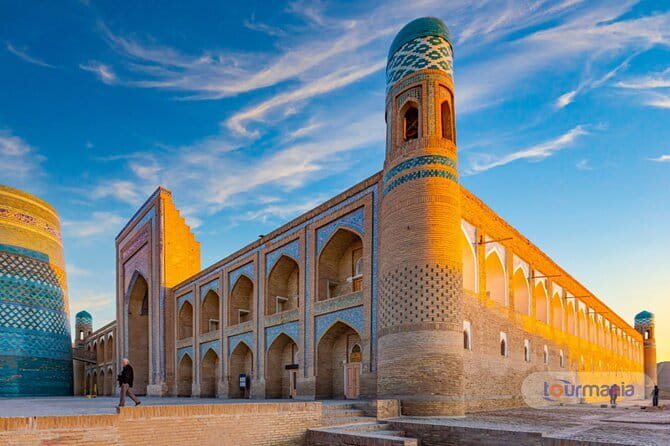
Book it if you want the Aral Sea as part of a larger story, not merely a photograph of stranded ships. The mix of Chilpik qala, the Savitsky Museum, Muynak, Mizdakhan, the Ustyurt area, and the shore gives you a thoughtful route through Karakalpakstan.
I would book for two or three people to make the USD 699 group price work better. Confirm the exact overnight plan, the amount of time at Ustyurt Canyons, and your preferred start or finish city before paying. Pack for long drives, changing weather, and basic desert conditions.
Skip it if you want a slow, comfortable holiday with short transfers. Choose it if you can accept the road, because the road is what connects all the pieces. The result is a demanding but memorable look at a region that few visitors reach.
FAQ
Where does the tour start?
The stated meeting point is the west gate of Ichan Kala in Khiva, at 6:00 a.m.
How long is the experience?
The tour lasts approximately two days, including transportation time.
How far do you travel?
Around 1,000 kilometers are driven over the two days.
How many people can join the private tour?
The price covers one private group of up to three people.
Which vehicles are used?
The trip uses two cars, one sedan and one 4×4.
Is hotel pickup included?
Yes. Hotel pickup and drop-off are included.
Is accommodation included in the price?
No. Yurt accommodation costs USD 40 per person and includes dinner and breakfast.
Are museum entrance fees included?
No. The Savitsky Museum costs USD 7 per person, and the Muynak Aral Sea Museum costs USD 3 per person.
What happens if bad weather cancels the tour?
If poor weather causes cancellation, you will be offered another date or a full refund. You can also cancel for a full refund up to 24 hours before the experience starts.
Recently added around Khiva
- A Night In The Kyzylkum Desert [2] From Khiva★ 4.5 · 3 reviews
- Khorezm Fortress and KyzylKum Desert Private Tour★ 5.0 · 3 reviews
- Best of Khiva: Exclusive Private Tour!★ 5.0 · 3 reviews
- Khiva: City Highlights Guided Walking Tour★ 4.6 · 3 reviews
- Khiva: classic Half-Day Tour★ 3.7 · 3 reviews
- Master Class – Uzbek Bread (Khiva)★ 3.5 · 4 reviews
- Uzbekistan 6 Days Private Tour Khiva-Bukhara-Samarkand by Train★ 5.0 · 4 reviews
- Traditional Khiva Cooking Class with Market Visit & Lunch★ 5.0 · 4 reviews
Aral Sea Tours, compared.
Daytrip from Khiva to Aral Sea Cemetery of Ships. All in one
Read our review →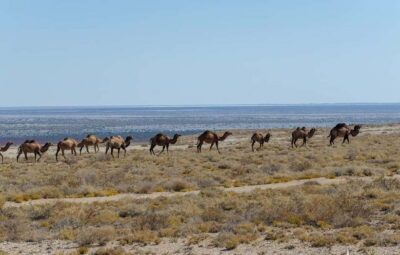
Daytrip From Khiva to Aral Sea Cemetery Of Ships . All In One
Read our review →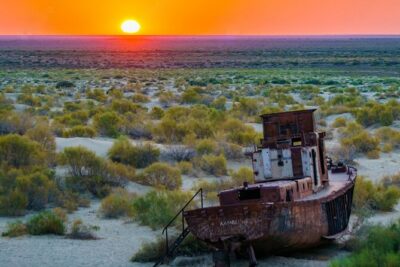
Browse the lists this tour appears in