
Reviewed · COOKING CLASSES
Traditional Khiva Cooking Class with Market Visit & Lunch
Good food opens doors in Khiva. This private 2.5-hour experience takes you beyond the monuments and into everyday life, starting with a local market visit and ending with a home-cooked meal in Sarvar Bobojonov’s family home. I especially like the chance to choose ingredients at the market and then use them in a real cooking session, rather than watching a chef work in a restaurant. I also like the warm family setting, with homemade pickles, garden fruit, green tea, and conversation about Uzbek life.
The main consideration is the price: $150 per group of up to three is good value for a small private group, but less so for a solo visitor. The cooking class is also listed as two hours within a 2.5-hour experience, so this is a focused introduction to Khorezm food rather than a long culinary workshop.
In This Review
- What makes this Khiva experience special
- From Itchan Kala to the local market
- Choosing between plov and Shivit Oshi
- Cooking with Sarvar and his family
- The meal: plov, tea, pickles, and fruit
- Why the market and home work well together
- Price and value for a private group of three
- Timing, clothing, and practical limits
- Who should book this cooking class?
- A few ways to get more from the visit
- Should you book the Khiva cooking class?
- FAQ
- How long does the Khiva cooking class last?
- How much does the experience cost?
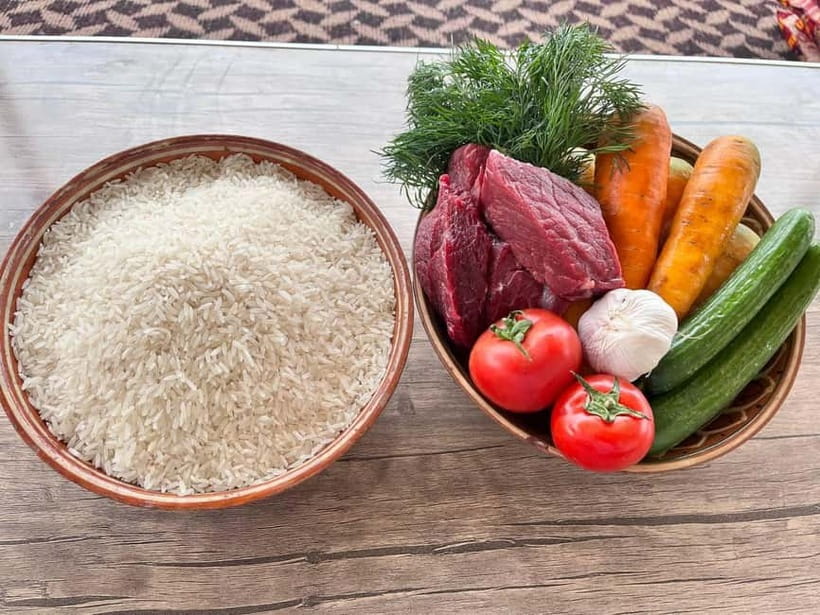
- Which dishes can I cook?
- Is hotel pickup included?
- What language does the instructor speak?
- What should I avoid wearing or bringing?
What makes this Khiva experience special
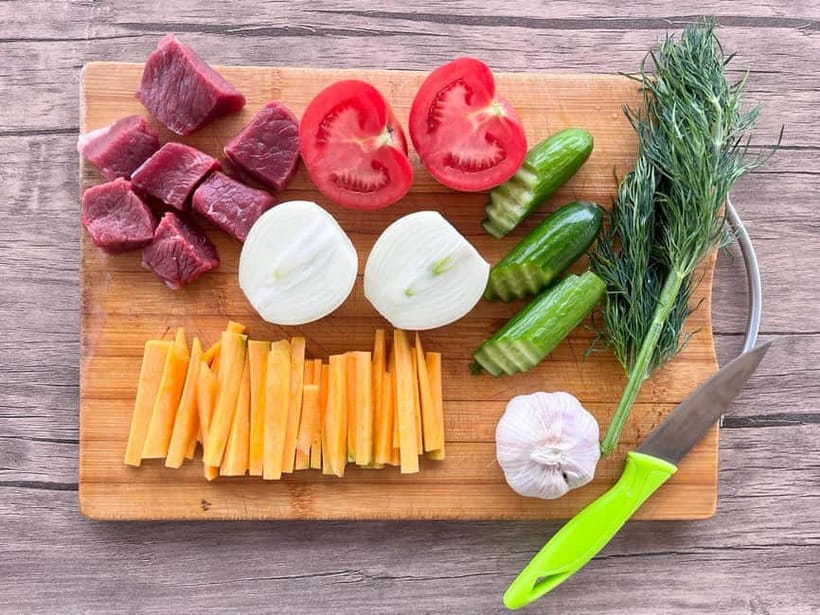
- You shop before you cook: Visit a local Khiva market with Sarvar, select fresh ingredients, and learn how locals choose produce and negotiate prices.
- You enter a real family home: The meal takes place with Sarvar, his mother, and other family members, not in a staged restaurant kitchen.
- You cook Khorezm specialties: Prepare plov or Shivit Oshi, two dishes closely tied to local food traditions.
- You get more than the main dish: Traditional Uzbek tea, seasonal fruit, and homemade pickles add a wider taste of family cooking.
- You receive recipes afterward: The recipes give you a practical way to recreate some of the meal at home.
- The format is private: The price covers up to three people, with an English-speaking instructor and hotel pickup and drop-off.
From Itchan Kala to the local market
Your experience begins with pickup from one of several points around Khiva, including the Polvon Darvoza, the Stone Gate at the southern entrance to Itchan Kala, and the Bakcha Darvoza at the western gate. Hotel pickup and drop-off are included, which is useful if you are staying inside or near the old city and do not want to arrange local transport.
The vehicle is listed as a white sedan, registration 156NAA. That small detail matters in Khiva, where several pickup points sit around the old city gates. Confirm the meeting point and look for the correct car, especially if your accommodation is close to more than one entrance.
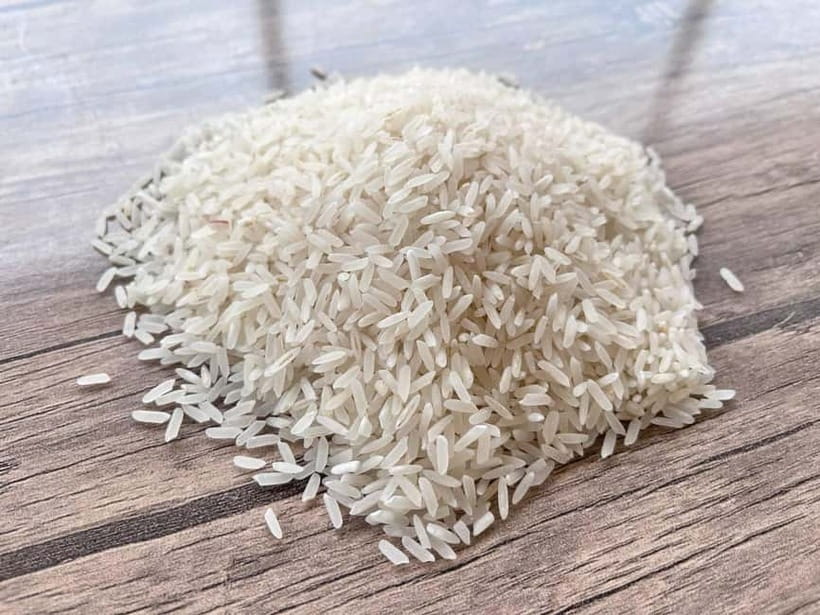
The first stop is the local market. This is not just a quick shopping errand. Sarvar helps you understand what you are looking at, how ingredients are selected, and how shopping works in Uzbekistan. You may also learn some local facts about Khiva and the country along the way.
I like this part because it gives the cooking a clear connection to place. Instead of seeing a finished plate with no context, you follow the ingredients from the market to the kitchen. You also get a glimpse of ordinary shopping, something that the grand architecture of Itchan Kala cannot provide.
The market visit includes an introduction to negotiation. You do not need to treat this as a performance or force yourself to bargain over every item. Pay attention to the tone and rhythm of the exchange, and let Sarvar guide you. His role is especially useful if you have not visited a Central Asian market before.
More Cooking Classes in Khiva:
- Master Class – Shivit Osh Traditional Food Of Khiva
★ 4.2 · 27 reviews - Master Class – Uzbek Bread (Khiva)
★ 3.5 · 4 reviews - Master Class – Uzbek Bread in Khiva
★ 4.4 · 125 reviews
Choosing between plov and Shivit Oshi
The class focuses on Plov or Shivit Oshi. The supplied details do not specify how far in advance you must choose, so ask Sarvar when you book or before the market visit. Seasonal availability and the time of day may affect which dish is most practical.
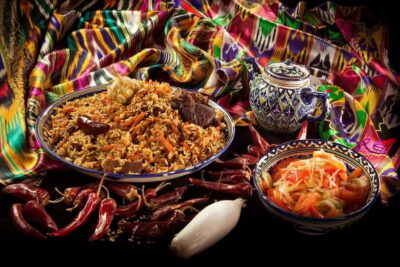
Plov is the safer choice if you want one of Uzbekistan’s best-known national dishes. The class lets you see how it is prepared in a home setting, with Sarvar’s mother sharing family cooking methods. The strongest praise for the experience centers on the plov, with the dish described as the best meal of its kind during a wider Uzbekistan trip.
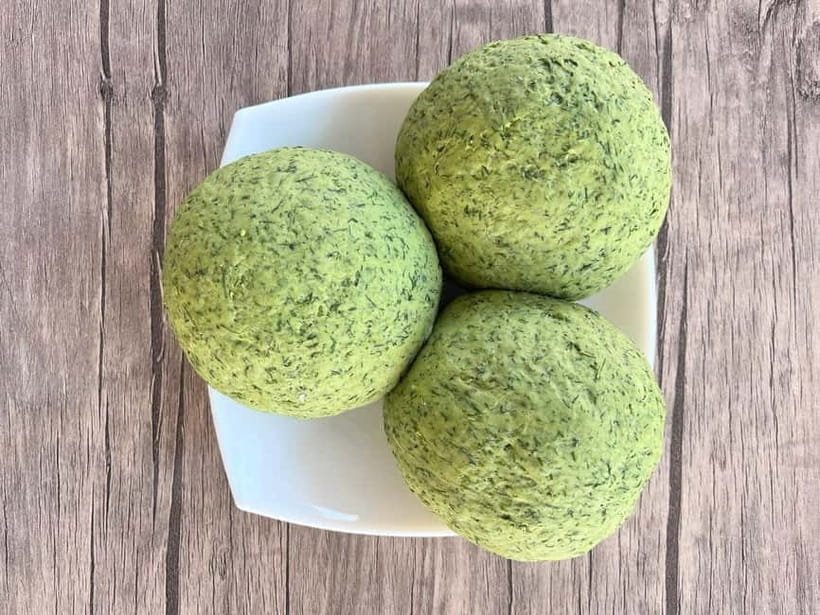
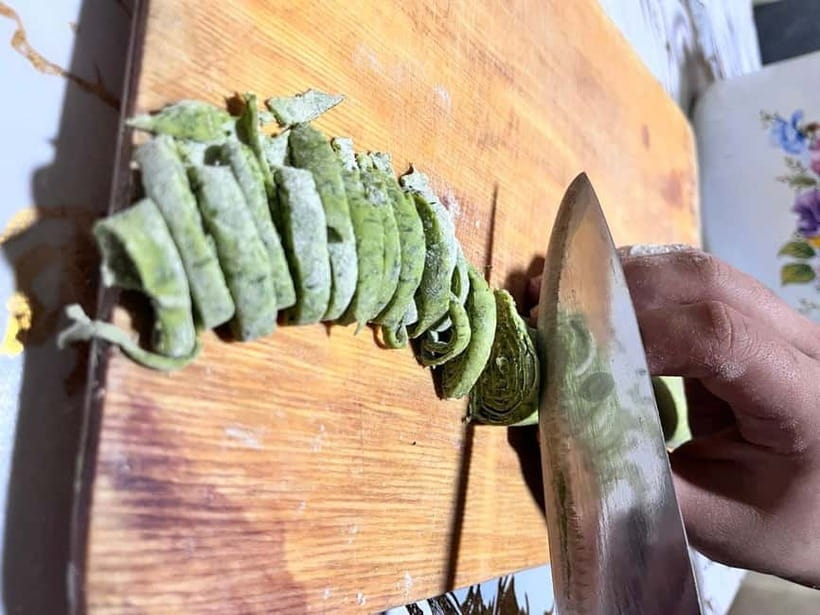
Shivit Oshi gives you a more specifically Khorezm-focused option. It is associated with Khiva and offers a different way to experience local cooking than the more widely known plov. If you have already eaten plov several times, Shivit Oshi may give the class a stronger local angle.
This is hands-on cooking, but you should set your expectations correctly. It is not described as a professional chef course with a long list of techniques, multiple courses, or formal instruction. Instead, you cook alongside a local family and learn through explanation, demonstration, and shared work. That is the point.
Cooking with Sarvar and his family
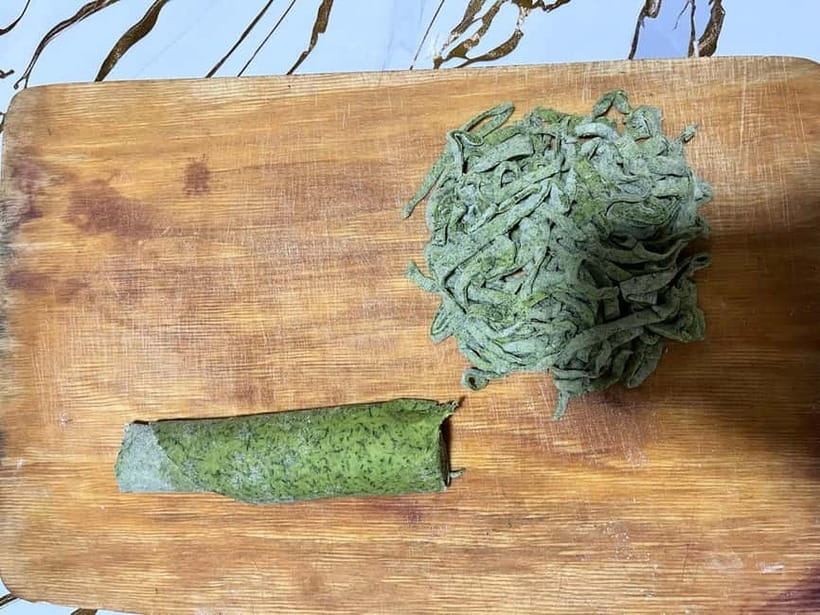
The home visit is the heart of the experience. Sarvar hosts the activity, and his mother and brothers may be part of the cooking and meal. The family setting gives the class a relaxed feel that a commercial kitchen cannot easily copy.
The most memorable details are simple ones. You may sit with the family, talk about food and culture, and watch a meal come together in the same place where family meals are prepared. Homemade pickles have received special praise, as has the family’s garden, where seasonal fruit may be available to taste.
That personal contact is valuable in Khiva. The old city tells you about historic buildings, rulers, and trade routes. A home visit tells you something different: how hospitality works at a family level, how food brings people together, and how traditions are passed from one generation to another.
Sarvar’s English instruction is a practical advantage. You can ask questions while cooking and hear explanations about the food and local customs without relying entirely on gestures or translation. The activity is private, so your group has more room to ask questions and work at its own pace than it would in a large class.
Still, family hospitality can be less formal than a restaurant service. The pace may depend on the household and the cooking process. If you want a tightly timed class with every minute planned, this might feel informal. If you want a personal encounter, that informality is part of the appeal.
The meal: plov, tea, pickles, and fruit
Once the cooking is finished, you eat the meal in the family home. The food is served with traditional Uzbek tea, and seasonal fruit is provided for dessert. Depending on the season, the fruit may include melons or watermelons, which received especially warm praise after the meal.
The fruit matters because it makes the meal feel complete without turning it into a formal restaurant menu. You get to taste what the family has available and what fits the season. The garden adds another layer to the visit, since you may sample fruit growing at the home rather than simply receiving a prepared dessert.
The tea service also gives the meal a slower rhythm. Uzbek tea is not an afterthought here. It is part of the welcome and a natural reason to continue talking after the main dish is finished.
I would not book this class only to guarantee a particular side dish or dessert. The description promises seasonal fruit, but not a fixed fruit selection. Likewise, the exact family menu may vary. The strongest reason to book is the combination of cooking, conversation, and a home meal.
More Workshops in Khiva:
- Samarkand: Village Tour with Plov Cooking Class & Home Visit
★ 5.0 · 29 reviews - Samarkand: Uzbek Cooking Class in a Village Home
★ 5.0 · 22 reviews - Cooking class in Samarkand with local life experience
★ 5.0 · 19 reviews - Private Samarkand Cooking Class with Market Tour & Transfers
★ 5.0 · 14 reviews
Why the market and home work well together
Many food activities offer either a market tour or a cooking lesson. This one links both parts. The market shows you the raw materials, while the home shows you how those materials become food.
That connection helps you remember the experience. When you later see similar produce in a market or restaurant, you will have a better sense of where it fits into Khorezm cooking. You also gain recipes to take home, which is useful if you want to keep the memory alive beyond your trip.
The class also gives you a better sense of Khiva outside the tourist center. You start near the famous gates and then move into a more local setting. The shift is not dramatic or theatrical. It is simply a change from sightseeing to sitting down with a family over food.
For me, that is the best argument for adding this experience to a Khiva itinerary. You can see the major sights in a day, but a home meal gives you a different kind of understanding. It puts a human face on the city.
Price and value for a private group of three
The cost is $150 per group of up to three, not $150 per person. For three people, that works out to $50 each. For two people, the effective cost is $75 each, and a solo participant pays the full group rate unless the booking terms offer another arrangement.
At the full group size, the price includes quite a lot: transport, a guided market visit, all cooking ingredients, the class, tea, fruit, the meal, and recipes. You are also paying for a private English-language experience with direct access to a local family.
Compared with a simple restaurant meal, this is expensive. Compared with a private cultural activity that includes transport and a meal, the price is easier to justify. The value depends on whether you care about the setting and personal contact, not just the food on the plate.
I would recommend sharing the booking with two friends or family members if possible. That makes the cost more reasonable and suits the private format. The class is also a good choice for people who want a slower, more personal activity after visiting Khiva’s monuments.
Timing, clothing, and practical limits
The total duration is 2.5 hours, with the cooking class listed as two hours. That leaves time for pickup, the market visit, transport, and the meal. You should allow the full period rather than trying to squeeze another fixed tour into the same slot.
The instructor speaks English, and the group type is private. Pickup and drop-off are available at the listed Khiva points, including the west and south gates of Itchan Kala.
The clothing rules are stricter than you might expect. Shorts and sleeveless shirts are not allowed. Dress modestly for the home visit, and choose clothing that you will not mind wearing while handling food.
Backpacks, baby strollers, and baby carriages are also not allowed. Smoking, alcohol, drugs, and audio recording are prohibited. These rules may reflect the household setting and local customs, so take them seriously rather than treating them as minor suggestions.
The activity includes cancellation up to 24 hours before departure for a full refund. You can also reserve now and pay later, which helps if your Khiva schedule is still changing.
Who should book this cooking class?
This experience suits you if you want more than a meal and more than a standard city tour. It is especially good for:
- Couples or small groups who want a private activity
- Food-focused visitors interested in Uzbek and Khorezm cooking
- People who enjoy meeting local families
- Visitors who want to see a market away from the main monuments
- Anyone who would like recipes and cooking ideas to take home
Families with very young children should check the restrictions carefully, since strollers and baby carriages are not allowed. The class may also be less suitable if you dislike informal home visits or prefer a polished restaurant environment.
It is a strong choice after you have spent time exploring Itchan Kala. The experience changes the pace of your day and gives you a reason to see Khiva through food rather than only through architecture.
A few ways to get more from the visit
Ask Sarvar early whether plov or Shivit Oshi is planned. If you have a strong preference, it is better to clarify before the market shopping begins.
Wear modest clothing and leave your backpack behind. Bring questions about family cooking, market customs, and Khorezm food, but do not bring an audio recorder because recording is not permitted.
Keep some appetite for the meal. The class includes tasting and cooking, but the point is to sit down together afterward. Make time for the tea, fruit, and conversation instead of treating the final meal as a quick finish.
If you are traveling as three people, split the cost. The private group price makes the most sense at its maximum size.
Should you book the Khiva cooking class?
Book it if you value personal contact as much as the food. The market visit, family kitchen, homemade pickles, garden fruit, tea, and recipes create a full cultural experience in a short period. Sarvar’s warm hosting and his mother’s cooking are the strongest reasons to choose it.
Skip it if you only want the cheapest possible meal, a formal culinary certificate, or a highly structured professional class. For everyone else, especially a group of two or three, this is one of the more personal ways to spend an afternoon in Khiva. You leave with a meal, a few recipes, and a better sense of how hospitality works beyond the old city walls.
FAQ
How long does the Khiva cooking class last?
The full experience lasts 2.5 hours. The cooking class itself is listed as two hours.
How much does the experience cost?
The price is $150 per private group of up to three people.
Which dishes can I cook?
The class features Plov or Shivit Oshi. Ask the provider about your preferred dish when arranging the experience.
Is hotel pickup included?
Yes. Hotel pickup and drop-off are included, with pickup and return points available around Khiva, including the Polvon Darvoza, Stone Gate, and Bakcha Darvoza.
What language does the instructor speak?
The instructor speaks English.
What should I avoid wearing or bringing?
Shorts and sleeveless shirts are not allowed. Backpacks, baby strollers, and baby carriages are also prohibited. Smoking, alcohol, drugs, and audio recording are not permitted.
More trips with lunch included from Khiva
- Tashkent: City Tour with Pro Photography, Lunch & Dinner
★ 4.7 · 16 reviews - Beyond the Walls: Countryside Tour with Transport and Lunch
★ 5.0 · 13 reviews - Samarkand Ancient Silk Road City Tour w/ Pickup & Lunch Option
★ 5.0 · 9 reviews - Tadjikistan 7 Lakes Day Trip from Samarkand with Lunch
★ 5.0 · 5 reviews
More bazaars and markets in Khiva
- Samarkand Local Family Cooking Class and Siyob Bazaar Tour
★ 5.0 · 5 reviews
Recently added around Khiva
- Khorezm Fortress and KyzylKum Desert Private Tour★ 5.0 · 3 reviews
- A Night In The Kyzylkum Desert [2] From Khiva★ 4.5 · 3 reviews
- Best of Khiva: Exclusive Private Tour!★ 5.0 · 3 reviews
- Khiva: City Highlights Guided Walking Tour★ 4.6 · 3 reviews
- Khiva: classic Half-Day Tour★ 3.7 · 3 reviews
- Master Class – Uzbek Bread (Khiva)★ 3.5 · 4 reviews
- Uzbekistan 6 Days Private Tour Khiva-Bukhara-Samarkand by Train★ 5.0 · 4 reviews
- Aral Sea – Extended trip (3 days)★ 5.0 · 5 reviews
Cooking Classes, compared.
Village Tour with Plov Cooking Class & Home Visit
Read our review →Master Class – Shivit Osh Traditional Food Of Khiva
Read our review →
Cooking class in Samarkand with local life experience
Read our review →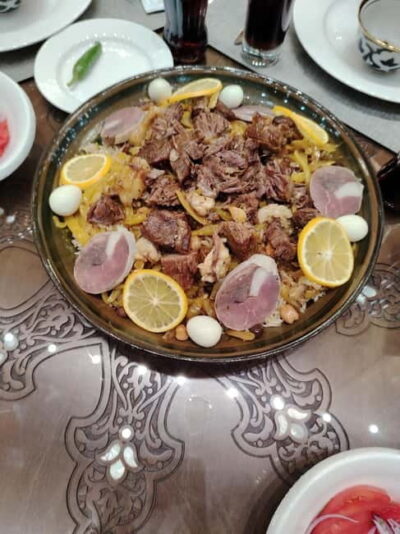
cooking traditional food in Samarkand with local people
Read our review →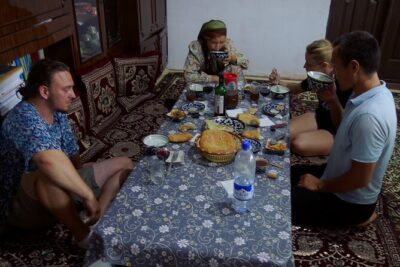
Private Samarkand Cooking Class with Market Tour & Transfers
Read our review →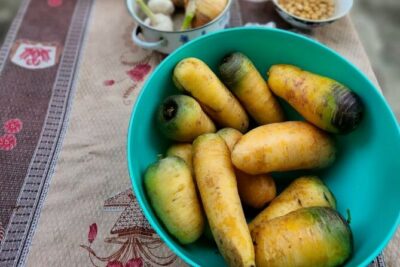
Cooking Class in the Village with Local Family in Samarkand
Read our review →
Browse the lists this tour appears in