
Reviewed · COOKING CLASSES
Cooking Class in the Village with Local Family in Samarkand
Food opens doors in Samarkand. This five-hour private outing begins at a local bazaar, then takes you to a village home to cook Uzbek dishes with a family. I like the market stop for its everyday setting, and I like the home visit because food becomes a natural way to learn about customs, family life, and hospitality. The main consideration is that the cooking can be a slow, gentle process, so you may have less hands-on work than you expect.
Pickup from your hotel, flexible starting time, and a private group make the day easy to fit around your Samarkand sightseeing. The price is $65 per person, which is fair if you value transport, a market visit, a family meal, and several local workshops in one outing. Just confirm which dishes and activities will be included on your date, since the exact food and host can vary.
In This Review
- Key points to know before booking
- From Samarkand hotel pickup to the local bazaar
- Cooking plov in a village family home
- What family interaction adds to the meal
- Konigil paper, oil meal, and pottery along the way
- Is five hours enough for this experience?
- What $65 includes in practical value
- Dietary requests and comfort considerations
- Who will enjoy this village cooking class?
- Should you book the Samarkand family cooking class?
- FAQ
- How long does the cooking class last?
- Where does the experience take place?
- Is hotel pickup offered?
- Is the starting time fixed?
- What Uzbek dishes might I cook?
- Can I request vegetarian food?
- Is this a private activity?
- What is the cancellation policy?
Key points to know before booking
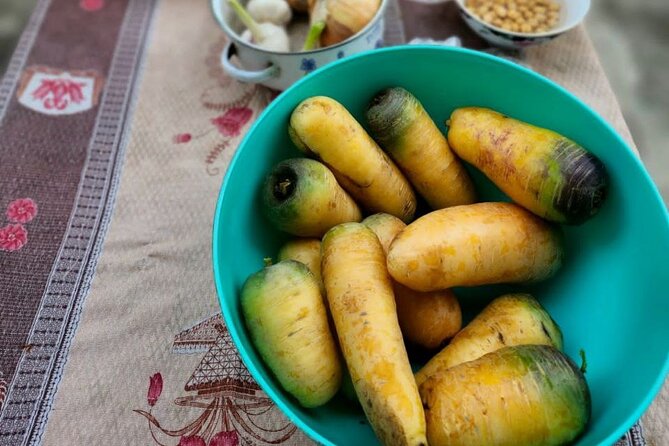
- Start at a working local bazaar: Shop for ingredients, see ordinary market life, and try unfamiliar produce with help from your host.
- Cook in a village family home: The main lesson centers on Uzbek home cooking, with plov, shashlik, samsa, manti, or dolma possible depending on the arrangement.
- Expect a relaxed pace: The cooking is designed as a social experience, not a fast restaurant-style demonstration.
- Meet a host family: Conversation, family routines, customs, chess, and shared food are part of the appeal.
- Add local craft stops: The day can include the Konigil paper factory, an oil meal production site, and a pottery workshop.
- Private and flexible: Only your group participates, pickup is offered, and the start time can be arranged.
From Samarkand hotel pickup to the local bazaar
The day begins with pickup from your hotel in Samarkand. The starting time is flexible, which helps if you have spent the previous day visiting Registan Square, the Bibi-Khanym Mosque, or the Shah-i-Zinda complex and do not want another early alarm.
Your first stop is a local bazaar. This is not simply a place to collect ingredients. It gives you a useful look at how food enters daily Uzbek life, from the buying of produce to the social exchanges between shoppers and vendors.
You can stroll through the stalls, ask about unfamiliar foods, and watch your host choose ingredients for the meal. Some food names may be familiar, such as rice, meat, onions, and vegetables. Others may not be. Having a local guide beside you makes it easier to ask questions without guessing.
A market also gives the cooking class some purpose. Instead of entering a kitchen with ingredients already measured, you see where the meal begins. One account describes shopping for fresh ingredients for pilov, manti, and dolma, while another notes that vegetarian preferences were handled at the market. If you do not eat meat, tell the provider before the outing and repeat your needs at the start.
The bazaar can be lively and crowded, but the supplied details do not promise a formal guided market tour or a set tasting menu. Think of it as an introduction to local shopping, not a full food walk. You may sample new foods, but sampling is not guaranteed.
More Cooking Classes in Samarkand
- Samarkand: Village Tour with Plov Cooking Class & Home Visit
★ 5.0 · 29 reviews - Samarkand: Uzbek Cooking Class in a Village Home
★ 5.0 · 22 reviews - Cooking class in Samarkand with local life experience
★ 5.0 · 19 reviews
Cooking plov in a village family home
After the market, you drive to a village outside the main city area. The setting changes from public commerce to private family life, and that is the heart of the experience.
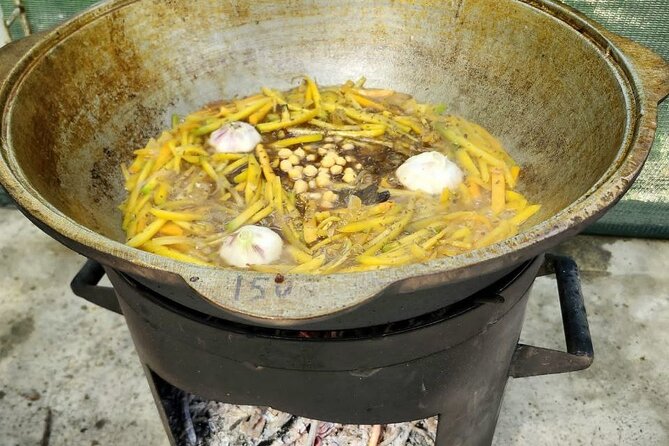
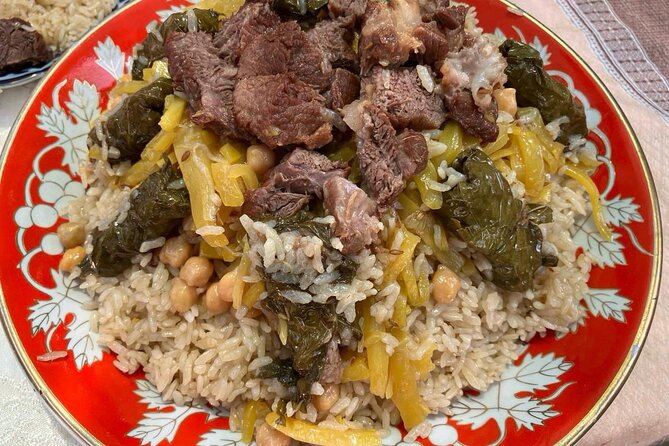
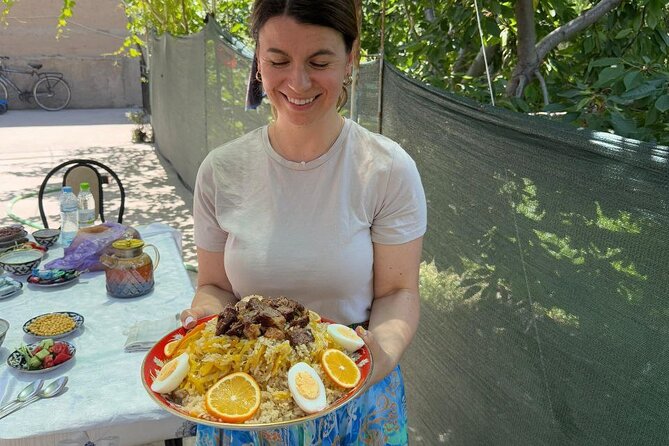
Uzbek cooking is closely tied to sharing. Plov, also called pilov, is the best-known dish on the menu. It is more involved than a basic rice dish, with preparation and timing that reward patience. A cooking session with a local family lets you see how the dish is made at home rather than only ordering it from a restaurant.
Gulrux is praised as a strong teacher of plov, explaining the steps clearly and speaking very good English. If she is your host, you can expect the lesson to include conversation as well as cooking. The exact host is not guaranteed, though, and other named hosts include Goli, Navuq, and Navro’z, with the provider listed as Navruz.
Other possible dishes include shashlik, grilled meat, and samsa, savory pastries often associated with Central Asian cooking. Some sessions have included manti, filled dumplings, and dolma. The food depends on the family, the day, and your dietary requests, so do not assume every dish will appear in one class.
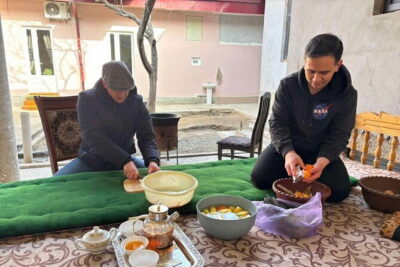
The strongest part of the format is its unhurried rhythm. You are not rushed from one station to another. You might spend time talking, watching a preparation step, helping with ingredients, and waiting while the food cooks.
That pace is also the main limitation. One account wished for more active work, such as gathering firewood or rolling dough. If you want a hands-on pastry workshop with constant tasks, this may feel too quiet. If you want time to talk with a family and understand how a dish fits into home life, the slower pace works in your favor.
What family interaction adds to the meal
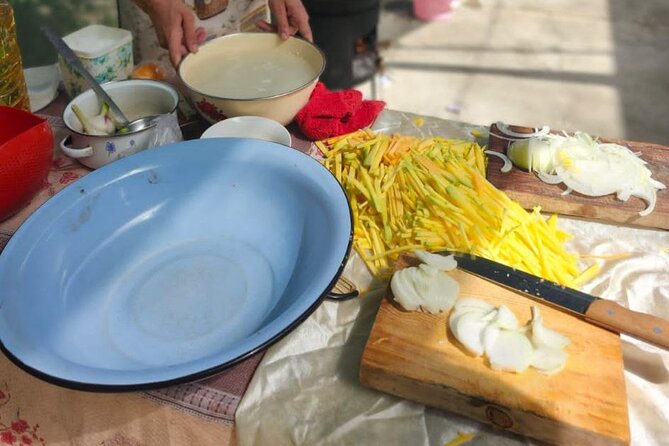
The meal matters, but the family setting gives the cooking its meaning. You can share stories, discuss daily routines, and learn about customs that are difficult to pick up during a standard city tour.
The activity may include time with several family members rather than only the main instructor. That creates a less formal atmosphere. You may chat over the preparation, share laughter, or play a game of chess. These small moments are not scheduled sightseeing stops, but they can become the part you remember most clearly.
The tone is warm and hospitable. Several accounts describe feeling at home with the family, and the host families are repeatedly praised for their kindness. One account calls the day both a food workshop and a human experience, which is a useful way to understand the appeal. You are not only learning a recipe. You are spending time in someone’s home.
Language should be manageable, though it can vary by host. Gulrux is specifically described as speaking very good English. Other hosts may communicate through the guide or with simpler conversation. If detailed discussion matters to you, ask in advance who will lead your session and what language support is available.
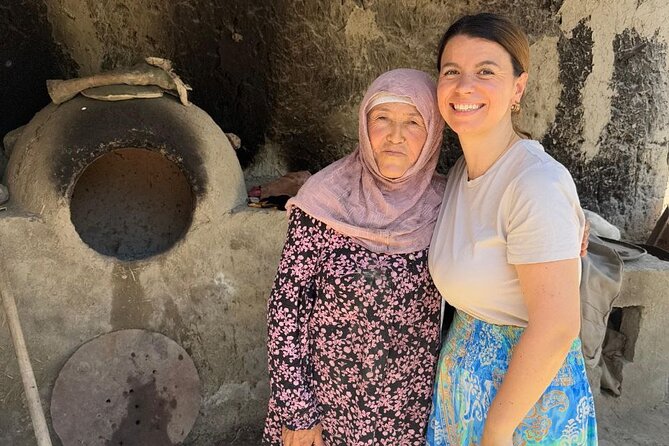
You should also come with an open attitude about home cooking. The day may not look like a polished culinary school. The work area, tools, and lesson style will reflect a real family home. That is part of the charm, but it also means the experience may be less structured than a professional class.
Konigil paper, oil meal, and pottery along the way
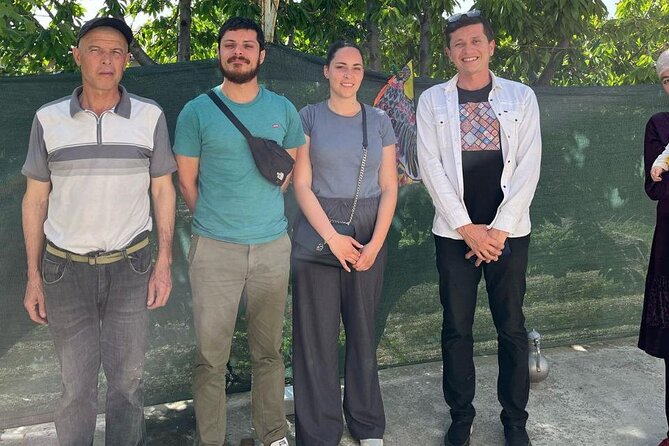
The outing can include more than food. The listed stops are the Konigil paper factory, an oil meal production site, and a pottery workshop.
Konigil is known in Samarkand for traditional paper production. Here, you can see a craft process linked to the city’s long connection with writing, books, and trade. The supplied details do not give a set length for this stop, so treat it as an added cultural visit rather than a full workshop with guaranteed participation.
The oil meal stop offers another look at local production. Oil meal is a byproduct of pressing oil from seeds, and the visit connects agriculture with practical household and commercial work. It is a less familiar stop than a famous monument, which may appeal if you want to see how materials are processed outside the historic center.
A pottery workshop adds a hands-on craft element, though the available information does not promise that you will make a pot yourself. Ask the provider what participation involves on your date. These stops can make the day feel broader, but they also reduce the amount of time available for cooking and family conversation.
That tradeoff is worth considering. If your priority is plov and direct time in the home, confirm that the craft visits will not shorten the cooking session. If you enjoy seeing several forms of village production, the added stops improve the value of the day.
More Workshops in Samarkand
- Private Samarkand Cooking Class with Market Tour & Transfers
★ 5.0 · 14 reviews - Plov Cooking Class at Local Uzbek House
★ 5.0 · 5 reviews - Samarkand Local Family Cooking Class and Siyob Bazaar Tour
★ 5.0 · 5 reviews - Samarkand: Cooking class with local family
★ 5.0 · 3 reviews
Is five hours enough for this experience?
The total duration is about five hours. That is long enough to include hotel pickup, a bazaar visit, the drive to the village, cooking, eating, family conversation, and possible craft stops, but it is not a full-day village excursion.
The schedule is flexible rather than tightly fixed. This helps you start at a convenient time, but it also means the exact order and length of each part may change. You should leave some breathing room after the tour instead of booking a timed museum entry immediately afterward.
The drive to the village is part of the experience, but the precise distance and travel time are not provided. Pickup is offered, and the activity is private, so you avoid gathering a large group at a central meeting point. That is especially useful for families, couples, and small groups with different food preferences.
A private format also makes questions easier. You can ask about ingredients, request a vegetarian meal, or spend more time discussing a cooking step without waiting for a large group. The tradeoff is that the social atmosphere depends on your own group and the host family. If you enjoy meeting many international participants, a shared class may provide more variety.
What $65 includes in practical value
At $65 per person, this is not the cheapest way to eat lunch in Samarkand. You are paying for more than the food, though. The value comes from hotel pickup, private transportation, the market visit, cooking instruction, a family meal, and possible visits to local production sites.
For a small private group, the price is reasonable when you want a guided cultural activity rather than a restaurant meal. The family setting is difficult to reproduce on your own, especially if you do not speak Uzbek or Russian and would not know which village home to visit.
The value is strongest for people who want context. You see ingredients at the bazaar, learn how they become a shared dish, and then connect the meal with family customs. The experience makes more sense as a cultural outing with food at its center.
The value is weaker if you only want technical cooking instruction. The pace may be slow, and hands-on tasks are not guaranteed at every step. You may watch more than you chop, stir, or roll. Ask ahead for a cooking plan if you want to prepare a specific dish.
The high recommendation rate and 4.8 rating from 11 ratings point to a consistently well-liked experience, though the sample is small. I would treat that as a positive sign, not proof that every session will be identical.
Dietary requests and comfort considerations
Vegetarian food has been accommodated, including during the market shopping. You should provide that request before booking and remind the host on the day. Since dishes can include meat, early notice matters.
The activity is near public transportation, though pickup is offered. Service animals are allowed. No other accessibility details are supplied, so ask directly about vehicle access, walking surfaces, kitchen access, and the craft stops if those points affect your plans.
The opening hours are listed as Monday through Sunday, 9:00 AM to 10:00 PM, for the stated operating period from February 8, 2025, through November 25, 2026. The experience itself lasts about five hours, so the wide booking window does not mean you will spend 13 hours on the tour.
Free cancellation is available if you cancel at least 24 hours before the local start time. Cancellations or changes made within 24 hours are not accepted for a refund. Keep that cutoff in mind when arranging trains, flights, or other Samarkand activities.
Who will enjoy this village cooking class?
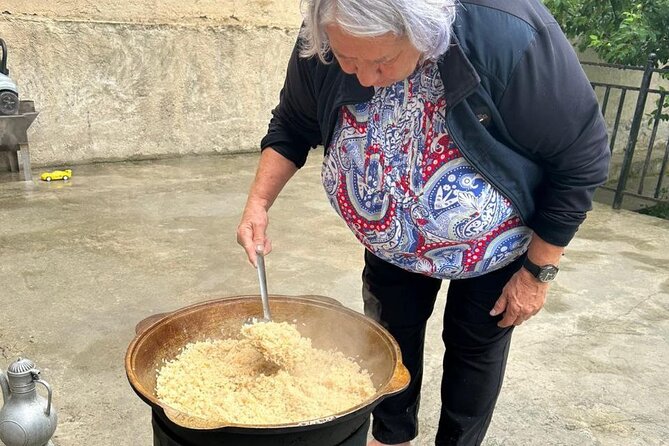
I would choose this for anyone who prefers conversation and local life over a polished tourist production. Couples, families, solo visitors, and small private groups can all fit the format because only your group participates.
It is a good choice if you want:
- A market visit tied to the meal
- A home-based cooking lesson
- Uzbek food and family conversation
- A flexible pickup time
- A private format
- Extra craft and production stops
It may not suit you if you want a formal chef-led class, exact recipe cards, constant hands-on work, or a predictable menu. The experience is shaped by the host family and the day’s arrangements.
I also think it works well near the middle or end of a Samarkand stay. By then, you may have seen the grand monuments and be ready for ordinary life beyond the blue tiles. The bazaar, village drive, home meal, and workshops show a side of the region that a monument tour cannot.
Should you book the Samarkand family cooking class?
I would book it if your idea of a good day includes food, conversation, and a little uncertainty. The strongest features are the private family setting, the market connection, the warm hosts, and the chance to learn plov in a real home. The experience offers a more personal view of Samarkand than a standard restaurant meal.
Before paying, confirm the host, menu, vegetarian arrangements, the amount of hands-on cooking, and whether the Konigil paper factory, oil meal, and pottery stops are included on your date. If you want a relaxed cultural day rather than a strict cooking course, $65 is a sensible price for what is offered.
FAQ
How long does the cooking class last?
The experience lasts approximately five hours in total.
Where does the experience take place?
It begins with pickup from your Samarkand hotel and a visit to a local bazaar. You then drive to a village and cook traditional food with a local family.
Is hotel pickup offered?
Yes. Pickup from your hotel is offered.
Is the starting time fixed?
No. The starting time is described as flexible, subject to arrangement.
What Uzbek dishes might I cook?
Possible dishes include plov, shashlik, samsa, manti, and dolma. The exact menu can vary.
Can I request vegetarian food?
Yes. Vegetarian preferences have been accommodated. Tell the provider about your requirements before the experience.
Is this a private activity?
Yes. Only your group participates in the activity.
What is the cancellation policy?
You can cancel at least 24 hours before the local start time for a full refund. Cancellations or changes made less than 24 hours before the start time are not refunded.
Recently added around Samarkand
- Bird Watching Tours in Samarkand★ 3.6 · 3 reviews
- Penjikent Day Trip From Samarkand★ 5.0 · 3 reviews
- Samarkand: city tour★ 4.7 · 3 reviews
- Samarkand Capital of Amir Timur Private Tour with Transport★ 5.0 · 3 reviews
- Seven Lakes Panjakent: One-Day Adventure from Samarkand★ 5.0 · 3 reviews
- Ancient and Modern tour in Samarkand with Transport★ 5.0 · 3 reviews
- Samarkand: Cooking class with local family★ 5.0 · 3 reviews
- Amankutan Trek One Day Tour From Samarkand★ 3.9 · 3 reviews
Cooking Classes, compared.
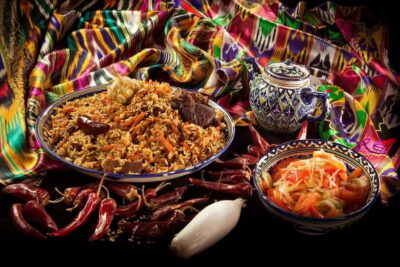
Village Tour with Plov Cooking Class & Home Visit
Read our review →Master Class – Shivit Osh Traditional Food Of Khiva
Read our review →
Cooking class in Samarkand with local life experience
Read our review →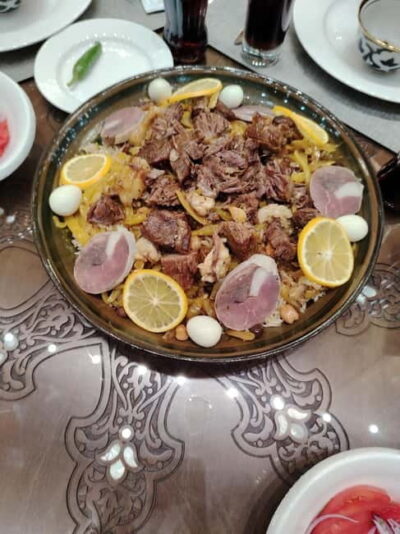
cooking traditional food in Samarkand with local people
Read our review →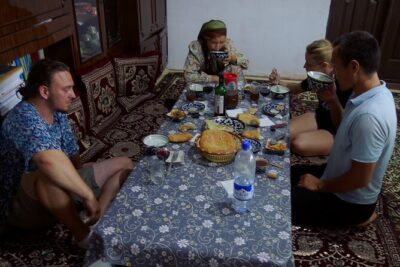
Private Samarkand Cooking Class with Market Tour & Transfers
Read our review →
Browse the lists this tour appears in