
Reviewed · CRAFT MASTERCLASSES
Master Class – Uzbek Bread in Khiva
Bread tastes better when you make it yourself. At Mirzaboshi, also called Tapas Restaurant, you get a short, hands-on introduction to Uzbek non bread, from shaping the dough to decorating it with flower patterns and placing it in a hot clay oven. I like the direct contact with a food that appears on tables all across Uzbekistan, and I like that you eat your own bread with tea and jam at the end. The main drawback is that this is a quick demonstration with participation, not a full baking course from start to finish.
The price is $20 per person, and the activity lasts about 50 minutes. That makes it an easy Khiva add-on, especially if you want a break from monuments. The oven work can be hot, and one participant initially had to ask before being allowed to place the bread inside, so expectations about your exact role may need clarifying at the start.
In This Review
- Key points at a glance
- Why Uzbek bread matters in Khiva
- At Mirzaboshi Restaurant: a short, friendly start
- Shaping the non and adding flower patterns
- The clay oven is the main event
- Tea, jam, and your finished bread
- How much value do you get for $20?
- Who will enjoy this bread class?
- Timing, clothing, and booking flexibility
- What the experience gets right
- The limits you should know before booking
- Should you book the Uzbek bread master class?
- FAQ
- How long does the Uzbek bread master class last?
- How much does the activity cost?
- Where does the class take place?
- What is included in the price?
- Can I cancel the booking?
- What languages are available?
Key points at a glance
- Shape and decorate your own Uzbek non with flower ornaments before baking.
- See a traditional clay tandir oven in use, with protective clothing supplied for the heat.
- Eat the bread you helped prepare with tea, apricot jam, and, at times, mulberry jam or sweet plums.
- Small groups of up to 10 people keep the activity friendly and manageable.
- English and Russian instruction is available, with staff helping you through each step.
- Wheelchair access and free cancellation up to 24 hours ahead make this a flexible short activity.
Why Uzbek bread matters in Khiva
Uzbek non is not just a side dish. It is one of the foods you see and eat repeatedly while traveling through Uzbekistan. Round loaves are made for sharing, and their patterned tops make them easy to recognize. A bread class gives you a better sense of the work behind an everyday food that can otherwise seem simple on a restaurant table.
I like this experience because it puts food culture in your hands. You are not only watching someone prepare bread behind a counter. You shape your own portion, press in the decorative pattern, and take part in the baking process. The result may not look perfect, but that is part of the fun.
The setting also keeps the experience grounded. You do not leave central Khiva for a remote village or spend half a day on transport. You visit a restaurant in the city and take part in a traditional process that is still visible to people passing outside. One participant noted that the oven work can be watched from the street, which gives the activity a public, working-kitchen feel rather than the atmosphere of a polished cooking studio.
More craft masterclasses in Uzbekistan:
- Master Class – Shivit Osh Traditional Food Of Khiva
★ 4.2 · 27 reviews - Tashkent: Cultural Exploration & Pottery Masterclass
★ 5.0 · 24 reviews - Tashkent: Uzbek Culture, Food, Crafts & Pottery Masterclass
★ 5.0 · 24 reviews
At Mirzaboshi Restaurant: a short, friendly start
The class takes place at Mirzaboshi, also known as Tapas Restaurant, in Khiva. The total session is listed at about 50 minutes, with the wider activity range described as 30 to 60 minutes. That is enough time for a useful introduction, but not enough for a long lesson on dough science, fermentation, or several kinds of bread.
Staff begin by helping you understand the preparation process. English and Russian are available, and the instructions are intended to be practical. You do not need to arrive with baking experience. The activity is aimed at ordinary visitors who want to try something with their hands.
The small-group limit of 10 is a real advantage. A class this size gives you a better chance to see the demonstration and ask for help. It also makes the social side work well. Several people enjoyed meeting other visitors during the hour, and that is one reason this can be a good choice for solo visitors as well as couples and friends.
Bring comfortable clothes. The activity involves handling dough and working near a hot oven, so this is not the moment for your most delicate outfit. The supplied description refers to special tanker clothing for protection from the heat. The wording is unusual, but the practical point is clear: expect to put on protective clothing before getting close to the oven.
Shaping the non and adding flower patterns
The hands-on part begins with your own bread. You prepare the dough and work on its shape before adding decorative details. The flower ornaments are more than a photo opportunity. They show how Uzbek bread is often given a patterned surface instead of being left plain.
You are guided through the work by the restaurant team. Their role matters because the activity is short. With staff assistance, you can spend less time wondering what to do and more time actually handling the bread.
Do not expect a detailed professional baking lesson. The class does not promise instruction in starter preparation, rising times, flour varieties, or home-oven adjustments. If you already bake bread often, you may find the technical content light. If you are new to bread making, though, the simple format is welcoming and easy to follow.
The decorative stage is also a good point for photos. Staff have helped participants take pictures and videos while they prepare the bread. You can ask for help if you want a record of the process, though it is wise to keep your phone out of the way while hands and dough are in motion.
The clay oven is the main event
The most memorable part is seeing the bread go into the traditional clay oven. The oven is hot enough that protective clothing is used, and the handling of the bread near the fire may be left partly to the restaurant team. This is sensible. You get the experience without turning a short cooking class into a safety lesson.
The activity description says you will hang the bread in the bread maker after preparing it. Several participants had the chance to put their own bread into the tandir oven, while one person said this required clarification before staff agreed. That tells me you should ask early: Will I be able to place my bread in the oven myself?
The answer may depend on the moment, the heat, and staff judgment. The oven is a working cooking space, not a prop. If staff take over the hottest part, that does not mean the class has failed. It means they are protecting you and keeping the process moving. Still, if handling the bread in the tandir is the main reason you booked, make your interest known at the beginning.
Watching the bread bake also adds a little drama to the session. The oven is open to public view, so people passing in the street may see the process. That connection between restaurant, street, and working oven gives the experience a stronger local feel than a classroom with a sealed electric oven.
More Cooking Classes in Uzbekistan:
- Samarkand: Village Tour with Plov Cooking Class & Home Visit
★ 5.0 · 29 reviews - Samarkand: Uzbek Cooking Class in a Village Home
★ 5.0 · 22 reviews - Cooking class in Samarkand with local life experience
★ 5.0 · 19 reviews - cooking traditional food in Samarkand with local people
★ 4.8 · 17 reviews
Tea, jam, and your finished bread
The final reward is simple and effective: you eat the bread you helped prepare. Fresh bread is served with tea, and the sweet accompaniment may include apricot jam, mulberry jam, or sweet plums. The apricot jam receives especially warm praise, and it gives the bread a pleasant contrast after the smoky, hot baking process.
Tea is included in the $20 price. Both green and black tea have been served, so you can expect a familiar Uzbek-style refreshment rather than a complicated tasting menu. This is not a full meal, and you should not book it as one. Think of it as a snack and a cultural activity combined.
I like the ending because it gives the class a clear purpose. You are not making a piece of dough that disappears into the kitchen. You see the result, taste it, and compare your bread with the work of the people around you. The shared table also gives you time to talk with other participants.
The bread may not be perfectly shaped. That is fine. The value is in understanding the steps and tasting something warm that you helped prepare. The jam and tea turn a functional baking lesson into a pleasant social pause.
How much value do you get for $20?
At $20 per person, this is fairly priced for a short activity that includes equipment, fresh bread, and tea. You are also paying for staff assistance, access to the restaurant’s baking setup, and the chance to take part in an oven process you may not otherwise be allowed to try.
The value is strongest if you care about food, local customs, or hands-on activities. For the price of a standard restaurant meal in some destinations, you get a personal activity and something to eat. It also fills less than an hour, so you can fit it between sightseeing stops in Khiva.
The value is weaker if you expect a serious cooking course. You will not spend hours kneading multiple loaves or leave with a complete set of baking skills. The class is best understood as an introduction and cultural experience.
I would compare it with the cost of other short activities in Khiva, but the supplied information does not give those prices. My advice is simple: book it for the experience of making and tasting non, not because you expect a large meal or advanced instruction.
Who will enjoy this bread class?
I would recommend it most strongly to:
- First-time bread makers, who will appreciate the clear help and simple process.
- Food-focused visitors, who want more context for a familiar Uzbek staple.
- Families and friends, since the shaping and decorating stages are easy to enjoy together.
- Solo visitors, because the group setting encourages conversation.
- Photographers and social-media users, since staff can help with pictures and videos.
- Visitors with a free hour, especially those already sightseeing in Khiva.
It is also suitable for people who do not speak Uzbek. English and Russian instruction is available, and the activity is physical enough that you can understand much of it by watching and following along.
The class may be less satisfying for advanced home bakers. You might want more detail about ingredients, dough texture, oven temperature, and the cultural meaning of different bread designs. Those topics are not part of the stated program.
The activity is listed as wheelchair accessible, which is useful for anyone checking practical access before booking. The information does not describe the exact layout or oven approach, so you may still want to confirm any specific mobility needs in advance.
Timing, clothing, and booking flexibility
The session lasts about 50 minutes, with starting times subject to availability. That makes it easy to place in a busy Khiva day. You can enjoy it before lunch, after visiting sights, or during a quieter part of the afternoon.
Wear comfortable clothes. You may be close to heat, handling dough, and putting on protective clothing. I would avoid anything restrictive or especially vulnerable to flour and food stains.
The group is limited to 10 people. A small group helps with instruction, but the exact amount of hands-on oven time can still depend on how many people attend and how quickly the bread is prepared. If placing bread in the tandir matters to you, ask about it when you arrive.
You can cancel up to 24 hours in advance for a full refund. The reserve-now, pay-later option also helps if your Khiva schedule is still shifting. These policies are useful in Uzbekistan, where sightseeing days can change with transport, weather, or simply the temptation to linger in the old city.
What the experience gets right
The strongest feature is the staff. The people at the restaurant are described as kind, friendly, and willing to answer questions. Murat and his team were specifically praised for making the cooking moment enjoyable, while another participant noted that a woman gave clear instructions.
The staff also helped with photos and videos, which is a small but thoughtful touch. You can focus on the bread instead of trying to balance dough, heat, and a camera at the same time.
The second major strength is the final tasting. Fresh bread with homemade-style jam and tea is a modest treat, but it fits the activity perfectly. You get to sit down, eat what you made, and talk with the people in your group.
The third strength is its size and pace. The activity does not ask you to commit half a day. In roughly an hour, you get a practical look at bread preparation, a chance to decorate your own loaf, time near a traditional oven, and a snack.
The limits you should know before booking
The word master class may set your expectations too high. One participant described it as a fun activity rather than a true class, and I think that is a fair distinction. You are participating, but you are not receiving a long, technical course.
Your access to the tandir may also need clarification. The description suggests that you will hang or place the bread in the oven, and some participants did so. Yet at least one person was initially told this was not possible. Staff eventually allowed the full experience, but you should not assume every part will be handled by you.
The activity is also short. If the group is full, each person may have limited time at the oven. The bread-making and decorating are the dependable parts. The most heat-sensitive oven work may be shared or managed by the staff.
These are not deal-breakers for me. They simply point to the right reason to book: a friendly, hands-on taste of Uzbek food culture, not a formal culinary qualification.
Should you book the Uzbek bread master class?
Book it if you want a low-cost, local food experience that fits neatly into a Khiva sightseeing day. The combination of dough shaping, flower decoration, clay-oven baking, fresh bread, jam, and tea gives you more than a restaurant meal and costs $20.
I would especially choose it if you are new to Uzbek cuisine, traveling with friends, or looking for an activity that feels social rather than purely sightseeing-based. Ask at the start how much oven work you can do, and arrive in comfortable clothes with realistic expectations.
Skip it if you want advanced baking instruction, a long meal, or guaranteed uninterrupted control of the tandir. For everyone else, this is a cheerful hour with friendly staff and a tasty payoff.
FAQ
How long does the Uzbek bread master class last?
The activity lasts about 50 minutes. The program also describes the duration as roughly 30 to 60 minutes, depending on the session.
How much does the activity cost?
The price is $20 per person.
Where does the class take place?
The class takes place at Mirzaboshi, also called Tapas Restaurant, in Khiva in Uzbekistan’s Khorazm Region.
What is included in the price?
The price includes use of the baking equipment, freshly baked bread, and tea.
Can I cancel the booking?
Yes. You can cancel up to 24 hours in advance for a full refund.
What languages are available?
Instruction is available in English and Russian.
More Workshops in Uzbekistan
- Private Samarkand Cooking Class with Market Tour & Transfers
★ 5.0 · 14 reviews - Cooking Class in the Village with Local Family in Samarkand
★ 5.0 · 11 reviews - Plov and Samsa Cooking Class in Tashkent
★ 4.3 · 6 reviews - Plov Cooking Class at Local Uzbek House
★ 5.0 · 5 reviews
Recently added around Uzbekistan
- Uzbekistan 8 Days Private Guided Tour★ 4.6 · 3 reviews
- Tashkent: 3-Day Horseback Riding Tour in Chimgan Mountains★ 4.4 · 3 reviews
- Samarkand: Uloq-Kopkari (Buzkashi) Game Day Tour★ 5.0 · 3 reviews
- Bird Watching Tours in Samarkand★ 3.6 · 3 reviews
- Bukhara: City Highlights Guided Tour with Pickup★ 5.0 · 3 reviews
- Tashkent Mountain Tour Amirsoy with Transport★ 3.5 · 3 reviews
- 9 Days Private Guided Tour to Uzbekistan★ 5.0 · 3 reviews
- Private Tashkent City Tour★ 5.0 · 3 reviews
Craft Masterclasses, compared.
Master Class – Shivit Osh Traditional Food Of Khiva
Read our review →
Uzbek Culture, Food, Crafts & Pottery Masterclass
Read our review →
Legends and Crafts: Suzani Masterclass & Cultural Immersion
Read our review →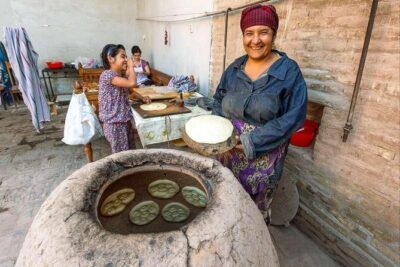
Browse the lists this tour appears in