
Reviewed · CRAFT MASTERCLASSES
Legends and Crafts: Suzani Masterclass & Cultural Immersion
Your souvenir starts with a needle. This three-hour experience pairs a guided visit to Navruz Park with a hands-on Suzani embroidery class, giving you something more meaningful than another tile or magnet. I especially like the chance to learn directly from artisans and the generous cultural explanation from guides such as Yusuf and Yulia. The main drawback is that the embroidery project is small and beginner-level, so anyone expecting to complete a large wall hanging should adjust expectations.
This is a strong choice for your first or second day in Uzbekistan. You get a useful introduction to textiles, dolls, jewelry, metalwork, food, and Silk Road trade, then sit down to make something yourself. The included Uzbek meal and hotel pickup add real value, though you should confirm the pickup arrangement and starting time after booking.
In This Review
- Key points to know before booking
- Why Suzani is a smart way to meet Uzbekistan
- Starting in Tashkent Province at Navruz Park
- Old craft, modern pressure
- Sitting down for the Suzani masterclass
- The Uzbek meal: plov, bread, and stories
- The guides make the difference
- What the $90 price includes
- Timing, pickup, and small practical matters
- Who will enjoy this experience most
- Should you book Legends and Crafts?
- FAQ
- Where does the experience take place?
- How long does the activity last?
- Is hotel pickup included?
- What time does the experience start?
- What languages are available?
- Is the experience private?
- What will I make during the Suzani class?
- Do I need embroidery experience?
- What food is included?
- Can I cancel for a refund?
Key points to know before booking
- Make your own Suzani: Learn basic stitches and create a small embroidered piece to take home.
- Navruz Park sets the context: The guided hour connects Uzbek crafts with legends, customs, and Silk Road trade.
- Yusuf and Yulia add warmth: Their English-language guiding has been praised for clear explanations, patience, humor, and practical advice.
- Plov is part of the lesson: The meal includes non bread, salads, green tea, water, and a traditional rice dish with lamb, carrots, and raisins.
- Private format helps: You can ask detailed questions and may receive flexible help with food choices or the pace of the visit.
- Good value at $90: Hotel pickup, guiding, craft materials, instruction, a souvenir, and a full meal are included.
Why Suzani is a smart way to meet Uzbekistan
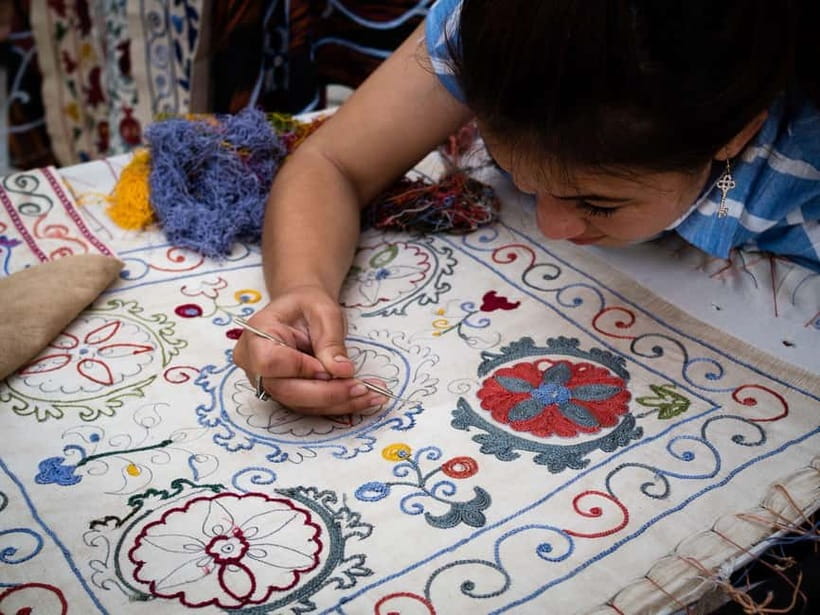
Uzbekistan is famous for grand Islamic architecture, markets, and Silk Road cities, but handmade textiles reveal a more personal side of the country. Suzani embroidery was traditionally used for household decoration and important life events. Its flowers, circles, vines, and other motifs often carry protective or hopeful meanings.
Here, you do not only look at finished work behind glass. You handle the fabric, learn a few basic stitches, and feel how much time even a modest pattern requires. I like this format because it turns craft from a shopping category into a human skill.
The class is not designed to make you an expert embroiderer in one sitting. It is a short introduction, usually lasting about one to one and a half hours. You leave with a small item and a better eye for the labor behind the larger pieces sold in Uzbek craft shops.
That can help you shop more wisely during the rest of your trip. You will have a clearer sense of stitch quality, design detail, and why handmade textiles cost more than factory-made souvenirs.
More craft masterclasses in Tashkent:
- Tashkent: Cultural Exploration & Pottery Masterclass
★ 5.0 · 24 reviews - Tashkent: Uzbek Culture, Food, Crafts & Pottery Masterclass
★ 5.0 · 24 reviews - Master Class – Uzbek Bread in Khiva
★ 4.4 · 125 reviews
Starting in Tashkent Province at Navruz Park
The experience begins with pickup in Tashkent and a guided cultural visit at Navruz Park. The cultural portion lasts about one hour, so expect an introduction rather than a full-day museum program.
The park is used as a setting for stories about Uzbek customs and traditional work. Your guide explains how Uzbekistan became an important link between Asia and Europe along the Silk Road, and how that trade carried textiles, ceramics, metal goods, and design ideas across long distances.
This context matters. Silk Road trade was not simply about merchants moving from one market to another. Valuable cloth and decorated objects also carried status, beliefs, and ideas about good fortune. The explanation helps you see why Uzbek craft traditions often combine useful objects with symbolic patterns.
You may look at several types of textile work, including ikat and embroidery. Ikat is known for its blurred, almost painted patterns, while Suzani depends on stitched motifs and strong decorative forms. Seeing different methods together gives you a helpful basis for comparing materials and workmanship later in your trip.
The visit also includes Uzbek dolls. These are not generic decorative figures. Different dolls represent regions and connect with local legends, customs, and superstitions. I find this particularly useful for anyone interested in how a country expresses regional identity through small household objects.
The section on jewelry and metalwork adds another layer. Traditional designs may be linked with protection and luck, so the guide does more than identify an item by its material. You learn why a shape or ornament might matter to the person wearing it.
Old craft, modern pressure
One thoughtful part of the cultural discussion looks at globalization. Uzbek artisans now work between inherited methods and modern tastes. They must keep older techniques alive while responding to visitors, changing markets, and contemporary design preferences.
That tension is worth understanding before you shop. A modern color combination or simplified pattern does not automatically make a piece less Uzbek. At the same time, not every item sold as traditional will have the same level of handmade work.
You can ask your guide about materials, production methods, and regional styles. The private format makes those questions easier than they would be in a large group. Yusuf has been praised for explaining both older customs and present-day life in clear English, with plenty of humor along the way.
The guide’s role is important here. Craft demonstrations can become a parade of objects if nobody explains the beliefs and choices behind them. This experience works best when you treat the first hour as a conversation, not just a sightseeing stop.
Sitting down for the Suzani masterclass
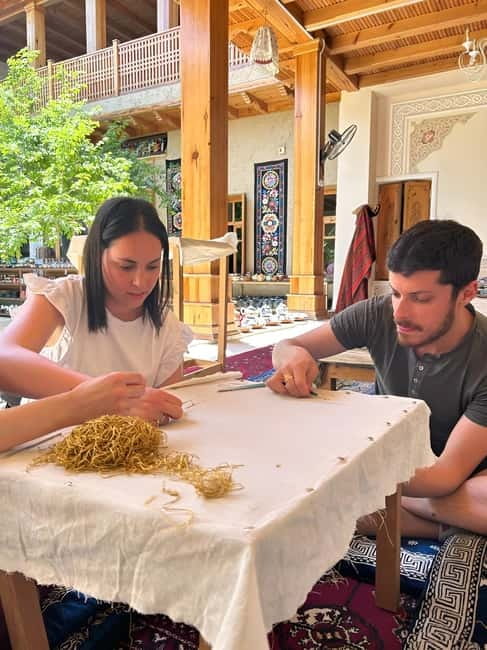
After the cultural visit, you go to the workshop for the practical part of the day. This is the heart of the experience, and it lasts roughly one to one and a half hours.
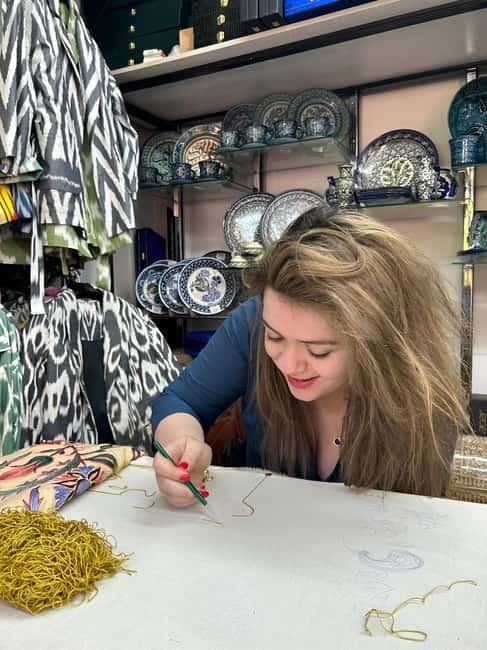
An artisan provides the materials and shows you basic stitches and designs. You work on a small embroidered project rather than attempting a full-size Suzani. That scale is sensible. Large embroidered textiles require patience and many hours, while a small piece lets you learn the basic movements without turning the class into a test of endurance.
You do not need previous sewing experience. Several people have found the craft challenging, which is exactly the point. Even if your lines are uneven, you gain an immediate respect for the patience required to produce the finished work displayed in shops.
The class also explains the protective meaning associated with Suzani designs. Some patterns are traditionally linked with blessings or protection from harmful forces. You should understand these meanings as part of the cultural tradition, not as a promise that the finished object has a fixed spiritual power.
I like the take-home element. Your finished embroidery will probably be modest, but it records your time in Uzbekistan in a way a purchased souvenir cannot. It also gives you a story to tell when someone asks why the stitching is not perfectly straight.
Guides Yusuf and Yulia have been praised for being patient and encouraging during this portion. That matters because a rushed instructor can make a craft lesson frustrating. Here, the tone appears to be friendly and relaxed, with room for questions and mistakes.
A few more Tashkent trips worth weighing up
- Best of Tashkent Mountains: Amirsoy, Chimgan & Charvak Trip
★ 4.8 · 567 reviews - Samarkand One Day Tour – Departure From Tashkent
★ 5.0 · 313 reviews - Samarkand One-Day Tour Departure from Tashkent
★ 4.7 · 171 reviews - Tashkent: Amirsoy Resort, Chimgan Mountain and Charvak Lake
★ 4.8 · 170 reviews
The Uzbek meal: plov, bread, and stories
The final part takes place at a local restaurant or garden setting and lasts about 45 minutes to an hour. The meal is not an afterthought. Food is used as another way to explain Uzbek customs and regional traditions.
The included menu features freshly baked non, the round Uzbek bread found on tables across the country. You also receive shakarob, a tomato and herb salad, plus the Kuzchi Kayfiyat Salad. The main dish is a traditional version of palov, made with rice, lamb, carrots, and raisins.
Green tea and water are included without limit. Additional side dishes can be ordered for an extra charge, so ask about the cost before adding anything beyond the included meal.
Plov is filling, especially if you have already eaten it several times during a longer Uzbekistan trip. One useful sign of flexibility came when a guide helped a participant choose a different restaurant after too much previous plov. That suggests it is worth explaining your preferences rather than assuming the fixed menu is your only option.
The food portion is best viewed as a cultural meal rather than a formal cooking class. You will taste traditional dishes and hear the stories attached to them, but the provided details do not promise a detailed kitchen demonstration.
The guides make the difference
The strongest praise for this experience centers on its guiding. Yusuf is repeatedly described as warm, funny, patient, and easy to understand. Yulia is also praised for her English and her enthusiasm for Uzbekistan.
That combination changes the feel of a short tour. A three-hour activity can seem hurried if the guide only moves you from place to place. Here, the value comes from the explanations between stops, the willingness to answer many questions, and the practical suggestions offered for the rest of your visit.
Some participants received tips about museums, textiles, pottery, food, and prices. That makes this experience especially useful early in your stay. You can use what you learn when comparing craft shops and deciding which souvenirs deserve your money.
The tour is private, which is another advantage. You are not trying to hear a guide over a large group, and you can spend more or less time on the subjects that interest you. A textile enthusiast can ask about embroidery and ikat, while someone focused on food can steer the conversation toward regional dishes and plov.
The listed languages are English, Polish, Russian, and Uzbek. Confirm your preferred language when booking.
What the $90 price includes
At $90 per person, the experience is not the cheapest way to spend three hours in Tashkent. It is also more than a basic park visit or restaurant meal. The price needs to be judged as a package.
You receive:
- Hotel pickup from Tashkent
- A private guided cultural visit
- Explanations of Uzbek crafts and Silk Road influence
- Workshop materials
- Artisan instruction
- A Suzani souvenir
- A traditional meal
- Non, salads, palov, green tea, and water
If you paid separately for private guiding, transport, a craft lesson, materials, and a full meal, the total could easily approach the tour price. The strongest value comes from the combination. You are not paying only for lunch or only for a souvenir.
The price is most worthwhile if you appreciate personal instruction and cultural context. It is less compelling if you want a long, advanced embroidery course or prefer to spend your time visiting major monuments.
A private format also suits couples, families, and small groups who would rather ask questions freely. Solo visitors should note that the per-person price may feel higher, but the included meal, transfer, and lesson still make it a practical half-day activity.
Timing, pickup, and small practical matters
The total duration is listed as three to three and a half hours. The cultural exploration takes about one hour, the masterclass one to one and a half hours, and the meal about 45 minutes to one hour.
Starting times depend on availability. Hotel pickup is offered from Tashkent, and the driver is expected to hold a sign with your last name. You are asked to wait in the hotel lobby five minutes before pickup and send a WhatsApp message to the local guide after booking.
Because the details describe pickup as both included and optional, confirm the exact arrangement with the provider. This is especially sensible if your hotel is outside the usual pickup area or if you prefer to meet at a set location.
Wear something comfortable for sitting and working with thread. No special equipment is listed as necessary because materials and guidance are included. If you have food preferences or have already eaten a great deal of palov, mention that ahead of time.
Cancellation is free up to 24 hours before the activity for a full refund. You can also reserve now and pay later, which helps if your Tashkent schedule is still changing.
Who will enjoy this experience most
I would recommend this activity to anyone who wants a gentle introduction to Uzbekistan beyond famous buildings. It is especially good for:
- First-time visitors who want cultural context at the start of a trip
- People who enjoy textiles, design, jewelry, or handmade goods
- Couples and families looking for a shared activity
- Solo visitors who appreciate private guiding
- Anyone who wants a useful, personal souvenir
- Visitors who enjoy food as part of cultural learning
It may not suit you if you dislike crafts, have very limited time in Tashkent, or want an advanced course with a large finished piece. The class is an introduction, not a professional workshop.
The activity also works well near the end of a trip. One participant found it a pleasant closing experience, since the embroidery and meal offered a calm way to reflect on the country after visiting its major sights.
Should you book Legends and Crafts?
Book it if you want to understand how Uzbek craft connects with family life, belief, trade, and modern commerce. The best parts are the patient instruction, the chance to make a Suzani yourself, and the warm guiding style associated with Yusuf and Yulia.
I would choose it for the first or second day of a Tashkent visit if you plan to shop for textiles or ceramics later. You will know more about quality, prices, regional styles, and the stories behind the objects.
Skip it if your priority is architecture, monuments, or a longer specialist sewing course. For most visitors who want a personal cultural activity with transport, food, and a take-home object, the $90 price is fair. The embroidery may not be perfect, but that is part of its charm.
FAQ
Where does the experience take place?
The activity takes place in Tashkent Province, beginning with pickup in Tashkent. The program includes Navruz Park, a workshop location, and a local restaurant or garden setting.
How long does the activity last?
The total duration is about three to three and a half hours.
Is hotel pickup included?
Hotel pickup from Tashkent is included in the activity information, although pickup is also described as optional. Confirm the exact pickup arrangement with the local guide after booking.
What time does the experience start?
Starting times depend on availability. You should check the available times when booking.
What languages are available?
The tour can be provided in English, Polish, Russian, or Uzbek.
Is the experience private?
Yes. It is offered as a private group experience.
What will I make during the Suzani class?
You will create a small embroidered piece while learning basic stitches and designs from artisans. The finished item is yours to take home.
Do I need embroidery experience?
No previous experience is stated as a requirement. The session teaches basic stitches and includes materials and guidance.
What food is included?
The meal includes non bread, shakarob, Kuzchi Kayfiyat Salad, a traditional palov with rice, lamb, carrots, and raisins, plus unlimited green tea and water.
Can I cancel for a refund?
Yes. You can cancel up to 24 hours in advance for a full refund. Reserve-now, pay-later booking is also available.
Recently added around Tashkent
- Tashkent: 3-Day Horseback Riding Tour in Chimgan Mountains★ 4.4 · 3 reviews
- Samarkand: Uloq-Kopkari (Buzkashi) Game Day Tour★ 5.0 · 3 reviews
- Tashkent Mountain Tour Amirsoy with Transport★ 3.5 · 3 reviews
- Private Tashkent City Tour★ 5.0 · 3 reviews
- Amirsoy & Chimgan mountain tour from Tashkent★ 5.0 · 3 reviews
- Transfer Tashkent Airport / Railway Station – Hotel★ 3.5 · 3 reviews
- Heliocomplex “Institute of the Sun” – Remnants of USSR★ 5.0 · 3 reviews
- Half-day excursion around Tashkent★ 5.0 · 3 reviews
Craft Masterclasses, compared.
Master Class – Shivit Osh Traditional Food Of Khiva
Read our review →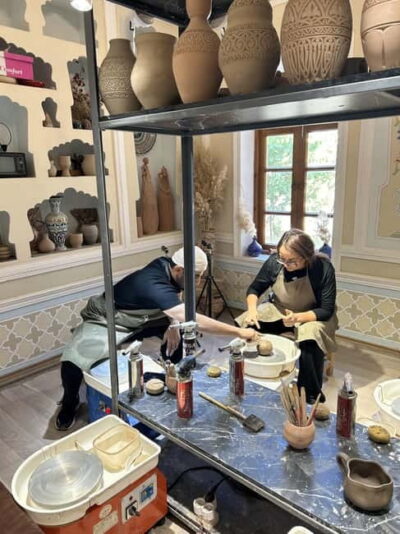
Uzbek Culture, Food, Crafts & Pottery Masterclass
Read our review →
Browse the lists this tour appears in