
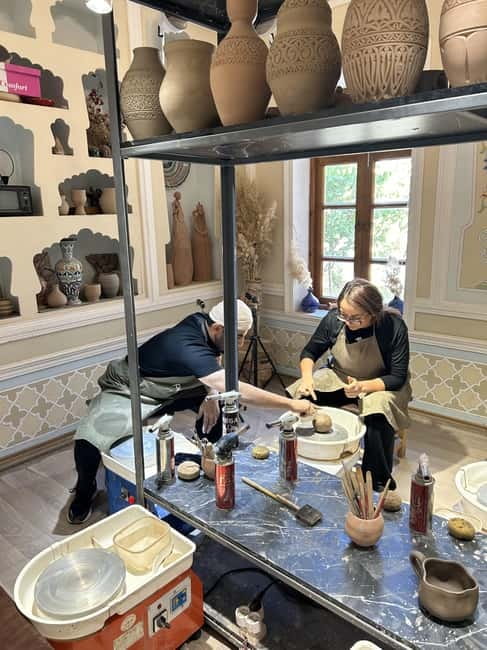
Reviewed · CRAFT MASTERCLASSES
Tashkent: Uzbek Culture, Food, Crafts & Pottery Masterclass
Make something you can take home. This private Tashkent experience brings together Silk Road culture, artisan workshops, pottery, and a generous Uzbek meal in three and a half hours. I like the hands-on pottery class, where master potters guide you without taking away your creative control, and I like the local shopping help, especially if bargaining is not your strong suit. The main consideration is that your pottery is not ready immediately, and shipping costs extra if you cannot return to collect it.
The $85 price is fair for a private tour with Tashkent pickup, transportation to the workshop, a cultural guide, pottery materials, instruction, and lunch. Guides such as Yusuf, Julia, and Sandor are praised for making the outing feel like time with a local friend rather than a formal lecture. Just note that the workshop is not suitable for wheelchair users or people with back problems, and hotel drop-off is an extra-cost service.
In This Review
- Key points at a glance
- Why this is a smart first-day activity in Tashkent
- The one-hour craft walk through Tashkent Province
- What makes the pottery class worth your time
- Lunch with non, salads, and palov
- The guide makes the difference
- Is $85 good value?
- Timing, pickup, and practical planning
- Who should book this experience?
- Final call: book it or skip it?
- FAQ
- Where does the experience begin?
- How long does the activity last?
- What does the cultural tour cover?
- Is the pottery class suitable for beginners?
- Can I choose what pottery piece to make?
- Can I take my pottery home the same day?
- Is pottery shipping available?
- What food is included?
- Is hotel drop-off included?
- Which languages are available?
Key points at a glance
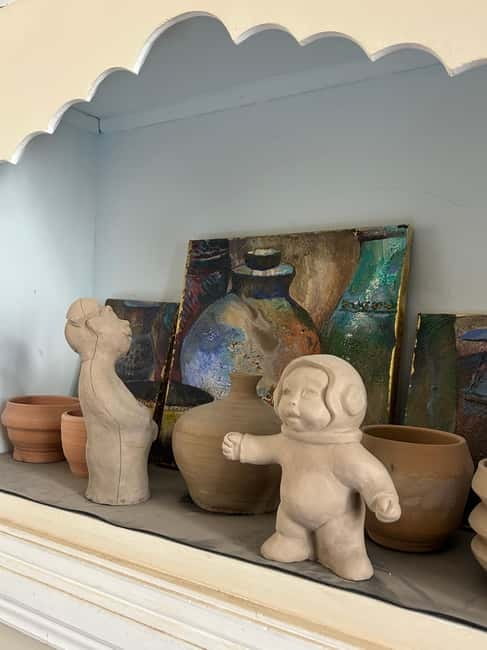
- A real pottery session: You prepare clay, shape a piece, smooth it, and add decoration with help from a master artisan.
- Silk Road culture made practical: The tour connects textiles, ceramics, silk, dolls, wedding customs, and household traditions to Uzbekistan’s role in regional trade.
- Bargaining support included: Your guide can help negotiate prices when you shop for crafts and souvenirs.
- Palov completes the afternoon: Fresh non bread, salads, green tea, and traditional rice with lamb, carrots, and raisins make up the included meal.
- Private and multilingual: The tour is for a private group, with guiding available in English, Russian, Polish, or Uzbek.
- Plan for the finished piece: Pottery needs drying and kiln firing, taking up to a week or possibly two weeks, with shipping available for an added fee.
Why this is a smart first-day activity in Tashkent
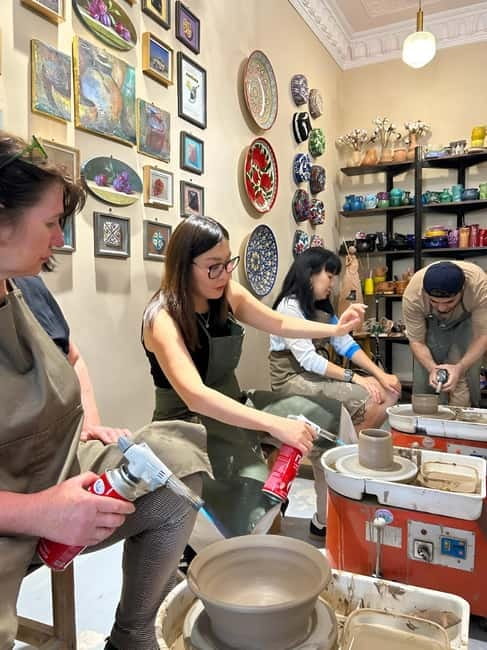
I would consider booking this early in a Uzbekistan trip. It gives you useful cultural background before you begin exploring markets, monuments, and other cities, while also giving you practical advice from people who know local customs.
The cultural portion covers more than a quick explanation of the Silk Road. You learn why Uzbekistan became a meeting point for textiles, ceramics, silk production, and other crafts. The discussion also includes traditional dolls, differences between tribal crafts, local superstitions, household traditions, wedding customs, Suzani embroidery, and ceramics.
That range matters. A textile is not just a pretty souvenir when you understand its place in family life or regional identity. A ceramic pattern becomes easier to appreciate when you know that Uzbek pottery developed across different areas and traditions rather than following one single national style.
The personal approach is one of the strongest parts. Yusuf is often singled out for his warmth and easy conversation, while Julia brings an unusual viewpoint through her own experience of joining an Uzbek family as a foreigner. Sandor is described as deeply passionate about his country. The guide lineup may vary, but the useful thing is clear: you get local interpretation, not just dates and labels.
More Food Tours in Tashkent
- Tashkent Vegan Street Food Tour
★ 5.0 · 22 reviews - Tashkent Walking & Food Tour: Highlights + Local Flavors
★ 5.0 · 18 reviews - With John Private Tashkent city & Food tour
★ 5.0 · 13 reviews
The one-hour craft walk through Tashkent Province
The tour begins with pickup in Tashkent and transportation to the workshop area. The exact craft stops can vary, but the experience includes a guided look at local artisan work and a chance to shop with help from your guide.
You might see textiles, silk-related work, handmade dolls in regional dress, ceramics, and other craft items. The doll-making detail is especially appealing because it brings regional clothing into view in a small, easy-to-understand form. Suzani embroidery also receives attention, giving you context for one of Uzbekistan’s best-known decorative arts.
This is not only a shopping stop. Your guide explains how the old Silk Road carried materials, techniques, and ideas across Central Asia. The value is in seeing how trade changed daily life, not just hearing that Tashkent sat along an ancient route.
If you want souvenirs, this is also a useful place to buy. Bargaining is part of shopping in many Uzbek craft settings, but visitors can feel unsure about what is fair. Your guide can handle or support the negotiation, helping you avoid paying more simply because you are unfamiliar with local prices.
I would still set a budget before you arrive. The tour includes shopping assistance, not free souvenirs. The range of crafts can make it easy to spend beyond the original $85, particularly if you are drawn to embroidered textiles or pottery.
What makes the pottery class worth your time
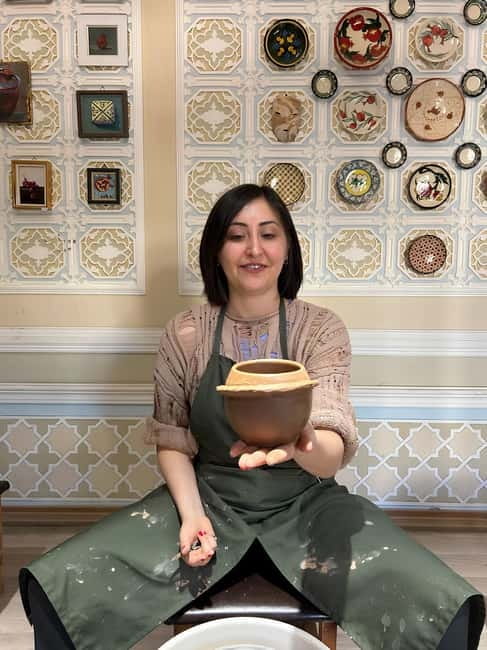
The pottery masterclass lasts about an hour to an hour and a half, and this is the part that turns the tour from cultural sightseeing into a personal activity. You do not simply watch an artisan work. You take part in the process.
The session includes:
- An introduction to Uzbek pottery
- Clay preparation
- Choosing the type of piece you want to make
- Wheel throwing or molding
- Initial drying
- Shaving and smoothing
- Decoration and patterns
Beginners should feel comfortable here. The class is designed around guidance from master artisans, and the strongest praise goes to the way they help without taking over. That balance is important. You get enough assistance to create a usable piece, but you still make decisions about its shape and decoration.
I particularly like that the process includes smoothing and decorating rather than ending at the wheel. Even a slightly wobbly first pot becomes more personal when you choose its pattern and finish. You may surprise yourself with what you can make, but you should not expect factory-level perfection. The charm is in producing something by hand.
The physical side deserves a little thought. Working with clay can mean leaning forward, reaching, and sitting or standing around a wheel. Because the activity is not recommended for people with back problems and is not suitable for wheelchair users, ask about the setup before booking if mobility is a concern.
Your piece will not be ready at the end of the afternoon. It must dry and then be fired in a kiln. The supplied timing says this can take up to a week, while another note indicates around two weeks before collection, so allow for roughly one to two weeks. If your schedule takes you onward, ask about international shipping and its extra fee before you commit to a large or fragile piece.
Lunch with non, salads, and palov
The meal takes about 45 minutes to an hour and is an important part of the cultural experience. Uzbek food is not an afterthought here. It gives you a chance to sit down, slow the pace, and taste a dish that carries its own social meaning.
The included meal features fresh non, the round Uzbek bread commonly served with meals. You also receive Shakarob, a tomato and herb salad, plus a Kuzchi Kayfiyat salad. The main dish is a traditional form of palov, made with rice, lamb, carrots, and raisins.
Unlimited green tea and water are included. Additional side dishes can be ordered for an extra charge.
The meal may be served at a local restaurant, and one account describes lunch in a beautiful garden setting. Another refers to the plov center, so the exact venue may depend on the day and arrangement. Either way, palov gives you a fitting finish: it is hearty, communal, and very different from grabbing a quick snack between sightseeing stops.
I would arrive hungry. Rice, lamb, carrots, bread, and salads make this a substantial meal, not a tasting plate. If you do not eat meat, the information provided does not confirm a vegetarian main course, so ask ahead rather than assume substitutions are available.
More craft masterclasses in Tashkent:
- Tashkent: Cultural Exploration & Pottery Masterclass
★ 5.0 · 24 reviews - Legends and Crafts: Suzani Masterclass & Cultural Immersion
★ 5.0 · 11 reviews - Master Class – Uzbek Bread in Khiva
★ 4.4 · 125 reviews - Master Class – Shivit Osh Traditional Food Of Khiva
★ 4.2 · 27 reviews
The guide makes the difference
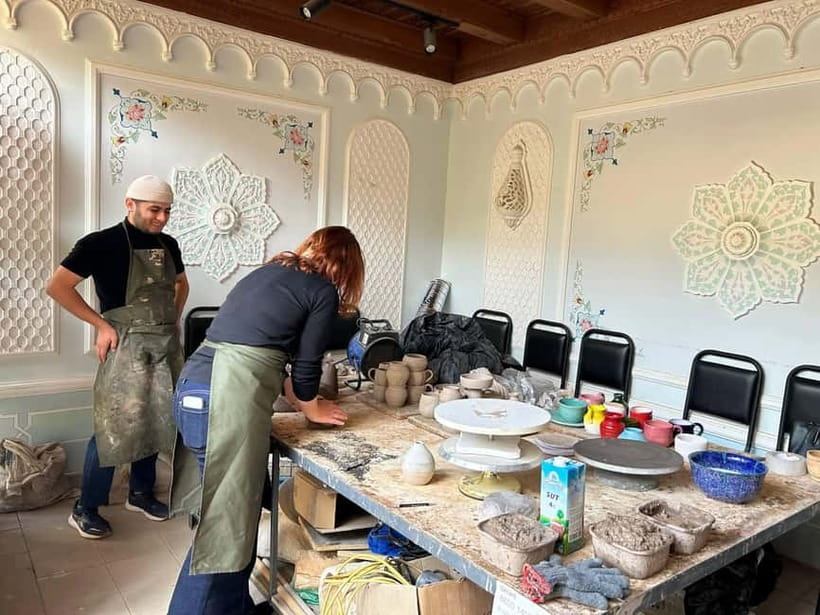
The schedule is worthwhile on its own, but the guide shapes how much you get from it. The best accounts describe Yusuf as friendly, open, and easy to talk with. Julia is praised for her insight into modern Uzbek life and for explaining what it is like to join an Uzbek family as an outsider.
That kind of conversation can be more useful than a standard city tour. You can ask about customs, beliefs, weddings, family life, food, and the meaning behind crafts. The guides also share tips for the rest of your time in Tashkent, which is especially helpful on a first visit.
The private-group format helps. You are not trying to hear a guide over a large crowd or waiting for a dozen people to finish shopping. A private group also gives you more room to ask questions and spend extra time on the parts you care about, such as ceramics or textiles.
The guide may be joined by another team member, such as Julia or Sandor. That can add different points of view, but the exact combination is not guaranteed. If a particular guide is important to you, confirm availability when booking.
Is $85 good value?
At $85 per person, this is not the cheapest way to spend an afternoon in Tashkent. You could eat palov for less, visit craft shops independently, and find a casual pottery class at another price. The comparison changes when you count what is bundled together.
You receive Tashkent pickup, transportation to the workshop, a private cultural tour, local craft explanations, shopping support, pottery instruction and materials, and a traditional meal. The guide also saves you the work of arranging several separate stops and interpreting what you see.
I see the best value for people who want a compact introduction to Uzbekistan. You are paying for access, explanation, transport, and a personal activity, not just admission to a site. The pottery piece adds a physical reminder of the day, though shipping or later collection must be planned separately.
The price is less attractive if you mainly want major monuments or a long historical tour. This is about crafts, daily culture, food, and conversation. It does not replace a full city tour of Tashkent, and the one-hour cultural section cannot cover every aspect of Uzbek history.
The private format helps justify the cost. You can ask questions freely, get individual help at the wheel, and receive direct support while shopping. For couples, families, or small groups who value a relaxed pace, that is a meaningful advantage.
Timing, pickup, and practical planning
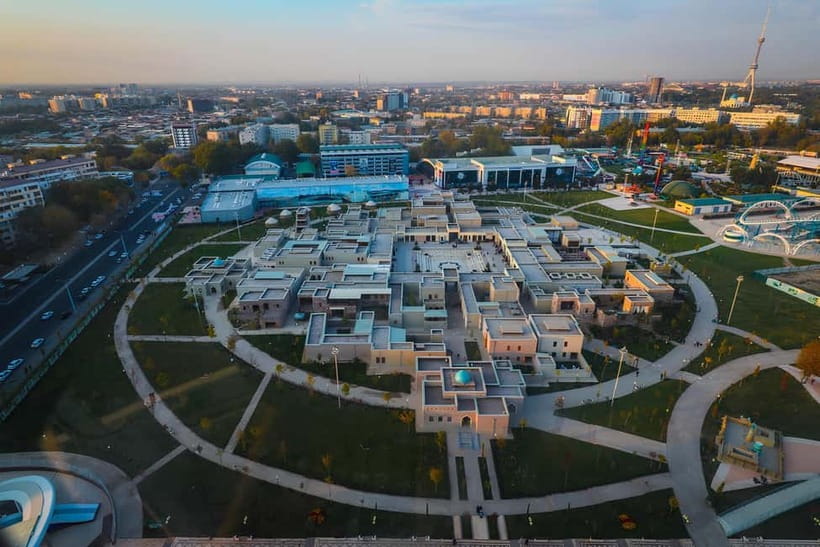
The full activity lasts about three and a half hours. A typical flow is one hour of cultural exploration, 75 minutes of pottery, and roughly one hour for the meal, although the published meal description also gives 45 minutes.
Pickup is in Tashkent, and transportation to the workshop is included. Hotel drop-off is not included, but a return can be arranged for an additional fee. If you want to continue sightseeing afterward, check where the meal ends and allow time for your own onward plans.
The activity offers a separate entrance, so you should not need to wait in a general queue at the workshop. Starting times vary, so check availability for your date.
Wear comfortable shoes. Bring a camera if you want photos of the craft work and your own pottery. Alcohol and drugs are not allowed, which is standard but worth noting because the meal includes a social tea service rather than alcoholic drinks.
Cancellation is flexible up to 24 hours before the activity for a full refund, and you can reserve now and pay later. These terms are useful if your Uzbekistan route is still shifting.
Who should book this experience?
I would recommend it to you if you:
- Want to meet local people and ask questions about Uzbek life
- Prefer making something to simply looking at exhibits
- Enjoy textiles, ceramics, embroidery, or traditional design
- Want a first-day introduction to Tashkent culture
- Like private tours with a relaxed pace
- Are happy to plan around collecting or shipping pottery later
It is a particularly good match for couples and small private groups. Families with older children may also enjoy the clay work, provided everyone can manage the physical setup.
I would hesitate if your schedule is extremely tight or if you leave Tashkent immediately after the tour. The pottery may not be ready before you go, and shipping adds cost. I would also choose another activity if you have back trouble or need wheelchair access.
Final call: book it or skip it?
Book this Tashkent culture and pottery experience if you want more than a checklist of sights. The strongest combination is the personal guiding, the chance to bargain with help, the thoughtful craft explanations, and the pottery session where you make your own decisions.
The meal is a fitting finish, and the private format gives the afternoon an easy, social feel. Yusuf, Julia, and Sandor are praised for warmth and local insight, though the exact guide team can vary.
Skip it only if you want a monument-heavy tour, cannot manage a hands-on clay session, or will not have time to collect or ship your pottery. For most visitors seeking a practical introduction to Uzbek culture, $85 buys a full afternoon with food, craft, conversation, and something handmade to remember Tashkent by.
FAQ
Where does the experience begin?
Pickup is in Tashkent. Transportation to the workshop location is included.
How long does the activity last?
The experience lasts about three and a half hours.
What does the cultural tour cover?
It covers the Silk Road’s importance, textiles and silk production, traditional dolls, tribal craft differences, local superstitions, household traditions, wedding customs, Suzani embroidery, ceramics, and pottery.
Is the pottery class suitable for beginners?
Yes. The class includes instruction and guidance from master artisans, including clay preparation, shaping, smoothing, and decoration.
Can I choose what pottery piece to make?
The class includes selecting your desired piece, followed by wheel throwing or molding and decoration.
Can I take my pottery home the same day?
No. The piece must dry and be fired in a kiln. This can take up to a week, with other timing information allowing around two weeks before collection.
Is pottery shipping available?
Yes. International shipping can be arranged for an additional fee.
What food is included?
The meal includes non bread, Shakarob, Kuzchi Kayfiyat salad, traditional palov with lamb, carrots, and raisins, plus unlimited green tea and water.
Is hotel drop-off included?
No. Return transportation to your hotel can be arranged for an additional fee.
Which languages are available?
Guiding is available in English, Russian, Polish, and Uzbek.
Recently added around Tashkent
- Tashkent: 3-Day Horseback Riding Tour in Chimgan Mountains★ 4.4 · 3 reviews
- Samarkand: Uloq-Kopkari (Buzkashi) Game Day Tour★ 5.0 · 3 reviews
- Tashkent Mountain Tour Amirsoy with Transport★ 3.5 · 3 reviews
- Private Tashkent City Tour★ 5.0 · 3 reviews
- Amirsoy & Chimgan mountain tour from Tashkent★ 5.0 · 3 reviews
- Transfer Tashkent Airport / Railway Station – Hotel★ 3.5 · 3 reviews
- Heliocomplex “Institute of the Sun” – Remnants of USSR★ 5.0 · 3 reviews
- Half-day excursion around Tashkent★ 5.0 · 3 reviews
Craft Masterclasses, compared.
Master Class – Shivit Osh Traditional Food Of Khiva
Read our review →
Legends and Crafts: Suzani Masterclass & Cultural Immersion
Read our review →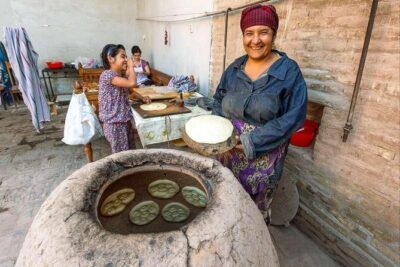
Browse the lists this tour appears in