
Reviewed · ARAL SEA TOURS
Muynak Ship Cemetery Tour From Khiva
The ships are stranded far from water. This private trip from Khiva reaches the Aral Sea desert, the eerie ship cemetery, and the old Mizdakhan necropolis. I like the powerful environmental story and the chance to eat Karakalpak food in Muynak. The main drawback is serious: the advertised 8.5 hours can become 14 to 15.5 hours because of the long distance and rough final roads.
You pay $230 per group of up to three, including a private air-conditioned vehicle and taxes. That is fair if you fill the car and want a direct trip from Khiva or Urgench, but it is not a quick outing. I would treat this as a full-day road expedition, not a neat half-day excursion.
In This Review
- Key points before you book
- Why this journey matters
- Leaving Khiva for the northern road
- Chilpik Fortress and old funerary customs
- Mizdakhan, the city of the dead
- Muynak, lunch, and a former fishing town
- The ship cemetery and the Aral Sea desert
- The Aral Sea Museum in Muynak
- The real cost of an $230 private trip
- Communication and driver quality
- Who should book this experience?
- Practical ways to make the day better
- Should you book the Muynak Ship Cemetery tour?
- FAQ
- Where does the Muynak Ship Cemetery tour start?
- Where can I be dropped off after the tour?
- How long does the tour take?
- What is included in the $230 price?
- Is lunch included?
- Is a guide included?
- Is entry to the Aral Sea Museum included?
Key points before you book
- The ship cemetery is the emotional center: Rusting boats sit on dry ground where the Aral Sea once reached Muynak.
- The road time is the biggest issue: The route covers roughly 370 to 387 kilometers each way, and actual return times can reach 14 or 15.5 hours.
- Mizdakhan adds ancient culture: The necropolis includes mausoleums and a pre-Islamic funerary site connected with Zoroastrian rites.
- Lunch needs planning: Food is not included, and Muynak has limited restaurant choices. A local Karakalpak family meal can be arranged.
- The tour is private and flexible: Pickup is available in Khiva or Urgench, with drop-off in either place or by request at an airport, station, or hotel.
- A guide is optional, not automatic: The driver speaks English or Russian according to the arrangement, but communication quality can vary.
Why this journey matters
The Aral Sea disaster is not a distant environmental story. In Muynak, you see its result in plain view: ships left on sand, a port city cut off from the water, and a community shaped by the loss of fishing.
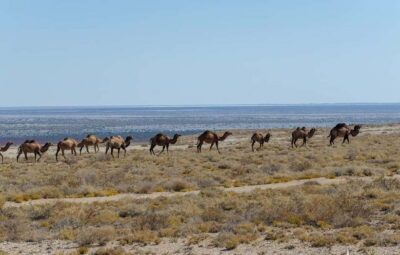
During the Soviet period, rivers feeding the Aral Sea were diverted for irrigation. The sea shrank, the shoreline pulled away, and Muynak lost its role as a major fishing port. The abandoned boats now sit in the Aral Sea desert, a stark reminder of how large engineering projects can reshape daily life.
I value this trip because it joins natural damage with human history. The ship cemetery is striking, but the Aral Sea Museum helps explain the wider story, including the former sea’s plant and animal life. You do not need to be an environmental specialist to understand the message. The empty ground does the talking.
At the same time, the experience asks a lot from you. The distance is vast, the roads can be poor, and the timetable provided for the trip does not match what several completed journeys have taken. Go because Muynak matters to you, not because you expect a relaxed sightseeing loop.
More Aral Sea trips from Uzbekistan:
- Daytrip from Khiva to Aral Sea Cemetery of Ships. All in one
★ 4.3 · 52 reviews - Muynak Ship Cemetery Tour From Nukus
★ 4.3 · 32 reviews - Aral Sea Adventures (2 day)
★ 5.0 · 30 reviews
Leaving Khiva for the northern road
Pickup can be arranged at Ichan Kala, Khiva Train Station, Urgench Airport, or Urgench Train Station. The usual starting point is Khiva’s main gate, Ata Darwaza. You should be ready in your hotel lobby about five minutes before departure.
The vehicle is private and air-conditioned, which matters on a long road day. A group of up to three people can share the $230 price, making the cost more reasonable than paying per person. If you are alone, the same fee is harder to justify, especially once you add lunch and museum entry.
The route runs through Nukus, the Mizdakhan complex, Kungrad, and Muynak. The stated duration is about 8.5 hours, but that figure should not guide your planning. The road distance is approximately 370 to 387 kilometers each way, and poor conditions on the final section can add many hours.
One completed trip took around 14 hours. Another reached the hotel at 12:30 a.m. after 15.5 hours, even after skipping lunch and the Aral Sea Museum. That is the most important practical point in this entire article: keep the next morning free, and do not schedule a flight or train soon after returning.
Chilpik Fortress and old funerary customs
The route description includes Chilpik Fortress as an early historical stop. It is described as one of the rare Central Asian monuments surviving from the pre-Arab period and one of the places where Zoroastrians carried out funeral rites.
The site helps widen the trip beyond the modern Aral Sea disaster. You are not only driving toward abandoned ships. You are also passing through a region shaped by religious customs that predate Islam.
The exact stop order and time available can depend on the driver and the long road ahead. Clarify before leaving Khiva that you expect to visit every listed stop. One passenger found the driver had not been properly briefed about the two stops before Muynak, which led to confusion and phone calls along the way.
Mizdakhan, the city of the dead
Mizdakhan is one of the most worthwhile cultural stops. The complex is often described as a city of the dead because of its many mausoleums and burial structures.
For you, the appeal is not just the number of tombs. The site preserves customs and beliefs from before the Islamic period, giving the journey a strong archaeological and spiritual side. It also breaks up the long drive with a place that rewards slow attention.
Do not expect a polished museum-style visit. This is an open historic complex, and the value comes from the setting, the old structures, and the traditions connected with them. Comfortable shoes and sensible clothing are useful throughout the day.
Communication can affect the stop. Some drivers may use Google Translate, and English ability may be limited despite English being listed among the available languages. If learning the details of Mizdakhan is important to you, request a guide in advance rather than assuming the driver will provide a full explanation.
A completely different sort of day around Uzbekistan:
- Best of Tashkent Mountains: Amirsoy, Chimgan & Charvak Trip
★ 4.8 · 567 reviews - Samarkand: Historical Monuments Guided Walking Tour
★ 4.8 · 446 reviews - Samarkand One Day Tour – Departure From Tashkent
★ 5.0 · 313 reviews - Bukhara: Walking Tour with a Small Group
★ 4.9 · 260 reviews
Muynak, lunch, and a former fishing town
Muynak is more than the address of the ship cemetery. It was once one of Uzbekistan’s important cities, supported by fishing on the Aral Sea. Today, you can get a brief sense of local life and see how closely the town’s identity remains tied to the lost water.
Lunch is not included. The plan allows for a national meal in a Karakalpak family home, or food at a restaurant along the way. You can ask the operator to arrange it before departure.
This detail matters because restaurant choices in Muynak are limited. One driver initially warned that the food would be poor, then took the group to a good restaurant outside the main tourist area. Another driver helped with a Russian-language menu and made the meal easier to manage.
If you have dietary restrictions, communicate them before the tour. The supplied information does not promise a particular menu, and the family-home option may be simple rather than tailored to international tastes. Still, I like the local meal idea because it gives the day a human connection that a quick photo stop cannot provide.
The ship cemetery and the Aral Sea desert
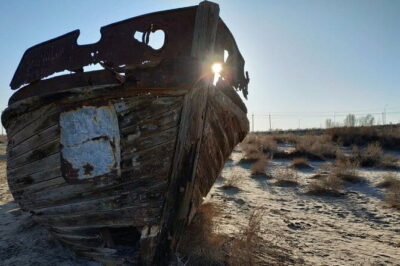
The ship cemetery is the reason most people make this difficult journey. Boats that once worked on the Aral Sea now rest on dry ground, surrounded by open desert.
The sight is visually strong, but it is also unsettling. A ship normally suggests movement, water, and work. Here, the same object has become a symbol of retreating water and economic collapse.
You can walk down to inspect the abandoned vessels. The stop is not about a long list of attractions. It is about standing beside the remains and taking in the scale of the change. Bring comfortable shoes, clothes suited to outdoor conditions, and water for the road.
The setting also makes timing important. A rushed arrival after hours of driving will limit what you can take from the place. Yet the poor road cannot simply be wished away. One driver was praised for handling especially bad sections with great skill, while another account described a normal passenger car as poorly suited to the final stretch and suggested a four-wheel-drive vehicle would be better.
Ask what vehicle will be used before paying. An air-conditioned car is included, but the available information does not guarantee an off-road vehicle. If the road has recently worsened, the car type could make a large difference to comfort and arrival time.
The Aral Sea Museum in Muynak
The Aral Sea Museum is a useful companion to the cemetery. The ships show the result, while the museum explains the former sea’s fauna and flora and gives more context about the environmental and social damage.
Entry is not included, so you will pay separately. One opinion found the museum expensive and not worthwhile, while another found it enjoyable and helpful. That difference makes sense: if you already know the Aral Sea story, the museum may feel basic; if you want a clearer introduction, it can give the ship cemetery more meaning.
I would keep it on the plan if this is your first visit and the schedule allows. But I would not sacrifice a safe return time just to force in one more indoor stop. Given the journey’s unpredictable length, ask the driver early in the day how much time remains.
The real cost of an $230 private trip
The price is $230 per group of up to three. It includes round-trip transport in an air-conditioned vehicle and all fees and taxes listed for the transport service.
For three people, that is about $77 each before lunch and museum entry. For two, it is $115 each. For one person, it is a costly way to cover a huge distance, though the privacy and direct pickup may still be valuable.
You are paying mainly for access and transport, not a fully guided cultural tour. A guide can be requested, but is not included. Lunch, the Aral Sea Museum, and personal costs are also extra.
The value improves if you:
- Share the cost with two other people
- Need pickup and drop-off in Khiva or Urgench
- Want a private car rather than arranging several separate transfers
- Care more about reaching Muynak than having a polished sightseeing operation
The value drops if you expect the advertised 8.5-hour schedule to be firm, want detailed explanations at every stop, or need a comfortable four-wheel-drive vehicle for rough roads. Confirm those points in writing before departure.
Communication and driver quality
The driver is listed as speaking English and Russian, but actual communication can range from helpful to very limited. Google Translate may be needed.
That does not automatically ruin the day. One driver with limited English was kind, stayed engaged, helped with lunch, and made the group feel welcome. Another driver was described as punctual, highly skilled on difficult roads, and helpful with a restaurant and later drop-off at the Savitsky Museum in Nukus.
The weak point is briefing. A driver may arrive on time but not know the full sightseeing plan. Another account involved a change of driver at Mizdakhan, followed by an attempt to discourage the group from continuing because of road conditions. That uncertainty can be stressful after you have already committed to the journey.
I would request the following before setting off:
- Confirmation of every planned stop
- The driver’s language ability
- The vehicle type
- The expected return time
- Whether lunch will be arranged
- Whether a guide will join the trip
Who should book this experience?
You should consider it if you have a strong interest in environmental history, Soviet-era change, archaeology, or unusual places that require effort to reach. It suits people who can tolerate a long car ride and who understand that the destination is powerful partly because it is remote.
It is also a good fit for a small private group. Up to three people can share the transport price, and pickup from Khiva or Urgench keeps the day simple at the start and end.
I would be cautious if you suffer from car sickness or back problems. The trip can involve many hours in the vehicle, and the final road section may be rough. It is described as suitable for all ages, but physical comfort depends heavily on the road and car.
You should also think twice if you have a fixed evening booking. Reaching Khiva late at night is possible, particularly if you stop for lunch and the museum or encounter delays. The ship cemetery is not worth missing a flight.
Practical ways to make the day better
Wear comfortable shoes and clothes for walking outdoors. Keep water, snacks, medication, and a phone charger within reach, since the day is long and food plans may change.
Ask for the lunch booking in advance. If you want the family meal, say so clearly. If you prefer a restaurant, ask where the driver plans to stop.
Do not assume every listed stop will happen automatically. Confirm Chilpik, Mizdakhan, Muynak, the ships, and the museum before departure. If the driver changes, repeat the plan to the new driver.
Treat the 8.5-hour figure as a best-case estimate, not a promise. Plan for a very long day and keep your return evening open.
The activity offers free cancellation up to 24 hours before departure and allows you to reserve without paying immediately. Those terms are useful while checking road conditions and fitting the trip around trains or flights. The service is also marked wheelchair accessible, but ask how that applies to the uneven outdoor stops and the ship cemetery before booking.
Should you book the Muynak Ship Cemetery tour?
Book it if seeing the Aral Sea desert and abandoned ships is a major goal, and you accept the road as part of the story. The ship cemetery, Mizdakhan, and museum together offer far more than a quick photo stop, and the private vehicle is practical for a small group.
Do not book it on the assumption that you will be back in Khiva after 8.5 hours. Ask for a realistic road estimate, confirm the vehicle and language support, and arrange lunch ahead of time. If you can handle a long, uncertain day, this is one of the most meaningful excursions in western Uzbekistan. If you need comfort, speed, and a tightly controlled schedule, choose a different plan or arrange an overnight stay in Nukus or Muynak.
FAQ
Where does the Muynak Ship Cemetery tour start?
Pickup is available from Khiva or Urgench. In Khiva, pickup can be arranged at Ichan Kala or Khiva Train Station. In Urgench, pickup is available from the airport or train station.
Where can I be dropped off after the tour?
Drop-off can be arranged in Khiva or Urgench. It may also be requested at an Urgench hotel, airport, or railway station.
How long does the tour take?
The stated duration is 8.5 hours, but the journey covers roughly 370 to 387 kilometers each way. Actual completed trips have taken about 14 to 15.5 hours, depending on roads, stops, and timing.
What is included in the $230 price?
The price covers a private round-trip air-conditioned vehicle and all listed fees and taxes. It applies to a group of up to three people.
Is lunch included?
No. Lunch is extra. It can be arranged at a local Karakalpak family home in Muynak or at a restaurant along the route.
Is a guide included?
No. A guide is available by request. The driver is listed as speaking English and Russian, but communication ability can vary.
Is entry to the Aral Sea Museum included?
No. Museum admission is paid separately. The museum explains the fauna and flora of the former sea and gives context about the ecological and social disaster.
Recently added around Uzbekistan
- Uzbekistan 8 Days Private Guided Tour★ 4.6 · 3 reviews
- Tashkent: 3-Day Horseback Riding Tour in Chimgan Mountains★ 4.4 · 3 reviews
- Samarkand: Uloq-Kopkari (Buzkashi) Game Day Tour★ 5.0 · 3 reviews
- Bird Watching Tours in Samarkand★ 3.6 · 3 reviews
- Bukhara: City Highlights Guided Tour with Pickup★ 5.0 · 3 reviews
- Tashkent Mountain Tour Amirsoy with Transport★ 3.5 · 3 reviews
- 9 Days Private Guided Tour to Uzbekistan★ 5.0 · 3 reviews
- Private Tashkent City Tour★ 5.0 · 3 reviews
Aral Sea Tours, compared.
Daytrip from Khiva to Aral Sea Cemetery of Ships. All in one
Read our review →
Daytrip From Khiva to Aral Sea Cemetery Of Ships . All In One
Read our review →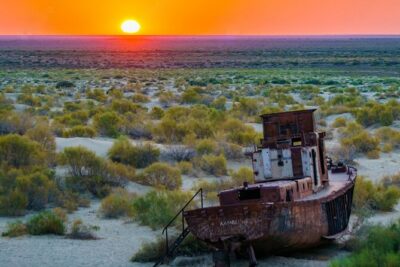
Browse the lists this tour appears in