
Reviewed · HISTORICAL TOURS
Samarkand: Historical Monuments Guided Walking Tour
Samarkand rewards slow looking. This five-hour walking tour links the city’s grandest monuments, from the tiled courts of Registan Square to the turquoise tombs of Shah-i-Zinda. I like the carefully chosen route and the chance to hear local stories from guides such as Gulsanam, Sarvinoz, Sevinch, and Shahrizoda. I also like the modest $20 price, though entrance fees add roughly another $21.50.
The main drawback is the walking. The monuments are spread across central Samarkand, and one recent participant noted that you need to cover plenty of ground, even with breaks. The published stop times also add up to about five hours and forty minutes, so you should allow a little flexibility rather than planning a tight connection afterward.
In This Review
- Key points before you book
- Why this route works for a first Samarkand visit
- Starting beneath Gur-e-Amir’s blue dome
- Two hours among the three madrasahs of Registan
- Bibi-Khanym Mosque and the cost of grand ambition
- A useful pause at Siyob Bazaar
- Shah-i-Zinda at the quieter end of the day
- The real walking challenge
- What the $20 price really covers
- Guide quality and the human side of the tour
- Practical cautions before you go
- Should you book this Samarkand walking tour?
- FAQ
- How long does the Samarkand walking tour last?
- Where does the tour begin?
- Where does the tour finish?
- Which monuments are included?
- Are entrance fees included in the $20 price?
- Is food included?
- What should I bring?
- Is the tour suitable for wheelchair users?
- Can I cancel the tour?
Key points before you book
- Four major monuments in one route: See Gur-e-Amir, Registan Square, Bibi-Khanym Mosque, and Shah-i-Zinda in a single outing.
- Starts at Gur-e-Amir: Meet your English-speaking guide at the entrance to the mausoleum complex.
- Registan gets the most time: The two-hour visit gives you room for tilework, courtyards, photographs, and explanation.
- Ends at Siyob Bazaar: Finish with local bread, dried fruit, nuts, and a chance to shop.
- Budget-friendly base price: The tour costs $20 per person, but site admission is extra.
- Best for active sightseers: Comfortable shoes, a hat, and sunscreen are not optional luxuries here.
Why this route works for a first Samarkand visit
Samarkand can feel like a series of enormous monuments scattered across a modern city. This route gives those sights a clear order and links them with stories about the Silk Road, Amir Timur, Timurid rulers, Islamic architecture, and local life.
I like that the tour does not stop with Registan Square. Registan is the image most people carry home from Samarkand, but Gur-e-Amir explains why the city became so important under Timur. Bibi-Khanym shows the scale of his building ambitions, while Shah-i-Zinda brings you into a more intimate religious setting.
The guides appear to be the heart of the experience. Gulsanam is repeatedly praised for patient explanations, warm conversation, and taking good photographs. Sarvinoz receives similar praise for making complex history easy to follow. Shahrizoda is noted for answering many questions, adapting the pace, and adding cultural context.
That personal style matters here. Without a guide, you can admire the blue domes and patterned walls, but it is harder to connect them. A strong guide helps you see why a building was made, who used it, what has survived, and how legend fits beside documented history.
More Historical Tours in Samarkand
- Samarkand: Historical City Highlights Guided Walking Tour
★ 4.8 · 153 reviews - Bukhara: Historical City Highlights Guided Walking Tour
★ 4.6 · 102 reviews - Tashkent: Historical City Highlights Guided Walking Tour
★ 4.8 · 71 reviews
Starting beneath Gur-e-Amir’s blue dome
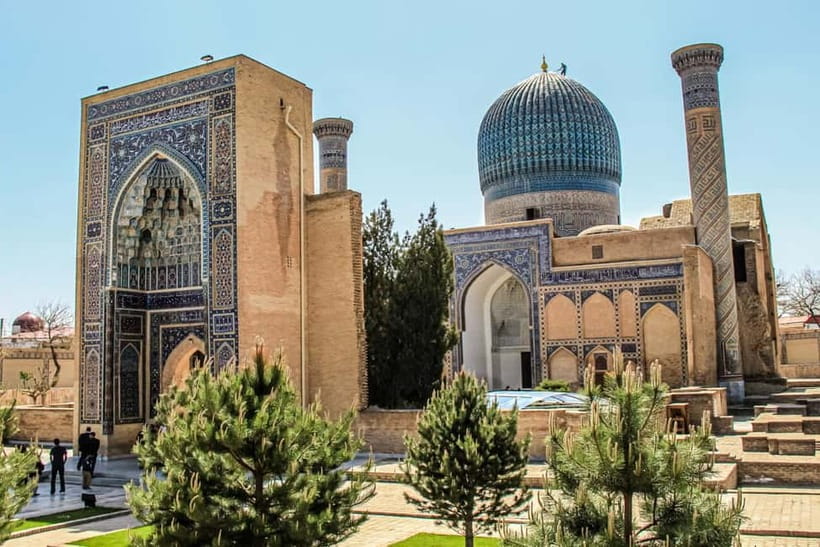
The meeting point is the entrance to the Gur-e-Amir complex, also called the Amir Temur Mausoleum. This is a practical starting place because the first visit is not a quick photo stop. About 100 minutes are set aside for the mausoleum and its surroundings.
Gur-e-Amir is the burial place of Amir Timur, known in the West as Tamerlane. The site gives you an immediate introduction to the Timurid period, when Samarkand became a center of power, learning, and monumental building.
Look closely at the blue-tiled dome and the decoration inside. The appeal is not just size. The geometry, color, and carefully arranged ornament show how the Timurid court used architecture to express authority.
Your guide should help separate Timur’s military reputation from his role as a patron of architecture and culture. That balance is useful. The tour presents his legacy as something more complicated than a simple conqueror story.
The long first stop also helps you settle into the walking pace. You will be standing indoors and outside, listening, looking upward, and taking photographs. Flash photography is not allowed inside the monuments, so bring a camera or phone that works well without flash.
Two hours among the three madrasahs of Registan
Registan Square is the centerpiece of the day. The two-hour visit gives you time to look beyond the famous front view and study the three madrasahs: Ulugh Beg, Sher-Dor, and Tillya-Kori.
Each building has its own character. Together, they form one of Central Asia’s most memorable architectural spaces, with vast facades, domes, courtyards, tile patterns, and carefully restored surfaces.
I would use the first few minutes simply to take in the scale. The square is designed to impress from a distance, but the details reward close attention. Pointed arches, colored tile, inscriptions, and repeated geometric forms create a visual rhythm that is easy to miss if you rush through with a camera raised.
This is also where a good guide earns the tour price. The buildings can look similar at first, especially under strong sunlight. Clear explanations help you remember which madrasah is which and why the square developed its importance.
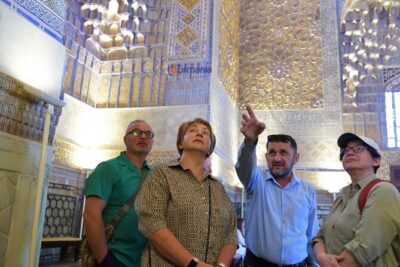
The long stop is generous compared with the other visits. You can ask questions, take portraits, examine details, and pause when your feet need a rest. Several guides, including Gulsanam and Shahrizoda, are praised for allowing time for photographs rather than pushing people from one sight to the next.
Registan is the most polished and monumental part of the route. That is part of its appeal, but it can also feel less connected to everyday Samarkand than the market or residential streets. The tour improves the experience by placing the square inside the wider story of the city instead of treating it as a single postcard view.
Bibi-Khanym Mosque and the cost of grand ambition
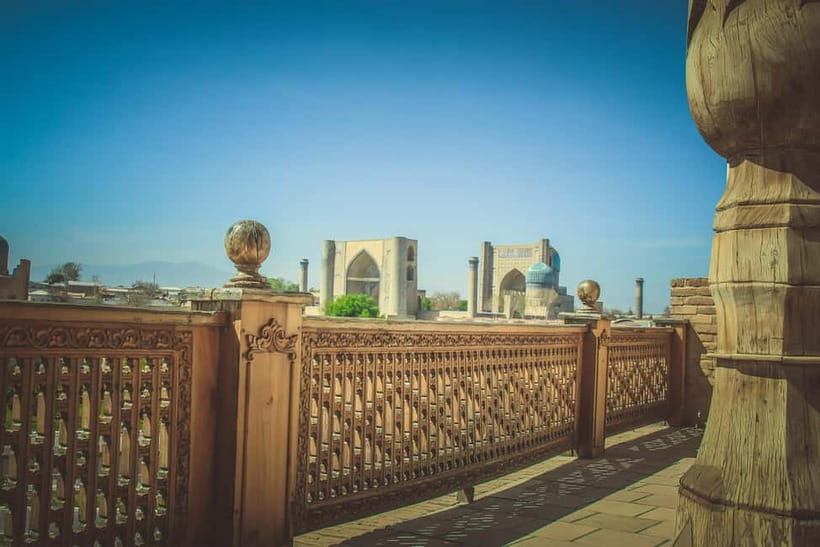
The visit to Bibi-Khanym Mosque lasts about 30 minutes. That is enough for an introduction, photographs, and a guide’s explanation, but it is the briefest monument stop on the route.
Bibi-Khanym is associated with Timur’s reign and is remembered for its extraordinary scale. It was built to project ambition, and even its surviving forms make that point clear. The mosque is a useful contrast with Gur-e-Amir, where the focus is a tomb and dynastic memory. Here, the focus is a vast religious and architectural statement.
The mosque is also tied to legends about its construction. Listen for the difference between a popular story and a firmly documented fact. Those legends are part of the site’s cultural life, but they should not be confused with the complete historical record.
The short timing means you should arrive ready to look. If you want lengthy architectural study at every stop, Bibi-Khanym may feel rushed. If you prefer a broad introduction to the city’s major sights, the half-hour slot keeps the overall route moving.
The entrance fee is listed as 50,000 Uzbek som, or about $3.50. As with the other prices, carry cash or a card because both payment methods are accepted at the destinations.
More Walking Tours in Samarkand
- Samarkand One Day Tour: one day walking & group tour
★ 4.4 · 87 reviews - Samarkand Walking Tour
★ 4.2 · 45 reviews - Samarkand: Historical Monuments Group Walking Tour
★ 5.0 · 29 reviews - Samarkand Historical City Highlights Guided Walking Tour
★ 5.0 · 22 reviews
A useful pause at Siyob Bazaar
Siyob Bazaar is scheduled for about 30 minutes and gives the day a welcome change of mood. After domes, mausoleums, and formal courtyards, you reach Samarkand’s largest and oldest market.
This is a good place to watch ordinary commerce rather than only admire royal monuments. You can browse dried fruit and nuts, take photographs, and sample local treats. Samarkand non, the city’s bread, is another useful thing to look for. One visitor specifically noted a price of 8,000 som per loaf, though prices can change.
The bazaar is also a natural place to ask your guide for help. Sevinch has been praised for assisting with souvenirs and local products, including helping with prices. That kind of small, practical guidance can be more valuable than another paragraph of dates and names.
Do not expect a full meal during this scheduled break. Meals and lunch are not included, and the tour ends with a market stop rather than a restaurant visit. Bring money for snacks, but plan a separate meal if you need something substantial.
A half hour passes quickly in a market. I would decide in advance whether you care more about tasting, shopping, or photography. Trying to do all three may leave you feeling hurried.
Shah-i-Zinda at the quieter end of the day
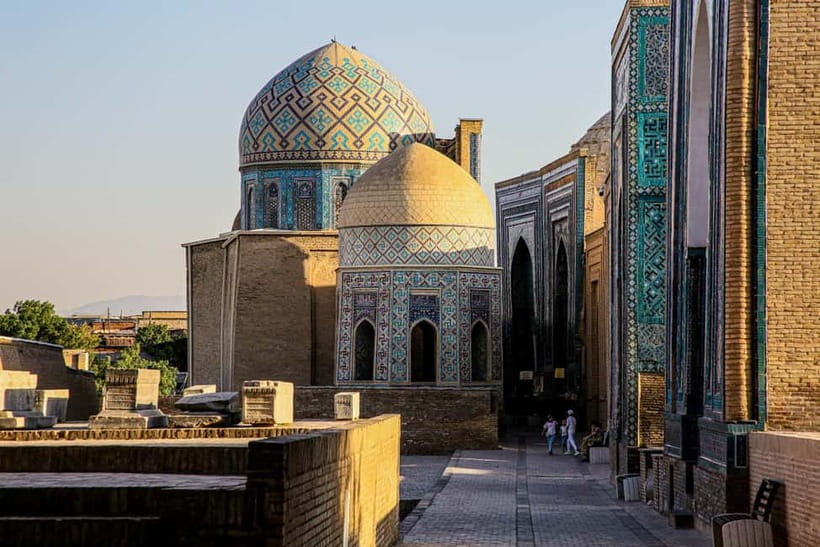
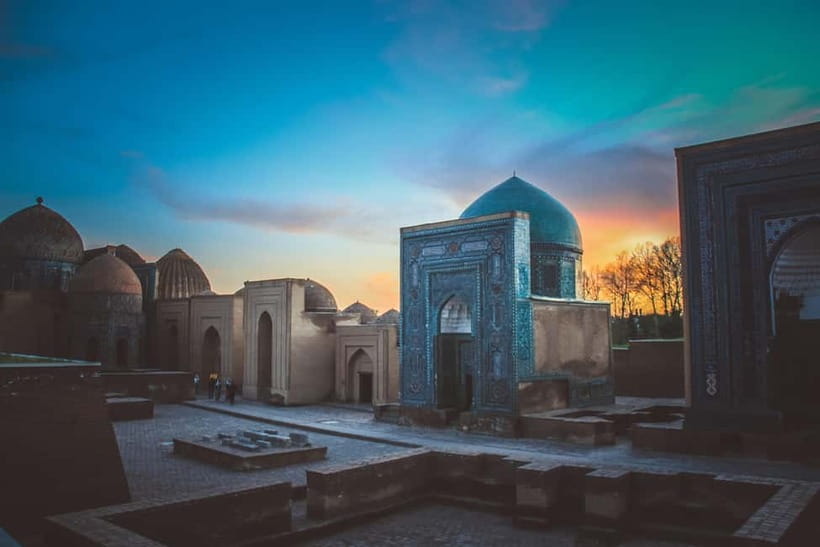
The final major visit is Shah-i-Zinda, with about one hour devoted to sightseeing and a possible sunset view. This necropolis is different from the open grandeur of Registan. Its narrow passageways lead between mausoleums covered in turquoise tiles, mosaics, and detailed surface work from different periods.
The compact setting makes Shah-i-Zinda especially rewarding for close observation. You can see how design changes from one structure to the next, and how repeated colors and patterns create unity without making every building identical.
This is also a sacred religious site. Dress respectfully, avoid very short or thin clothing, and do not smoke inside the monuments. Photography is allowed, but flash is not permitted indoors.
Ending here works well because the site invites a slower final look. The schedule identifies sunset as part of the visit, but the exact light depends on the day and starting time. If sunset photography matters to you, confirm the departure time when booking.
The site includes steps, uneven walking, and narrow routes. The activity information is inconsistent about accessibility: one section describes the tour as wheelchair accessible, while another says it is not suitable for wheelchair users or people with mobility impairments. I would treat the restriction as the safer guidance and ask the provider directly before booking.
The real walking challenge
This is called a walking tour for good reason. The four main sights are not presented as one enclosed complex, and the route between them adds to the physical demand.
You should wear supportive shoes, bring water, use sunscreen, and carry a hat in sunny weather. Samarkand’s monuments are visually generous, but they offer little relief if you arrive unprepared for heat or long periods on your feet.
The pace can be adjusted in some cases. Several guides, including Sarvinoz, Sevinch, and Shahrizoda, are praised for adapting to the group, answering questions, and allowing photo breaks. That does not turn the day into a low-mobility outing, but it can make it more comfortable.
Children under six are not recommended. The tour is best for older children, couples, solo visitors, and small groups who want a strong first orientation to the city.
Private groups are available. A private booking may suit you if you want to control the pace, ask many questions, or focus more heavily on photography and local life. Smaller groups also make it easier to hear the guide in busy public spaces.
What the $20 price really covers
At $20 per person, the tour is inexpensive for a five-hour guided introduction to Samarkand. The fee covers a professional English-speaking guide, not the entry tickets, meals, hotel transfers, or personal purchases.
The listed entrance fees are:
- Gur-e-Amir: 75,000 som, about $6
- Registan Square: 100,000 som, about $8.50
- Bibi-Khanym Mosque: 50,000 som, about $3.50
- Shah-i-Zinda: 50,000 som, about $3.50
That brings the site admissions to about $21.50, using the supplied dollar conversions. Your total before food and shopping is therefore roughly $41.50 per person, with exchange rates and ticket prices subject to change.
I still consider that a fair deal. You are paying for orientation, historical explanation, local conversation, and help making sense of four major sites. If you only want photographs, you can visit independently for less. If you want the monuments to connect into one story, the guide adds real value.
Hotel pickup and drop-off are not included. You need to reach the Gur-e-Amir entrance yourself, and the tour finishes at Siyob Bazaar. That ending can be convenient if you want to continue shopping or find food nearby, but you should plan your onward route.
Guide quality and the human side of the tour
The strongest praise is directed at the guides’ communication and personal attention. Gulsanam is often singled out for patience, friendly conversation, clear explanations, and photography. Sarvinoz is praised for warmth, humor, historical detail, and practical suggestions for the rest of a Samarkand stay.
Shahrizoda is noted for her background as a student of tourism and history, and for answering questions about Uzbekistan and Central Asia. Sevinch receives praise for adapting the pace and helping with bazaar purchases. Other named guides include Sevara, Charos, Zulfina, Amira, Shah, Ibrohimova, and Abrorbek.
The exact guide affects the feel of the day, but the overall pattern is clear: the experience depends heavily on who leads it. You may get a formal history lesson, or something closer to walking through the city with an informed local friend.
That personal contact is particularly useful in Samarkand. You can ask about food, daily life, customs, photography, and places to visit after the tour. Some guides are also happy to take photos, which can be a welcome bonus for solo visitors.
Practical cautions before you go
Dress with religious sites in mind. Normal, modest clothing is the safest choice, and respectful behavior matters at every monument.
Drones, alcohol, and drugs are not allowed. Smoking is not allowed inside the monuments. Photography is permitted, but flash photography is prohibited indoors.
The tour is offered in English. Free cancellation is available up to 24 hours in advance, and you can reserve now and pay later. Those terms help if your Samarkand schedule depends on train or travel connections.
The advertised duration is five hours, but the individual stop times total longer than that before counting walks between monuments. I would not book a flight, train, or fixed dinner immediately afterward.
Should you book this Samarkand walking tour?
I would book it if you want to see the essential monuments in one organized day and care about the stories behind the tilework. The $20 guiding fee is reasonable, especially if your guide is as attentive as Gulsanam, Sarvinoz, Sevinch, or Shahrizoda.
I would skip it if you dislike long walks, need guaranteed wheelchair access, or prefer exploring one monument at a very slow pace. Independent visits may also suit you if you already understand Timurid history and only want time for photographs.
For most first-time visitors, this is a strong introduction. Wear good shoes, budget for about $21.50 in admissions, keep the afternoon flexible, and save room in your bag for Siyob Bazaar’s bread, nuts, and dried fruit.
FAQ
How long does the Samarkand walking tour last?
The advertised duration is five hours. The listed monument visits total about five hours and forty minutes before adding walking time, so you should allow extra flexibility.
Where does the tour begin?
Meet your English-speaking guide at the entrance of the Gur-i Amir complex, also called the Amir Temur Mausoleum.
Where does the tour finish?
The tour concludes at Siyob Bazaar, Samarkand’s largest and oldest market.
Which monuments are included?
The route includes Gur-e-Amir Mausoleum, Registan Square, Bibi-Khanym Mosque, and the Shah-i-Zinda necropolis. It also includes time at Siyob Bazaar.
Are entrance fees included in the $20 price?
No. Entrance fees are extra. The listed prices are 75,000 som for Gur-e-Amir, 100,000 som for Registan, 50,000 som for Bibi-Khanym, and 50,000 som for Shah-i-Zinda.
Is food included?
No. Meals and lunch are not included. You can buy local treats such as dried fruit, nuts, and bread at Siyob Bazaar.
What should I bring?
Bring comfortable walking shoes, a hat, and sunscreen. You should also carry money for entrance fees, snacks, and personal purchases.
Is the tour suitable for wheelchair users?
The activity information gives conflicting accessibility details. One section says it is wheelchair accessible, while another says it is not suitable for wheelchair users or people with mobility impairments. Confirm directly before booking.
Can I cancel the tour?
You can cancel up to 24 hours in advance for a full refund. A reserve-now, pay-later option is also available.
Recently added around Samarkand
- Bird Watching Tours in Samarkand★ 3.6 · 3 reviews
- Penjikent Day Trip From Samarkand★ 5.0 · 3 reviews
- Samarkand: city tour★ 4.7 · 3 reviews
- Samarkand Capital of Amir Timur Private Tour with Transport★ 5.0 · 3 reviews
- Seven Lakes Panjakent: One-Day Adventure from Samarkand★ 5.0 · 3 reviews
- Ancient and Modern tour in Samarkand with Transport★ 5.0 · 3 reviews
- Samarkand: Cooking class with local family★ 5.0 · 3 reviews
- Amankutan Trek One Day Tour From Samarkand★ 3.9 · 3 reviews
Historical Tours, compared.
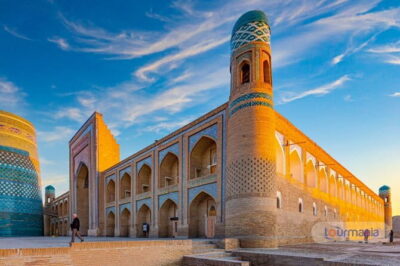
Khiva Historical City Highlights Guided Walking Tour
Read our review →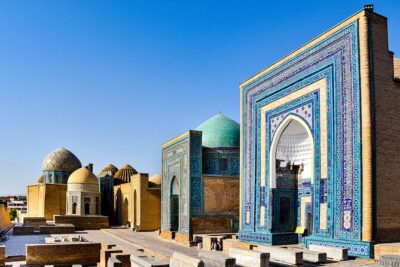
Samarkand Historical City Highlights Guided Walking Tour
Read our review →Browse the lists this tour appears in