
Reviewed · HISTORICAL TOURS
Bukhara: Historical City Highlights Guided Walking Tour
Bukhara rewards curious walkers. I like the way this $19 tour links the city’s most important Islamic monuments in one clear route, from the shady pond at Lyabi Khauz to the great Kalyan Complex. I also like the human touch: guides such as Ruby, Dildora, Makhbuba, and Shahnoza are praised for clear English, humor, patience, and useful advice about modern Uzbekistan. The main catch is that entrance tickets cost extra, and some interiors may be closed during an afternoon departure.
This is a strong first look at Bukhara, especially if you want the history explained rather than simply photographed. Four hours on foot can feel full, though, so comfortable shoes, water, and a sensible pace matter. Small groups may be flexible, while a solo booking can sometimes feel almost private.
In This Review
- Key points to know before you book
- Why this walk works well in Bukhara
- Starting at the Khodja Nasreddin statue
- Lyabi Khauz and Nadir Divan Begi Khanaka
- Mir-i-Arab Madrasa and the blue-domed skyline
- Magok-i-Attari Mosque and Bukhara’s layered past
- The Kalyan Minaret and Kalyan Mosque
- Entering the Ark of Bukhara
- What the $19 price really covers
- Pace, group size, and guide quality
- Practical advice for a comfortable walk
- Should you book this Bukhara walking tour?
- FAQ
- How long is the Bukhara walking tour?
- Where does the tour start?
- What languages are available?
- Are entrance tickets included in the price?
- Which main sights are included?
- Is the tour private or shared?
- What should I bring?
Key points to know before you book
- Seven major stops in four hours: The route covers Lyabi Khauz, Nadir Divan Begi Khanaka, Mir-i-Arab Madrasa, Magok-i-Attari Mosque, the Kalyan Minaret, Kalyan Mosque, and the Ark Fortress.
- The guide makes the difference: Ruby, Dildora, Makhbuba, Shaxnoza, and other guides receive especially warm praise for English, historical detail, good humor, and friendly help.
- A walking tour with a real Silk Road focus: You move through Bukhara’s old center on foot, seeing religious schools, mosques, a Sufi lodge, a minaret, and a former royal citadel.
- Budget price, extra admissions: The $19 fee includes a professional guide and taxes, but not entry tickets. Plan for local currency.
- Morning may be better for interiors: One guest specifically noted that some places close in the afternoon, so ask about access before choosing a start time.
- Bring WhatsApp and arrive early: The company contacts you the day before and asks for a WhatsApp number. Meet near the Khodja Nasreddin statue five minutes before departure.
Why this walk works well in Bukhara
Bukhara is easier to understand when its buildings are connected by a guide’s story. A blue dome can look impressive on its own, but the city becomes far more interesting when you learn how religious study, Sufi practice, royal power, trade, and local legend all occupied the same compact center.
This route gives you that framework without adding transport between stops. You walk from one monument to the next, with most of the four hours devoted to explanation, photographs, and short visits. It is a practical choice when you have limited time or have just arrived and want to get your bearings fast.
I would not treat the tour as a complete study of Bukhara. Four hours allows a good introduction, not a slow examination of every museum and courtyard. Still, the route includes the city’s main sights and gives you enough context to return later on your own.
The tour is offered in English, Uzbek, or Russian. The strongest comments focus on the guides’ personal approach. Ruby is praised for strong English, positive energy, photography, and flexibility. Dildora is described as professional, entertaining, and good at explaining the city’s dynasties. Makhbuba receives praise for warmth and honest answers, while Shaxnoza is noted for patience and experience.
That range matters because a walking tour depends heavily on the person leading it. The available feedback gives this experience a strong 4.6 rating from 102 bookings, with repeated praise for enthusiasm and clear explanations.
More City Tours in Samarkand
- Samarkand: Historical City Highlights Guided Walking Tour
★ 4.8 · 153 reviews - Private Samarkand City Tour With Transportation
★ 5.0 · 149 reviews - A City Tour Of Samarkand: The Pearl Of The East
★ 5.0 · 133 reviews
Starting at the Khodja Nasreddin statue
The meeting point is near the statue of Khodja Nasreddin, the famous comic folk figure known across Central Asia. The company says it will contact you the day before, so include a working WhatsApp number when booking.
Arrive five minutes early. This is not a hotel pickup, and the supplied information does not include transportation. You should plan to reach the statue independently and make sure you know the exact meeting spot after the guide contacts you.
Starting here gives the tour a light opening before the more serious religious and royal sites. It also places you close to the old city’s main pedestrian route.
Lyabi Khauz and Nadir Divan Begi Khanaka
The first main stop is Lyabi Khauz, a 17th-century ensemble built around a pond. The water and surrounding trees offer a calm pause in the old city, while the madrasahs around it show how Bukhara’s public spaces were shaped by religious education and social life.
I like this as an opening stop because it is visually easy to read. You can see the pond, the façades, and the relationship between the buildings before the guide starts adding layers of history. Allow about 40 minutes here for the visit, explanation, and photographs.
Next comes Nadir Divan Begi Khanaka, also called Khanaka Nodir Devonbegi. A khanaka was a Sufi lodge used for spiritual retreat and religious life. This building is admired for its decorative tilework and grand façade, but the important point is its purpose: Bukhara was not only a city of formal madrasahs and grand mosques. Sufi communities also shaped its spiritual culture.
The scheduled visit lasts about 20 minutes. That is enough for an introduction and photographs, though you should not expect a long architectural lecture inside every building. The guide can help you notice details that are easy to miss, especially on the ornamented front.
This area is also useful for understanding the city as a lived place rather than a row of monuments. Lyabi Khauz remains a gathering area for locals and visitors, so you get a sense of how the old center still functions beyond sightseeing.
Mir-i-Arab Madrasa and the blue-domed skyline
The walk continues to Mir-i-Arab Madrasa, one of Bukhara’s best-known religious schools. Built in the 16th century, it is still a functioning madrasa. Its blue domes, mosaics, and formal front make it one of the city’s signature views.
The tour allows about 20 minutes here. That may sound brief, but the building’s exterior gives you plenty to see. Ask your guide about its religious role and the tradition of scholarship connected with the school.
A functioning religious institution also means you should behave with care. Dress appropriately, follow instructions about where you can go, and avoid treating the site as a simple photo backdrop. The tour information specifically asks you to respect local customs and traditions.
One practical note is important: access can vary by time of day. A guest on an afternoon tour said some places were closed later in the day. The best way to manage this is to ask the operator which stops can be entered at your chosen time. If seeing interiors matters more to you than the exact schedule, a morning departure may be the safer choice.
More Historical Tours in Samarkand
- Samarkand: Historical Monuments Guided Walking Tour
★ 4.8 · 446 reviews - Tashkent: Historical City Highlights Guided Walking Tour
★ 4.8 · 71 reviews - Samarkand: Historical Monuments Group Walking Tour
★ 5.0 · 29 reviews - Samarkand Historical City Highlights Guided Walking Tour
★ 5.0 · 22 reviews
Magok-i-Attari Mosque and Bukhara’s layered past
Magok-i-Attari Mosque is one of the most unusual stops because part of the structure sits below the present street level. The sunken position hints at how much the city has changed around it.
The site contains layers reaching from pre-Islamic Zoroastrian worship to early Islamic construction. That makes it especially valuable for visitors who want more than a single religious narrative. Bukhara’s identity developed over many centuries, and this mosque gives you a visible way to understand that change.
The scheduled visit lasts about 30 minutes. Here, I would pay close attention to the guide’s explanation rather than rushing through photographs. The building’s lower position and older fabric are the main appeal, and the story is what turns those physical details into something memorable.
It is also a useful contrast with Mir-i-Arab. Mir-i-Arab presents a formal, still-active center of Islamic study, while Magok-i-Attari reveals an older and more layered religious past. Together, the two stops show how Bukhara changed without losing the traces of earlier eras.
The Kalyan Minaret and Kalyan Mosque
The Kalyan Complex is the visual center of the walk. The Kalyan Minaret rises above the old city and is often called the Tower of Death, a name tied to grim legends about executions. Your guide can separate documented history from stories passed down through local tradition.
The minaret is given about 20 minutes. Take time to look upward from different points around the complex. Its scale becomes clearer when you compare it with the surrounding courtyards and domes.
The adjoining Kalyan Mosque receives another 20 minutes. It is a large religious complex with a broad courtyard and repeating architectural forms. The effect is less about one small decorative detail and more about proportion, space, and the way the buildings frame one another.
Mir-i-Arab Madrasa is also part of this wider ensemble, so the route brings you back into visual contact with the building you saw earlier. This is one of the strongest parts of the tour for photographs, especially if the light is good.
The drawback is that the Kalyan area can feel like a lot to absorb after several earlier stops. If your guide gives you a choice between rushing onward and spending longer at one point, tell them what interests you most. Some people care about tilework, others about religious history, and others about architecture or local stories. Small groups make that kind of adjustment easier.
Entering the Ark of Bukhara
The final and longest stop is the Ark of Bukhara, a massive fortress that once served as the residence of the emirs. The walls held the royal court, administrative power, and important religious and political life.
You have about one hour here, which is sensible. The Ark is not just one façade to admire. Inside, the route may include the royal court, throne room, and museums explaining Bukhara’s rulers and customs.
This stop changes the tone of the tour. Earlier buildings focus mainly on worship, study, and community life. The Ark brings in government, ceremony, and authority. Seeing both sides in one morning or afternoon helps you understand why Bukhara became such an important center on the Silk Road.
I would save some questions for the Ark, especially if you want to understand how the emirs ruled and how the fortress functioned. The site can also be the point where a fast-paced tour feels most tiring. Four hours of walking, standing, and listening is manageable for many people, but you should not expect a relaxed café stroll.
What the $19 price really covers
At $19 per person, this is inexpensive for a four-hour guided introduction to Bukhara. The fee includes a professional guide and taxes, but entrance tickets are separate. That distinction matters because the total cost depends on which sites require admission on the day.
One booking reported paying for two entrances while most other stops were free. I would carry local currency for tickets, personal purchases, and a tip if you feel the guide earned one. The tour does not include food, drinks, or transportation.
The value is strongest if you want historical context. You can walk past many of these monuments independently, but you may miss why Magok-i-Attari sits below ground, what a khanaka did, or how the Ark fits into Bukhara’s political story.
The price is less compelling if you prefer to move slowly and spend a long time inside each building. In that case, use the tour to identify your priorities, then return alone for a closer look.
Pace, group size, and guide quality
Private and small-group options are available. Group size matters here because the route has several short stops and many questions naturally come up. A small group can adjust the pace more easily than a large one.
Several bookings turned into near-private experiences because only one or two people joined. Ruby adjusted one solo walk and added a festival stop, while another guide paced the tour carefully for a single visitor and never made the guest feel rushed.
The guide names change, so you cannot book a particular person unless the operator confirms it. Still, the repeated praise is specific: good English, patience, humor, strong local knowledge, helpful photographs, and practical answers about Uzbekistan today.
That last point is worth noting. One guest particularly valued speaking with a young, highly educated Uzbek guide about modern Uzbekistan, not only old monuments. If you enjoy connecting historic places with present-day life, ask questions beyond dates and dynasties.
Practical advice for a comfortable walk
Wear comfortable shoes. The route includes a lot of walking, and the Ark adds another hour of touring at the end.
Check the weather before you go and dress for it. The information does not specify shade, seating, or seasonal conditions at each stop, so bring what you need for a four-hour outing.
Carry a camera, but do not let photographs replace the explanations. Bukhara’s blue tilework and domes are highly photogenic, and some guides are happy to take pictures for you. Debra specifically appreciated receiving photographs from her guide.
Ask about the morning and afternoon schedule before booking. Afternoon departures can work well, but access to some sites may be limited later in the day. You can also ask the guide at the start which monuments are open and adjust your expectations.
The operator offers free cancellation up to 24 hours before the tour and allows you to reserve now and pay later. Those terms are useful if your Bukhara schedule depends on trains or changing plans.
Should you book this Bukhara walking tour?
Book it if you want a low-cost, well-organized introduction to Bukhara’s main monuments, especially on your first day in the city. I would recommend it to history fans, first-time visitors, solo visitors who want local company, and anyone who prefers explanations to silent sightseeing.
Think twice if you dislike long walks, need guaranteed interior access, or want an unhurried architectural study. Entrance fees are extra, and afternoon access may be uneven.
For the best fit, choose a morning start if possible, confirm the entry situation through WhatsApp, and tell the guide what interests you most. At $19, the route offers good value because it connects the city’s religious, artistic, and royal sights in one walk. Its greatest strength is not simply the number of monuments, but the chance to see Bukhara as a connected city rather than a collection of isolated buildings.
FAQ
How long is the Bukhara walking tour?
The tour lasts four hours. It includes walking between the historic sites, guided explanations, photo stops, and visits.
Where does the tour start?
The meeting point is near the Statue of Khodja Nasiriddin, also known as Khodja Nasreddin. The company contacts you the day before with further meeting details.
What languages are available?
The tour is available with a live guide in English, Uzbek, or Russian.
Are entrance tickets included in the price?
No. The $19 price includes a professional guide and all taxes, but entrance tickets are not included.
Which main sights are included?
The route includes Lyabi Khauz, Nadir Divan Begi Khanaka, Mir-i-Arab Madrasa, Magok-i-Attari Mosque, Kalyan Minaret, Kalyan Mosque, and the Ark of Bukhara.
Is the tour private or shared?
Private and small-group options are available. The final group arrangement depends on the booking.
What should I bring?
Wear comfortable shoes, check the weather, bring a camera, and carry local currency for personal expenses, entrance tickets, and tips. You should also provide a WhatsApp number when booking.
More Walking Tours in Samarkand
- Samarkand One Day Tour: one day walking & group tour
★ 4.4 · 87 reviews - Samarkand Walking Tour
★ 4.2 · 45 reviews - Sunset walking tour of Samarkand
★ 4.9 · 16 reviews - Samarkand Walking Tour History Culture and Hidden Gems
★ 5.0 · 9 reviews
Recently added around Samarkand
- Bird Watching Tours in Samarkand★ 3.6 · 3 reviews
- Penjikent Day Trip From Samarkand★ 5.0 · 3 reviews
- Samarkand: city tour★ 4.7 · 3 reviews
- Samarkand Capital of Amir Timur Private Tour with Transport★ 5.0 · 3 reviews
- Seven Lakes Panjakent: One-Day Adventure from Samarkand★ 5.0 · 3 reviews
- Ancient and Modern tour in Samarkand with Transport★ 5.0 · 3 reviews
- Samarkand: Cooking class with local family★ 5.0 · 3 reviews
- Amankutan Trek One Day Tour From Samarkand★ 3.9 · 3 reviews
Historical Tours, compared.
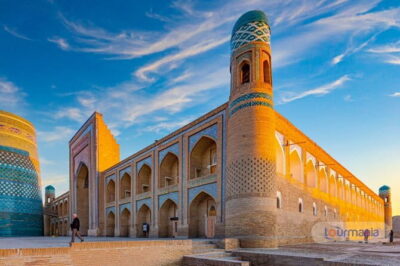
Khiva Historical City Highlights Guided Walking Tour
Read our review →
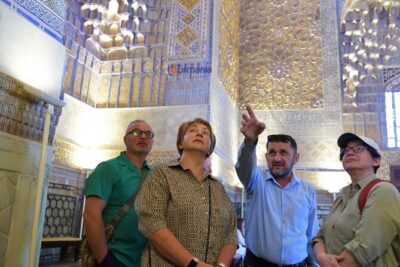
Samarkand Historical City Highlights Guided Walking Tour
Read our review →Browse the lists this tour appears in