
Reviewed · 2-DAY EXPERIENCES
2 Days Private Safari Tour from Bukhara
The desert gets interesting fast. This two-day private trip links Bukhara and Samarkand with ancient rock carvings, Nurata’s Alexander-era monuments, and a night in a yurt near Lake Aydarkul. I like the route because it is more than a desert drive: Sarmishsay Gorge brings Stone Age art, while the evening adds music, stories, and a star-filled sky.
I also like the practical one-way design. You leave Bukhara at 9:00 and arrive in Samarkand the next afternoon, so you do not need to backtrack. The main concern is value and comfort: the tour costs $245 per person, and the long drives can feel tough if the air conditioning fails or the yurt camp falls below expectation.
In This Review
- Key points at a glance
- Why this Bukhara to Samarkand route works
- Day one: Rabati Malik and the old desert road
- Sarmishsay Gorge and its Stone Age carvings
- Nurata, a city tied to Alexander the Great
- A yurt night near Aydarkul Lake
- Day two: Village life and Aydarkul Lake
- The five-hour ride to Samarkand
- What the $245 price really includes
- Who will enjoy this desert trip most
- Practical details before you book
- Should you book this Bukhara desert tour?
- FAQ
- Where does the tour start and finish?
- How long are the driving days?
- Is the yurt camp stay included?
- Is a camel ride included?
- Can you swim in Lake Aydarkul?
- What languages are available for the guide?
- What should you bring?
Key points at a glance
- 10,000 ancient carvings at Sarmishsay: Two petroglyph sites show human and animal figures dating as far back as the Stone Age.
- A five-hour desert transfer: Much of the first day is spent on the road, making air conditioning and vehicle quality important.
- Nurata’s Alexander connection: The city’s monuments add a historical stop before the yurt camp.
- Aydarkul Lake in the desert: You may swim in season, walk the shore, eat a picnic, and watch birds.
- Night music beside the fire: A local bard performs traditional music while you sit under the stars.
- Private door-to-door transport: Pickup is available from hotels, airports, and train stations in Bukhara or Samarkand.
Why this Bukhara to Samarkand route works
This is not a short excursion that returns you to the same hotel. It is a transfer with scenery and stops built in, which makes it useful if you are already planning time in both historic cities.
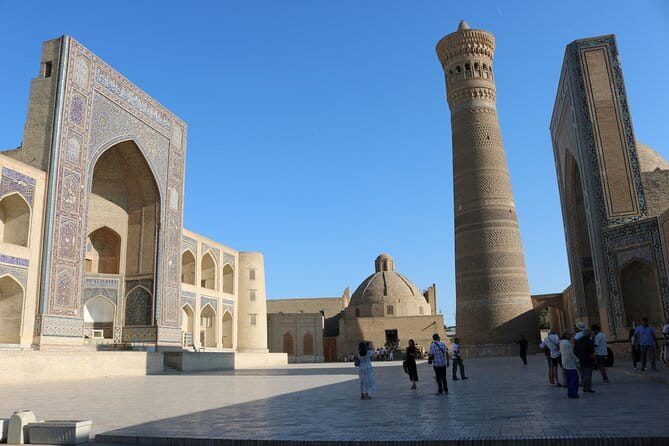
You begin in Bukhara and finish in Samarkand, with the Kyzylkum desert between them. The route gives you a sharp change of pace. Bukhara’s tiled courtyards and old streets give way to open sand, dry hills, village life, and a broad lake that seems almost misplaced in the desert.
I think the route suits people who want to see more of Uzbekistan beyond its famous city centers. You get archaeology, local culture, natural scenery, and a night outdoors in a compact two-day schedule. The tradeoff is simple: you gain variety, but you spend roughly five hours driving on each day.
The tour is private, so the pace may feel more personal than a large coach trip. You can ask questions, stop at the scheduled sites, and talk directly with your English- or Russian-speaking guide. Guides named in recent bookings include Bekhruz, Bakhtiior, Rozibek, Ikrom, and Rouzbek, with drivers including Abbos and Almaz. Experiences can vary by assigned team, but the strongest part of the service is often the human side.
More desert safaris from Bukhara:
- 2 Days Private Safari Tour from Bukhara
★ 4.5 · 6 reviews
Day one: Rabati Malik and the old desert road
Pickup from Bukhara is scheduled for 9:00. Your first major stop is Rabati Malik Caravanserai near Navoiy, along with Sardoba Malik, its associated water reserve.
A caravanserai was a stopping place for merchants and their animals on long trade routes. Rabati Malik helps you picture the hard practical work behind the Silk Road. A journey across Central Asia depended not only on roads and markets, but also on water. Sardoba Malik makes that point clearly, since a water reserve could decide where people and caravans were able to stop.
This is a good early stop because it gives the day some historical shape before the open desert begins. Do not expect a complete old town or a large museum complex. The appeal is the surviving structure, the setting, and the chance to understand how trade moved through a dry region.
From there, you continue toward Sarmishsay Gorge. The overall transfer to the yurt camp takes about five hours, including the stop in Nurata and the other visits. That timing matters. This is a full road day, not a gentle half-day outing.
If you travel during hot weather, ask before departure about the vehicle’s air conditioning. One serious comfort problem reported on this route involved a car with no working air conditioning throughout a day above 95°F, or 35°C. The operator said the fault lasted only a short distance, but the passenger’s experience was different. I would confirm that the car is cooled and road-ready before setting off.
Sarmishsay Gorge and its Stone Age carvings
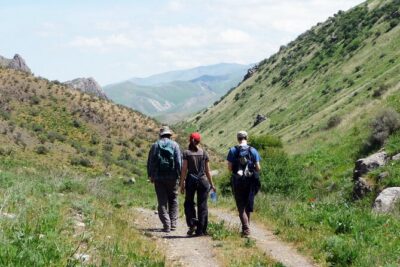
Sarmishsay Gorge is the archaeological high point of the first day. The area contains two petroglyph sites with a total of about 10,000 ancient rock carvings, some dating back as far as the Stone Age.
The drawings show why this stop deserves real attention. In a place that may first look bare and empty, the rocks preserve evidence of people who lived, hunted, and moved through the area long before modern roads. Your guide can help you notice the figures rather than walking past them as simple scratches on stone.
The gorge also breaks up the long drive. You get out, walk around, and shift from modern transport to a much older record of human life. The site is especially good for anyone interested in archaeology, early art, or the way people adapted to dry country.
Bring your passport or ID card, which is required for the tour. Comfortable walking shoes are sensible, though the supplied information does not give a precise walking distance or trail surface. A hat, water, and sun protection are also practical choices for an exposed stop, even though only the passport or ID is formally listed as required.
Drones are not allowed. If photography is important to you, use a phone or camera instead and keep your equipment light for the day’s repeated stops.
Nurata, a city tied to Alexander the Great
The route then reaches Nurata, a city founded by Alexander the Great. You stop to see its monuments before continuing to the desert camp.
That connection gives Nurata a useful place in the itinerary. It adds a recognizable name from ancient history, but the stop is not presented as a long city tour. Think of it as a compact historical visit that breaks the journey and gives you a look at a settlement shaped by a much older past.
I would pay close attention to the guide here. The quality of the explanation can make a short monument stop feel worthwhile. Guides such as Ikrom and the team members named above have been praised for clear English, kindness, and care with the schedule. A good guide can also point out the contrast between Nurata’s settled life and the spare desert ahead.
After Nurata, the road continues to the yurt camp near Lake Aydarkul. The camp is the base for the night, camel ride, dinner, and traditional music.
More two-day trips from Bukhara:
- From Bukhara: 2-Day Desert Yurt Camp Tour
★ 4.5 · 57 reviews - Desert Yurt Camp tour – 2 days (shared)
★ 4.5 · 13 reviews - 2 Day Ukhum Hiking Tour from Bukhara
★ 5.0 · 4 reviews - 2 Days Tour to Bukhara and Samarkand from Tashkent by train
★ 5.0 · 53 reviews
A yurt night near Aydarkul Lake

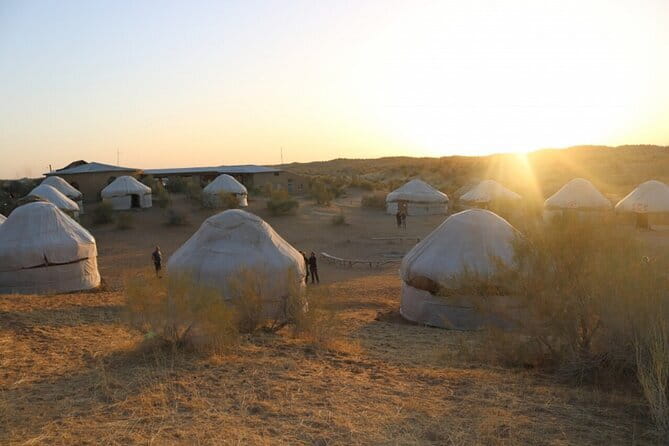
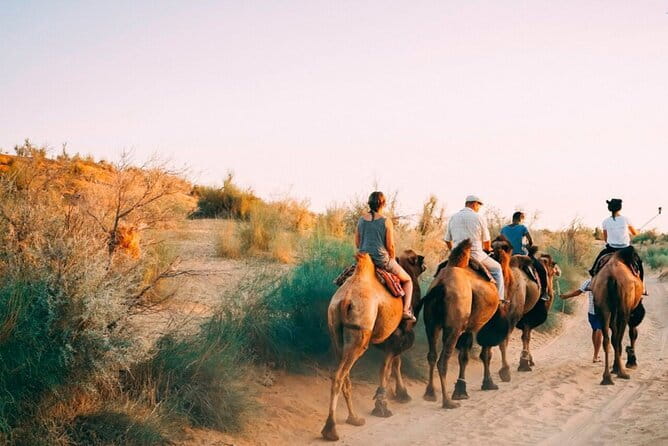
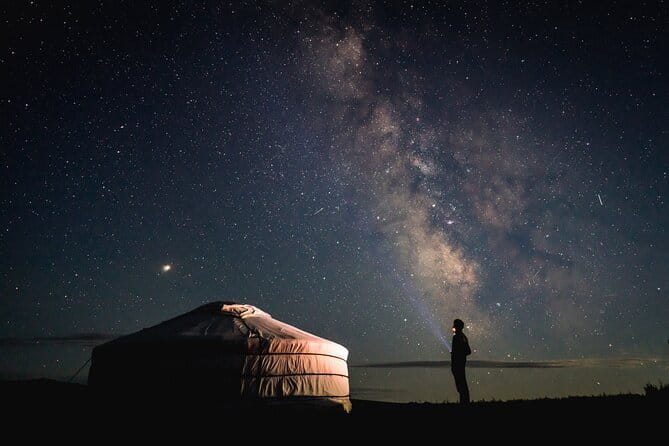
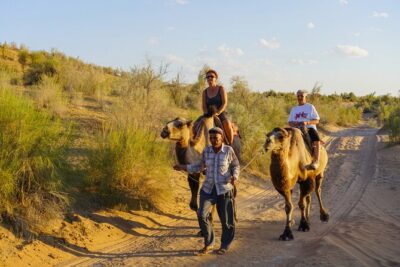
The yurt camp is meant to be the emotional center of the trip. You have a camel ride of about 20 minutes around the camp, followed by traditional music and stories beside the fire. The night sky can be superb, with very little artificial light. Several visitors have been able to photograph the Milky Way, and that is one of the clearest reasons to spend the night rather than simply pass through the desert.
The music is performed by a local bard. It gives the evening a sense of place that a standard hotel cannot offer. The combination of firelight, songs, and open sky can be memorable, especially after a long day in the car.
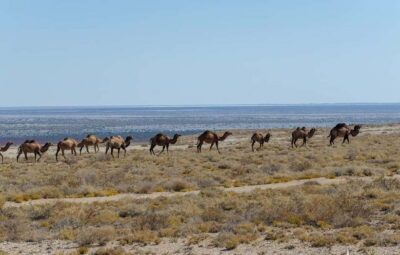
Keep expectations realistic about the camel ride. It is short, and the quality of the animals, guide, and camp setting may not match the polished image suggested by promotional photographs. One account described the camel area as dirty and said a tip felt forced after the ride. I would carry small cash only if you want to tip, and ask clearly what is included before participating.
The yurt itself may be comfortable, but standards are not guaranteed to be uniform. A broken door and an unclean yurt have been reported, even when other bookings described the camp as comfortable. If your accommodation has a problem, raise it immediately with the guide and camp staff rather than waiting until morning.
The price includes one night, dinner, breakfast, and the traditional music performance. It does not clearly promise unlimited drinking water or every small camp service. Bring some extra cash for water and possible tips, and confirm charges before accepting add-on services.
Day two: Village life and Aydarkul Lake
Breakfast comes at the yurt camp before a short visit to Dungalak village. The purpose is to see how local people live with livestock and how daily life works outside the main cities.
This visit is valuable because it changes the scale of the journey. Archaeological sites show the distant past, while the village offers a look at present-day rural life. You may see a quieter rhythm shaped by animals, household work, and the demands of living far from Uzbekistan’s major urban centers.
Do not expect a staged cultural show. The information provided describes a short visit, not a formal workshop or extended homestay. Your guide’s manners matter here. Follow local guidance, ask before taking close photographs, and treat the stop as a chance to observe rather than a performance arranged for you.
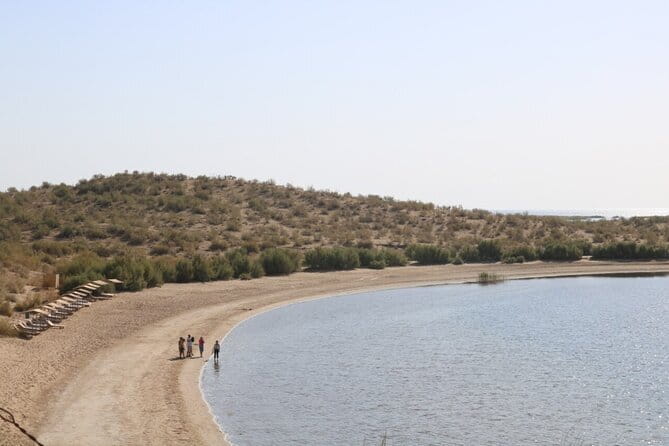
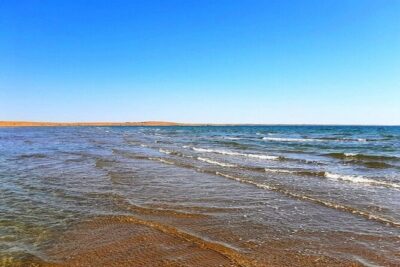
After Dungalak, you go to Lake Aydarkul for a picnic. The lake is the day’s most surprising natural stop. Its water and birdlife offer a strong contrast with the surrounding dry country.
Depending on the season, you can swim or walk along the shore. If swimming is important to you, ask about conditions before booking because the activity is seasonal and not guaranteed. If the weather is unsuitable, a shoreline walk and bird watching are the alternatives.
The picnic is included, along with lunch. Since the itinerary includes two lunches, one is likely connected to the first day’s stops and the second to this lake visit, but the precise arrangements are not specified. Ask your guide about timing, food, and water so you know what to expect.
The five-hour ride to Samarkand
In the afternoon, you leave Aydarkul for Samarkand. The final transfer takes about five hours, so you should not plan a demanding evening immediately after arrival.
This last road stretch is the practical price of the one-way route. You avoid returning to Bukhara, but you spend another long block of time in the vehicle. For some people, that is an efficient use of a travel day. For others, it may feel like too much road after the previous day’s drive.
The private format helps here. You are not tied to a large group’s conversation or fixed seating plan, and you can discuss rest stops with the driver. Still, private does not mean short. The distance remains the distance.
If you have back problems, this trip is not recommended. Babies under one year old and people over 95 are also listed as unsuitable for the activity. Those limits reflect the long drives, desert access, and camp conditions.
What the $245 price really includes
At $245 per person, the tour is not a budget transfer. The price covers an English-speaking guide, air-conditioned transport according to the program, entrance tickets, registration, the yurt night, one breakfast, two lunches, one dinner, a 20-minute camel ride, and the music performance.
That can be fair value if you want all the major pieces arranged in one private trip. You are paying for a driver, guide, cross-country transport, entry fees, meals, and the convenience of ending in another city. Booking two separate transfers and arranging the desert stop yourself could be more work, even if the raw cost were lower.
The value becomes weaker if you are traveling alone. One solo booking cost close to €340 after the single-person increase, while the same structure is more attractive for two people sharing the private vehicle. If you are alone, ask if a shared departure is possible. The supplied conditions describe a private group, but one solo visitor specifically wished to join others to reduce the cost.
The other value issue is service consistency. Air conditioning is not a luxury in a summer desert transfer. It is part of the promised transport. Before paying, confirm the vehicle, cooling system, and what happens if a major fault occurs.
Also ask what is included at the camp. Water, tips, and optional services can add small costs, and those costs feel irritating when the original price is already high.
Who will enjoy this desert trip most
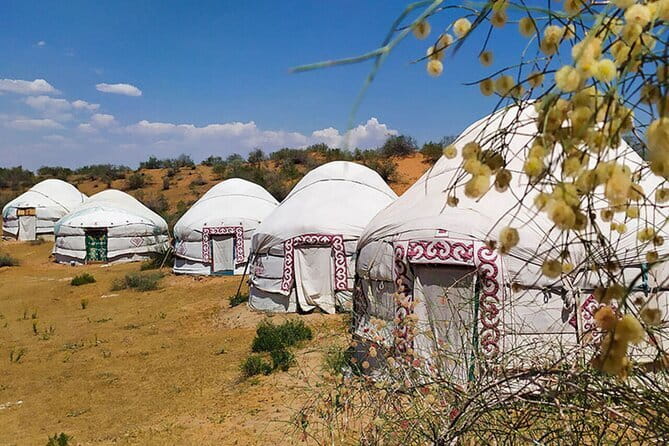
I would recommend this experience to you if you want a two-day bridge between Bukhara and Samarkand and care about seeing more than the famous city monuments. It is a good fit for people who enjoy archaeology, open country, rural encounters, simple camp accommodation, and long scenic drives.
It is also a strong choice if the idea of traditional music under the stars appeals to you. The night sky and the combination of camel ride, fire, and local songs are the parts most likely to stay with you.
I would hesitate if you need polished accommodation, dependable luxury transport, or a tightly controlled schedule. The yurt is not a hotel, and the route has limited room for comfort problems. Anyone who dislikes five-hour drives should consider a shorter excursion instead.
This trip can work for photographers, too. Sarmishsay offers ancient markings, the lake gives you birds and water against a dry setting, and the camp may provide excellent night-sky conditions. Just remember that drones are prohibited.
Practical details before you book
Pickup is available from hotels, airports, and train stations in Bukhara and Samarkand. The tour can begin in either city, although the described route runs from Bukhara through Nurata and the yurt camp to Samarkand.
English and Russian guiding are available. Bring your passport or ID card, and do not bring a drone. Free cancellation is available up to 24 hours before departure, and you can reserve now and pay later, which helps if your Uzbekistan schedule is still shifting.
I would ask these questions before confirming:
- Is the air conditioning working in the exact vehicle assigned?
- Is water included at the yurt camp, and how much should you bring?
- Are tips for the camel handler or musician optional?
- Can a solo booking join a shared group at a lower cost?
- What bedding and bathroom facilities are available in the yurt?
Those questions are not fussy. They address the main difference between a magical desert night and an uncomfortable one.
Should you book this Bukhara desert tour?
Book it if you see the journey as a cultural road trip rather than a luxury safari. The ancient carvings at Sarmishsay, Nurata’s historic connection, Dungalak village, Aydarkul Lake, and the music beside the fire create a varied two-day route that is hard to reproduce with a simple city transfer.
I would book for two people, confirm the vehicle’s air conditioning, and set aside a little money for water and tips. If those basics are confirmed, the tour offers a memorable way to move from Bukhara to Samarkand while adding a very different side of Uzbekistan.
If comfort and predictable standards matter more than variety, spend your nights in the cities and arrange a shorter desert visit. The desert itself is not grand in the way a vast dune sea can be. Its appeal comes from the small encounters, the old carvings, the lake, the campfire music, and the feeling of crossing a wide, quiet part of the country.
FAQ
Where does the tour start and finish?
The described route starts with pickup in Bukhara and finishes in Samarkand. The tour can also be started from Samarkand.
How long are the driving days?
The transfer to the yurt camp on day one takes about five hours, and the afternoon transfer from Lake Aydarkul to Samarkand takes about five hours.
Is the yurt camp stay included?
Yes. The price includes one night in the yurt camp near Lake Aydarkul.
Is a camel ride included?
Yes. A 20-minute camel ride around the yurt camp is included.
Can you swim in Lake Aydarkul?
Swimming is possible depending on the season. You can also walk along the shore and observe birds.
What languages are available for the guide?
Guiding is available in English and Russian.
What should you bring?
Bring your passport or ID card. Drones are not allowed on the tour.
Recently added around Bukhara
- Uzbekistan 8 Days Private Guided Tour★ 4.6 · 3 reviews
- Bukhara: City Highlights Guided Tour with Pickup★ 5.0 · 3 reviews
- 9 Days Private Guided Tour to Uzbekistan★ 5.0 · 3 reviews
- Full-Day Private Guided Tour to Islamic 7 Saints of Bukhara★ 4.5 · 3 reviews
- 2 Day Ukhum Hiking Tour from Bukhara★ 5.0 · 4 reviews
- Bukhara in a Day History, Culture, and Local Insight Private Tour★ 5.0 · 4 reviews
- Legends of Bukhara: Exclusive Full-Day Tour★ 5.0 · 4 reviews
- Bukhara: Full-Day Guided Tour with English-Speaking Guide★ 5.0 · 4 reviews
2-Day Experiences, compared.
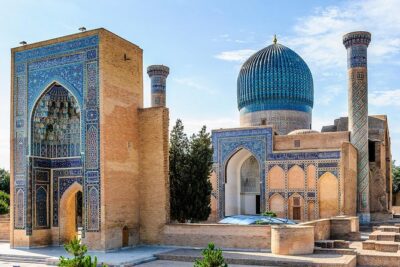
2 Days Tour to Bukhara and Samarkand from Tashkent by train
Read our review →
Yurt stay and Hiking in the Nurata Mountains tour – 2 days
Read our review →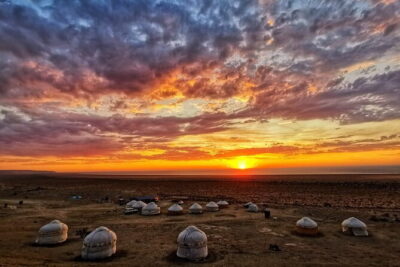
Browse the lists this tour appears in