
Reviewed · HISTORICAL TOURS
Bukhara in a Day History, Culture, and Local Insight Private Tour
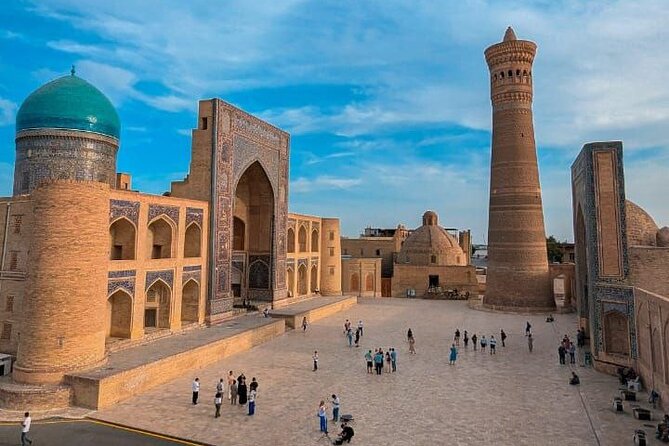
Bukhara rewards a slow walk. This private tour gives you a focused route through the old city, from Lyab-i-Hauz and the Silk Road trading domes to the Poi Kalyan complex, the Ark fortress, and Bolo Hauz Mosque. I like the small private format, which lets your group of up to six set the pace, and I like the chance to hear about local food, silk carpets, puppets, and ceramics alongside the major monuments. Guide Yulduz receives especially strong praise for clear explanations, flexibility, and keeping the day moving.
The main consideration is the pace. The advertised experience lasts about 4 hours and 20 minutes, while one description of the walk puts it closer to three hours. Several admissions are also extra, and the listed entrance-fee information is not perfectly consistent with the individual stop descriptions. You should confirm the exact ticket cost before setting out.
In This Review
- Key points at a glance
- Why this Bukhara walk works well in limited time
- Lyab-i-Hauz begins the story beside the water
- Trading Domes reveal Bukhara’s commercial past
- Magoki Attori and the carpet lesson
- Two madrasas, two different building stories
- Poi Kalyan is the visual high point
- The Ark takes the most time for good reason
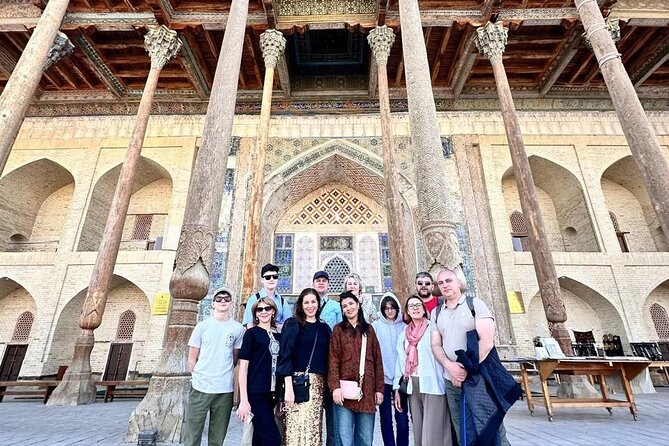
- Bolo Hauz Mosque adds wood, shade, and detail
- Local crafts give the monuments a human scale
- What the guide adds to the experience
- Cost, tickets, timing, and practical details
- Who should book this private tour
- Should you book Bukhara in a Day?
- FAQ
- How long does the Bukhara private tour last?
- How many people can join the private tour?
- What is included in the price?
- Where does the tour begin and end?
- Are entrance fees included?
- Can I cancel for a full refund?
Key points at a glance
- A compact route through Bukhara’s essential old-city sights: You visit Lyab-i-Hauz, the trading domes, historic madrasas, Poi Kalyan, the Ark, and Bolo Hauz Mosque.
- A private group of up to six: You are not tied to a large tour party, so the guide can adjust the pace and answer your questions.
- Guide Yulduz is a major strength: Her explanations, flexibility, and ability to cover the city efficiently receive repeated praise.
- Silk carpets and local crafts add human detail: The tour explains handmade silk, natural dyes, puppet-making, and the blue color used in Bukhara ceramics.
- The $80 price works best for a group: Divided among six people, the guide cost is modest, but admission fees and meals are extra.
- The route ends near the Ark: This is useful if you want to continue sightseeing around the citadel after the tour.
Why this Bukhara walk works well in limited time
Bukhara can feel like a city of repeated domes, brick facades, courtyards, and old religious schools. Without a guide, you can see the buildings but miss the links between them. This route gives you a clear framework for the city’s past as a major Silk Road center and an important seat of Islamic learning and regional power.
The tour begins at the Nasreddin Afandi statue beside Lyab-i-Hauz at 9:00 a.m. That meeting point is easy to recognize, and the location puts you straight into one of Bukhara’s best-known public spaces. From there, you move mostly through the historic center on foot, with the route ending near the Ark on Afrosiab Street.
I like the private setup here because Bukhara’s monuments reward questions. You may want to ask how a madrasa functioned, why one building remains unfinished, or how a handmade carpet differs from a machine-made one. A guide can shape the explanation around your interests instead of giving the same speech to a large crowd.
The advertised group limit is six people. For a couple, family, or small group of friends, that is a comfortable arrangement. It also makes the price attractive: the $80 guide fee works out to about $13.33 per person for a full group of six. For one person, it is a much larger expense, though private guiding can still be worthwhile if you have only one morning in the city.
More Historical Tours in Bukhara:
- Bukhara: Historic Center Guided Sightseeing Tour
★ 4.8 · 44 reviews - Bukhara Historical City Highlights Guided Walking Tour
★ 4.5 · 16 reviews - Samarkand: Historical Monuments Guided Walking Tour
★ 4.8 · 446 reviews
Lyab-i-Hauz begins the story beside the water
The first stop lasts about 40 minutes and costs nothing to enter. Lyab-i-Hauz is built around a historic pool and is one of the most atmospheric places in central Bukhara. Meeting here at the Nasreddin Afandi statue gives the tour a light opening before the route turns toward architecture and religion.
The Nasreddin Afandi figure represents a familiar Central Asian folk character, often linked with clever jokes and practical wisdom. That small cultural detail helps remind you that Bukhara is not only a collection of monuments. Its public spaces also carry stories, humor, and everyday traditions.
This is a good place to get oriented. Your guide can explain how the old city is arranged and how the buildings around the pool relate to Bukhara’s past. The stop is long enough for context without taking too much time from the larger sites later in the morning.
The broader tour theme also includes local cuisine. You may hear about plov, shashlik, manti, flatbread, and green tea, with an emphasis on recipes passed through generations. Meals are not included, so treat the food element as cultural guidance rather than a promised tasting session. If eating is a priority, ask Yulduz how to fit a local meal into your schedule.
Trading Domes reveal Bukhara’s commercial past
From Lyab-i-Hauz, the tour continues to the covered trading domes, another 40-minute stop with no listed admission charge. These domed markets date mainly from the 16th and 17th centuries and once served merchants moving goods through Bukhara along the Silk Road.
The main domes include Toqi Sarrafon, associated with money changers. Other covered market areas were linked to different trades. The architecture mattered in practical ways: a covered roof offered shade, defined the market space, and gave merchants a permanent place to work.
I find this stop valuable because it connects grand city history with ordinary commerce. Bukhara was not important only because rulers built mosques and madrasas. It also depended on traders, artisans, money changers, and customers passing through these market lanes.
The domes are also among the more approachable parts of the route. You can look closely at the structure, browse the shops, and ask how present-day craft sales relate to older traditions. Keep your eye on the clock, though. Market areas can encourage lingering, and the rest of the tour contains several major monuments.
Magoki Attori and the carpet lesson
The Magoki Attori Mosque is described as one of Bukhara’s oldest surviving religious sites, with origins reaching back to the 12th century. The stop lasts about 20 minutes, and admission is not included.
Its importance comes from its age and layered past. The building began as a sacred mosque and later formed part of a larger religious and cultural setting. A short visit cannot cover every period in detail, but a good guide can show you how the structure reflects the long development of Bukhara.
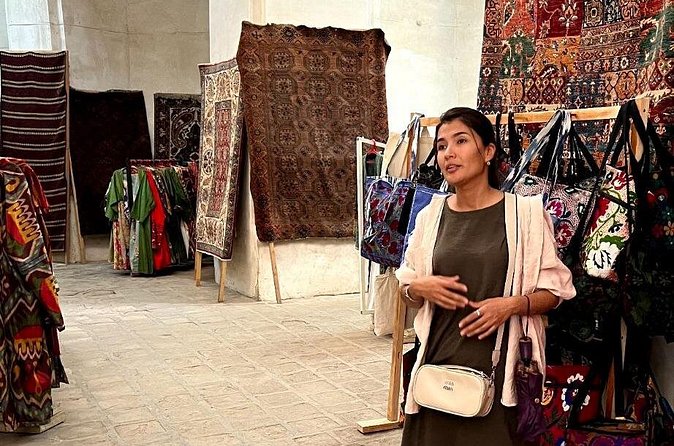
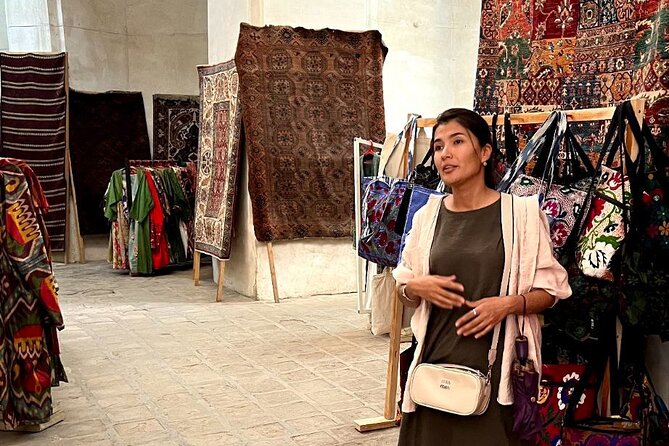
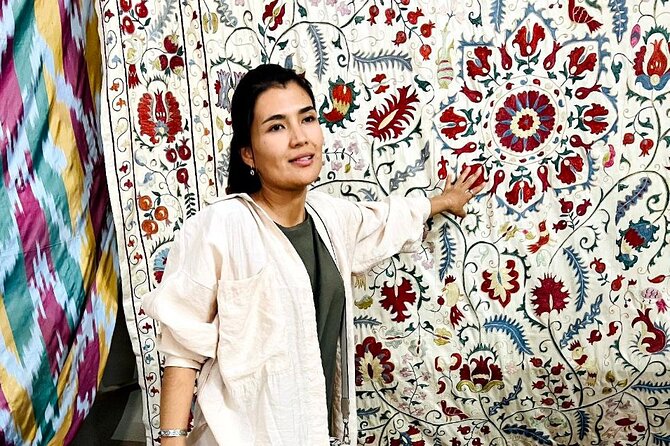
This stop also connects with the carpet museum and the tour’s craft focus. Bukhara is known for silk carpet weaving, and you can learn to distinguish handmade silk carpets from machine-made examples. Handmade pieces use intricate knots and natural dyes, so each one carries small variations. Machine-made silk tends to look more even and regular, but it lacks the same individual character.
That explanation is useful if you plan to shop. Ask about knotting, dye sources, production time, and how the design was made. A beautiful carpet is not automatically a good purchase, and understanding the labor behind it helps you judge prices more sensibly.
A few more Bukhara trips worth weighing up
- Bukhara: Walking Tour with a Small Group
★ 4.9 · 260 reviews - Best of Bukhara: All Day Private Old Town Tour
★ 5.0 · 66 reviews - Best of Bukhara: All Day Private Old Town Tour
★ 4.9 · 62 reviews - From Bukhara: 2-Day Desert Yurt Camp Tour
★ 4.5 · 57 reviews
Two madrasas, two different building stories
The Ulugbek Madrasa receives about 15 minutes. Built in the 15th century by Ulugbek, the Timurid ruler and astronomer, it represents Bukhara’s role as a center of education. Ulugbek is remembered not only as a political leader but also for his interest in astronomy and learning.
The building is a useful reminder that madrasas were more than decorative facades. They were schools connected to religious study and intellectual life. Your visit is brief, so expect an exterior-focused explanation rather than a long academic tour.
Next comes the Abdulaziz Khan Madrasa, with about 10 minutes allotted. Begun in the 17th century, it is known for ambitious design and ornate architectural details, though the project was never fully completed.
That unfinished quality is part of what makes the stop interesting. Instead of seeing a perfect royal project, you see a building that reveals the limits of time, money, politics, or changing priorities. The short stop should be enough to compare it with Ulugbek Madrasa, particularly in age, decoration, and condition.
Both madrasas have extra-admission notes in the tour information. Since each visit is short, you may want to ask the guide what is included in the ticket before paying. That is especially sensible if you are watching the total cost.
Poi Kalyan is the visual high point
The Poi Kalyan complex receives about 30 minutes, with admission listed as extra. This is one of the tour’s most important stops and one of the places where Bukhara’s scale becomes clear.
The Kalon Minaret is the centerpiece. Built in the 12th century, it rises above the old city with patterned brickwork and a form that served practical purposes, including the call to prayer and possibly observation. Its height and surface detail make it easy to understand why it has become one of Bukhara’s defining sights.
The complex also includes the Kalon Mosque and related historic buildings. Your guide can place the minaret within the wider religious center rather than treating it as an isolated tower. Look closely at the brick patterns, which give the structure much of its character without relying on bright painted decoration.
Thirty minutes is enough for an explanation and a good look, but it may feel short if you want extended photography. If architecture is your main interest, tell the guide early. The private format gives you a better chance of adjusting the balance between information and free viewing.
The Ark takes the most time for good reason
The Ark of Bukhara gets the longest stop, about one hour, and admission is not included. The fortress sits at the heart of the city and served as the residence and stronghold of Bukhara’s rulers. Its origins are described as more than 2,000 years old, making it one of the key places for understanding the city’s political story.
An hour gives you time to take in the citadel’s size and hear how it functioned as more than a defensive wall. It was a seat of power, with royal and administrative uses packed inside a fortified enclosure.
The Ark is also where the tour ends, close to Afrosiab Street. That ending is practical. You can continue exploring the citadel, arrange your next activity, or simply remain in the area instead of retracing your route to the original meeting point.
Because the Ark is both large and historically important, this stop may feel rushed if the earlier visits run over. Keep an eye on the schedule, especially if you want the full hour here. The fortress is the place where extra time pays off most.
Bolo Hauz Mosque adds wood, shade, and detail
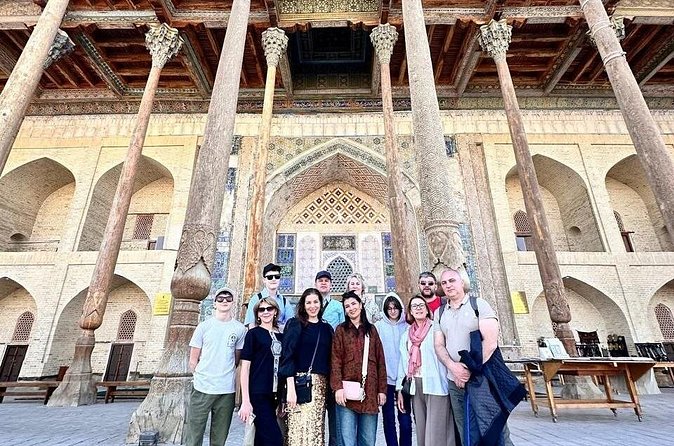
Bolo Hauz Mosque is near the Ark and receives about 15 minutes. Built in the early 18th century, it is known for carved wooden columns supporting its covered prayer area.
After the brick domes, minarets, and fortress walls earlier in the route, the wooden columns offer a useful change in texture. The mosque shows how local builders used wood as an important architectural element, not merely as a practical material.
The stop is free according to the tour details and fits neatly near the end of the route. It also gives your guide a chance to compare religious buildings from different periods and explain how their visual language changes across Bukhara.
Fifteen minutes is a short visit, but it is enough to appreciate the columns and hear the essential background. If you enjoy decorative woodworking, this may be one of the stops where you will want a few extra minutes.
Local crafts give the monuments a human scale
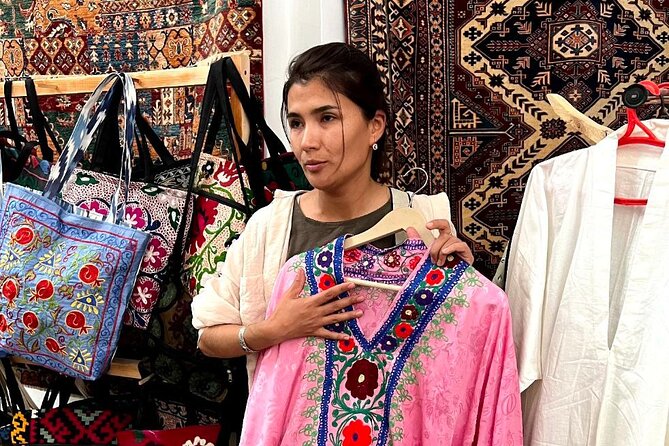
The tour description reaches beyond old buildings to workshops and traditional crafts. Silk carpet weaving is the clearest example. You learn about the patient process of making a handmade silk carpet, the use of natural dyes, and the visible differences between hand production and machine production.
You may also encounter a traditional puppet workshop. Craftsmen create colorful marionettes used in storytelling performances, a detail that gives Bukhara’s culture a playful side. This is a welcome counterpoint to the solemnity of mosques, madrasas, and royal fortifications.
Ceramics add another unusual topic. The tour explains how Bukhara’s famous blue color is achieved using a desert plant. That kind of production detail is easy to miss when you only move from monument to monument, yet it helps you understand why local objects look the way they do.
The available information does not assign a separate time to each craft activity, so you should ask at the start how these subjects fit into the walking route. If workshops are central to your plans, confirm which visits are included on your chosen date.
What the guide adds to the experience
The guide is the tour’s strongest personal element. Yulduz is praised for explaining Bukhara’s buildings clearly, answering questions with detail, and adjusting the pace when needed. One account describes her as helping a group understand the city’s culture rather than simply leading them from door to door.
That flexibility matters in a private tour. You can move faster through a stop that interests you less and spend more time on carpets, architecture, food, or local customs. You can also ask for a simpler explanation if the layers of Bukhara’s past begin to blur together.
The strongest praise focuses on efficiency and completeness. The route covers the major sights in a short period, which suits you if Bukhara is one stop in a larger Uzbekistan trip. The guide’s ability to condense the city’s story through its buildings is particularly useful for a first visit.
At the same time, efficiency means this is not a slow, unstructured neighborhood walk. You will see many important places, but you should not expect long periods at every monument. If you prefer to linger, photograph, or read every inscription, say so at the beginning.
Cost, tickets, timing, and practical details
The tour costs $80 per private group of up to six and includes a professional guide and bottled water. Meals are not included, and there is no restroom on board, though this is a walking experience rather than a vehicle tour.
The value is strongest for two to six people. A full group receives a private guide for a modest per-person cost, while a solo visitor pays the whole group rate. You also need to budget for admissions. The fee note lists $7 per person for entry connected with Lyabi Hauz, Abdulazizkhan, Poi Kalon Mosque, and the Ark, although some individual stops are marked as free and others as not included. Confirm the exact amount at booking or with the guide.
The tour begins at 9:00 a.m. at the Khodja Nasreddin statue, listed at QCFC+5FM in Bukhara. It ends near the Ark at QCH5+6W6 on Afrosiab Street. Pickup is offered, but the supplied details do not specify the pickup area or whether it changes the meeting time, so confirm that point if you need door-to-door service.
Confirmation arrives at booking. Service animals are allowed, and the meeting area is near public transportation. Most people can participate, but the route includes several hours of walking between historic sites, so comfortable shoes are sensible.
Free cancellation applies if you cancel at least 24 hours before the start time. Changes or cancellations inside that 24-hour window do not receive a refund.
Who should book this private tour
I would choose this tour if you have one morning in Bukhara and want the major old-city sights explained in a logical order. It suits couples, families, and small groups who value a private guide and want the freedom to ask questions.
It is also a good match if you care about more than monuments. The references to plov, green tea, silk carpets, puppets, and ceramic dyes add local texture and give you useful context for shopping and eating later.
You may want a different format if your priority is a slow craft workshop visit, a dedicated food tour, or long photography sessions. The route covers a lot in about four hours and 20 minutes, possibly less depending on the pace. The best approach is to tell Yulduz what matters most before you start.
Should you book Bukhara in a Day?
Book it if you want an efficient introduction to Bukhara with a private guide who can explain the city clearly and adjust the pace. The combination of Lyab-i-Hauz, the trading domes, madrasas, Poi Kalyan, the Ark, and Bolo Hauz gives you a strong first look at the old city.
The value improves sharply with a group of four to six, once the $80 guide fee is shared. Add the extra admission cost, allow time for walking, and confirm how much craft and food content can fit into the schedule. If you want a well-organized first day rather than a leisurely deep exploration of one subject, this is a sensible choice.
FAQ
How long does the Bukhara private tour last?
The advertised duration is approximately 4 hours and 20 minutes. One tour description also refers to a three-hour walking tour, so confirm the expected timing when booking.
How many people can join the private tour?
The private tour accommodates up to six people per group. Only your group participates.
What is included in the price?
The price includes a professional guide and bottled water. Meals, entrance fees, and restroom facilities on board are not included.
Where does the tour begin and end?
The tour begins at 9:00 a.m. at the Khodja Nasreddin statue near Lyab-i-Hauz. It ends near the Ark of Bukhara on Afrosiab Street.
Are entrance fees included?
No. The tour information lists a $7 per-person entrance charge for several sites, including Abdulaziz Khan Madrasa, Poi Kalyan Mosque, and the Ark. Some individual stops are marked as free, so confirm the exact admission arrangement before the tour.
Can I cancel for a full refund?
Yes, if you cancel at least 24 hours before the experience start time. Cancellations or changes made less than 24 hours before the start time are not refunded.
Recently added around Bukhara
- Uzbekistan 8 Days Private Guided Tour★ 4.6 · 3 reviews
- Bukhara: City Highlights Guided Tour with Pickup★ 5.0 · 3 reviews
- 9 Days Private Guided Tour to Uzbekistan★ 5.0 · 3 reviews
- Full-Day Private Guided Tour to Islamic 7 Saints of Bukhara★ 4.5 · 3 reviews
- 2 Day Ukhum Hiking Tour from Bukhara★ 5.0 · 4 reviews
- Bukhara: Full-Day Guided Tour with English-Speaking Guide★ 5.0 · 4 reviews
- Legends of Bukhara: Exclusive Full-Day Tour★ 5.0 · 4 reviews
- Bukhara Walking Tour★ 5.0 · 4 reviews
Historical Tours, compared.
Khiva Historical City Highlights Guided Walking Tour
Read our review →
Browse the lists this tour appears in