
Reviewed · FULL-DAY
Bukhara: Full-Day Guided Tour with English-Speaking Guide
Bukhara rewards slow looking. This full-day private tour brings its finest monuments into one walkable day, from the 10th-century Samanid Mausoleum to the blue-tiled Poi Kalan Mosque and the old trading domes. I especially like the focus on architecture and Silk Road commerce, plus the chance to learn from a local guide rather than simply collect photographs.
The tour also earns points for its flexible, personal feel. Guides including Lola, Paris, and Malika have been praised for clear English, warm manners, practical advice, and strong answers to questions. The main drawback is the amount of walking over uneven historic ground, while entrance tickets, meals, drinks, and transport with a driver cost extra.
In This Review
- Key points to know before you book
- Why this Bukhara tour works well
- Starting at Lyabi Khauz and finding the old city’s rhythm
- The Samanid Mausoleum and the power of plain brick
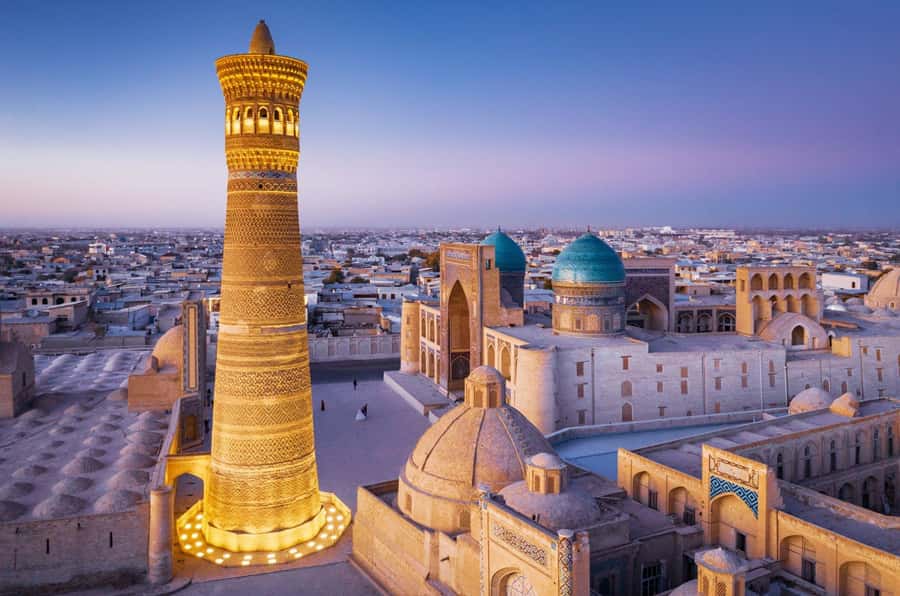
- Minorai Kalon and the blue-tiled Poi Kalan Mosque
- Magok-i-Attari Mosque and Bukhara’s layered past
- Tim Abdulla Khan Trading Dome and useful souvenir advice
- The Ark of Bukhara, fortress and royal residence
- Bolo Haouz Mosque and a quieter architectural pause
- Returning to Lyabi Khauz at the end of the day
- Walking, weather, and what to bring
- Who should book this Bukhara experience?
- Should you book the $80 private tour?
- FAQ
- Where does the Bukhara tour start?
- Where does the tour end?
- How much does the tour cost?
- Is the tour private?
- Which languages are available?
- What is included in the price?
- Are entrance tickets included?
- Is transportation included?
- What should I bring?
Key points to know before you book
- Seven major Bukhara sights in one day: Visit the Samanid Mausoleum, Minorai Kalon, Poi Kalan Mosque, Magok-i-Attari Mosque, Tim Abdulla Khan Trading Dome, Ark of Bukhara, Bolo Haouz Mosque, and Lyabi Khauz.
- A private English-speaking guide: You receive personal attention rather than following a large group, with Russian also available.
- Strong guide feedback: Lola, Paris, and Malika have been praised for excellent English, friendliness, useful stories, and detailed answers.
- A walking-heavy sightseeing day: Comfortable shoes, water, a hat, and sunscreen matter, especially in sunny weather.
- Shopping with context: The Tim Abdulla Khan Trading Dome includes a chance to browse handicrafts, with artisan workshops useful for buying quality scarves.
- $80 before extras: The price includes the certified guide and private tour, but not admission tickets, food, drinks, or transport with a driver.
Why this Bukhara tour works well
Bukhara is the kind of city where a guide adds real value. Its monuments are beautiful, but the connections between them are what make the day meaningful. A minaret was not only a piece of decoration. A trading dome was not merely a covered market. A pond was once a social center, and a fortress was the seat of power.
This tour follows that story across the old city. You begin near Lyabi Khauz, then visit monuments from several periods and finish back at the same meeting point. That makes the route easy to understand and removes the need to arrange separate sightseeing stops.
I like the private format for Bukhara because you can ask about small details that would otherwise pass unnoticed. You can also ask your guide to explain a religious building, a brick pattern, or a market tradition at your own pace. The named guides, Lola, Paris, and Malika, have each been praised for good English and an approachable manner. Malika, in particular, is noted for answering questions in detail, while Lola has been praised for combining facts with practical tips and local stories.
The $80 price needs a little unpacking. It is not an all-inclusive day trip. It covers a certified English-speaking guide and private guiding, but you pay separately for monument admission, meals, drinks, and transport during the tour with a driver. For someone who wants a private introduction to Bukhara’s main sights, that can be fair value. If you prefer to explore independently and only need directions, the extra costs may make the tour less appealing.
More full-day trips from Bukhara:
- Best of Bukhara: All Day Private Old Town Tour
★ 5.0 · 66 reviews - Best of Bukhara: All Day Private Old Town Tour
★ 4.9 · 62 reviews - Bukhara Full Day Old City Private Tour
★ 5.0 · 46 reviews
Starting at Lyabi Khauz and finding the old city’s rhythm
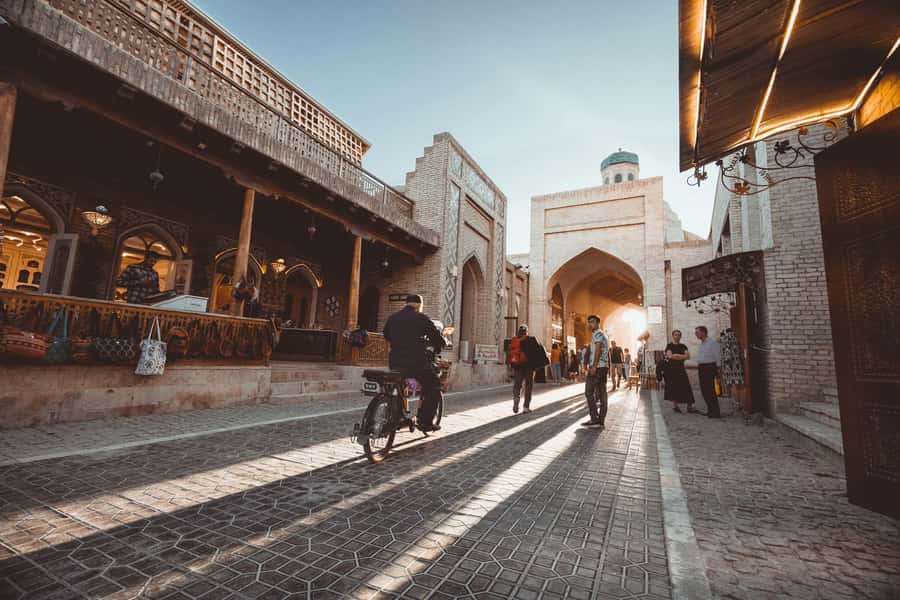
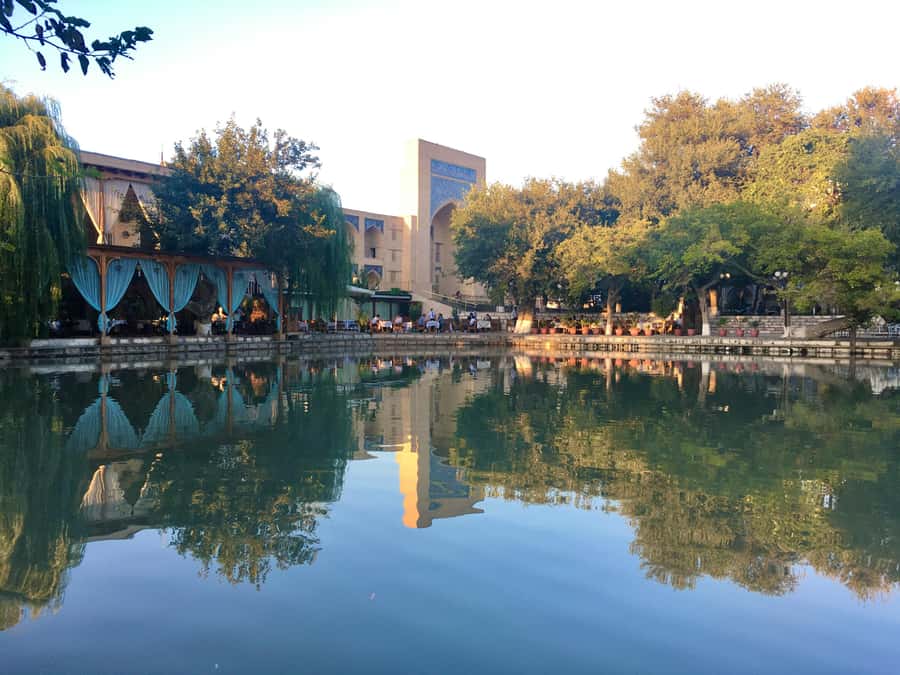
The meeting point is at Lyabi Khauz, near the Hodja Nasreddin monument. This is a useful place to begin because Lyabi Khauz is not just a convenient square. Its pond, madrassas, tea houses, and shaded social spaces help explain how people gathered in Bukhara before modern streets and cafés reshaped city life.
Your guide can give you a sense of the city before you move on to the individual monuments. That opening context matters. Without it, Bukhara can feel like a series of grand façades. With it, the buildings begin to form a connected picture of religion, trade, education, government, and daily life.
You will return to this same meeting point at the end. Since the activity does not include a driver, clarify your transport plans in advance if you are arriving from outside the central area. The core sightseeing route is on foot, and the walking is moderate rather than effortless.
The Samanid Mausoleum and the power of plain brick
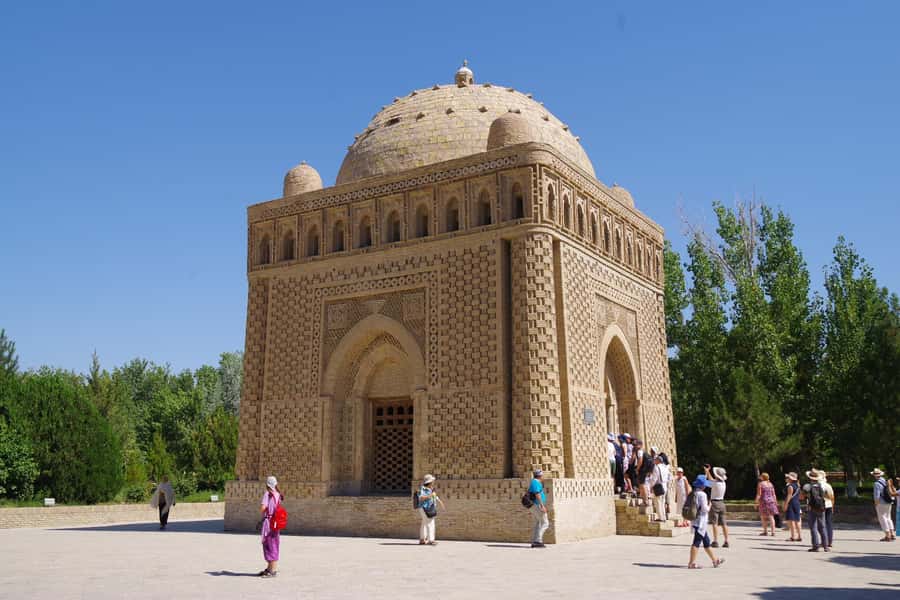
The Samanid Mausoleum is one of the strongest stops on the route. Built in the 10th century, it is associated with Ismail Samani, founder of the Samanid dynasty, and is described as one of the oldest and most remarkable monuments in Central Asia.
Its appeal comes from restraint. Instead of relying on painted decoration, the building uses carefully arranged brickwork to create patterns, depth, and balance. Look closely at how the bricks catch light differently across the walls. The design feels calm and exact, which makes it a useful introduction to the skill of Central Asian builders.
I would give this stop your full attention rather than treating it as a quick photo opportunity. The geometric design rewards close inspection, and a guide can explain why the structure matters beyond its age. You will also want to remember the photography rule: cameras are allowed, but flash photography is not permitted inside the monuments.
Minorai Kalon and the blue-tiled Poi Kalan Mosque
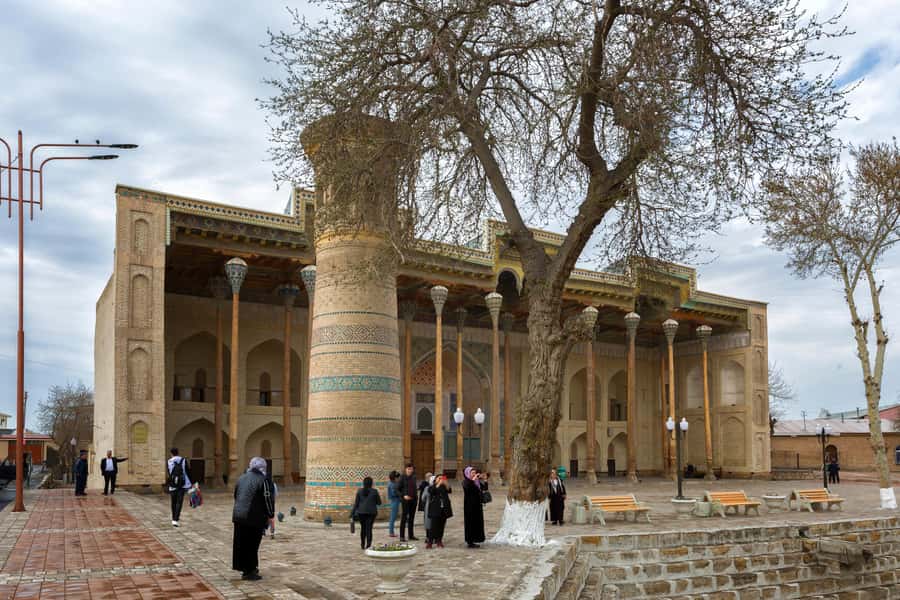
The 47-meter Minorai Kalon is one of Bukhara’s unmistakable landmarks. Built in the 12th century, the minaret guided Silk Road caravans and survived repeated invasions. Its tall, tapering form and patterned brick surface show how a practical structure could also become a symbol of the city.
Your guide will explain its role and construction, which helps you see more than a tall tower against the sky. The minaret was part of a larger religious and civic center, and its position near the mosque and madrassa made it an important marker for people moving through Bukhara.
Nearby, Poi Kalan Mosque provides a very different scale. The mosque can hold up to 10,000 worshippers, with a broad courtyard, blue-tiled domes, and an elaborate mihrab. I like the contrast between the vertical pull of the minaret and the open, wide feeling of the mosque courtyard.
This is one of the places where the guide’s explanation can prevent confusion. Religious architecture often has details that are easy to overlook if you do not know what you are seeing. Ask about the mihrab, the courtyard, and the relationship between the mosque and minaret. Food and drinks are not allowed inside the monuments, so plan to eat before or after the tour rather than carrying refreshments into these spaces.
A few more Bukhara trips worth weighing up
- Bukhara: Walking Tour with a Small Group
★ 4.9 · 260 reviews - From Bukhara: 2-Day Desert Yurt Camp Tour
★ 4.5 · 57 reviews - City Tour Around Bukhara
★ 5.0 · 55 reviews - Bukhara: Historic Center Guided Sightseeing Tour
★ 4.8 · 44 reviews
Magok-i-Attari Mosque and Bukhara’s layered past
Magok-i-Attari Mosque is a compact but especially interesting stop. It was originally a Zoroastrian temple and later became a mosque in the 12th century. That change gives the building an unusual sense of time, with religious and cultural layers meeting in one place.
The underground entrance is part of its character. You are not simply entering another large courtyard or grand prayer hall. The lower approach helps show how the building has changed and how the ground level of an old city can shift over centuries.
This stop is valuable for anyone interested in Central Asian history beyond the most famous Islamic monuments. It also gives you a break from the scale of Poi Kalan and the Ark. The drawback is that historic structures are not designed like modern museums. Steps, tight areas, and uneven surfaces can make access difficult, especially for anyone with significant mobility limitations.
Tim Abdulla Khan Trading Dome and useful souvenir advice
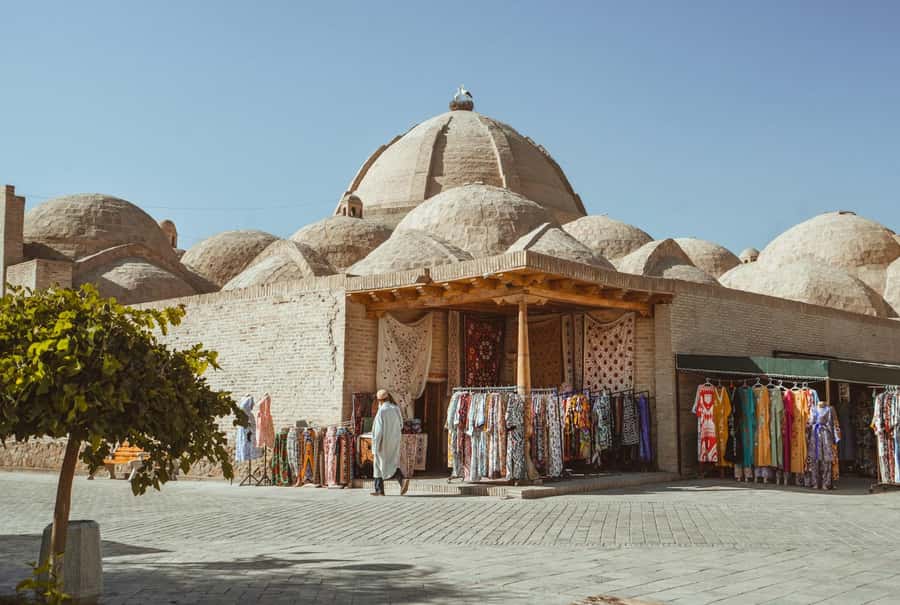
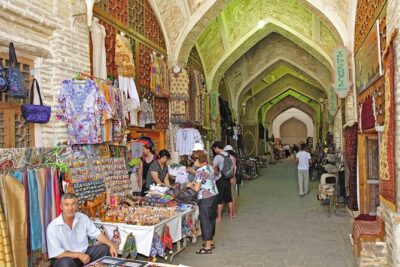
The Tim Abdulla Khan Trading Dome brings the Silk Road story down to the level of buying and selling. Covered trading domes once protected merchants and shoppers from the weather while connecting Bukhara to long-distance commerce.
Your guide will explain how the market functioned and then give you time to browse local handicrafts. That combination is better than shopping without context. You can understand why covered market spaces mattered before deciding if a textile or scarf deserves space in your luggage.
One practical tip is particularly useful: if you want a scarf, wait until after the tour has introduced you to artisan workshops. Malika is known for showing visitors places where higher-quality products are available. I would still compare prices and materials, but this advice may help you avoid making a rushed purchase at the first stall.
Shopping is not mandatory, and you should not feel pressured to buy. The value here is the chance to see craft production and connect modern goods with Bukhara’s long trading tradition.
The Ark of Bukhara, fortress and royal residence
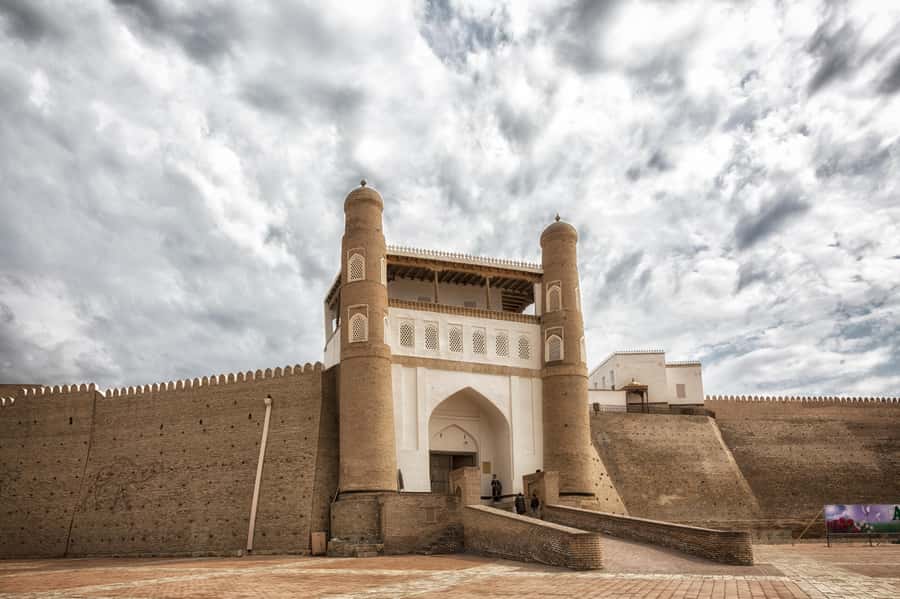
The Ark is a massive fortress that served as the royal residence of Bukhara’s rulers. Its origins date to the 5th century, making it one of the most important political sites on the route.
Inside and around the Ark, your guide will discuss defense, governance, courtyards, walls, and chambers. This is where Bukhara’s political story becomes more visible. Religious monuments show how people worshipped and studied, while the Ark shows where rulers made decisions and protected their authority.
The fortress is also a reminder that Bukhara was not only a stop for merchants. It was a capital with its own rulers, institutions, and power struggles. Give yourself time to absorb the scale of the walls. You may find the Ark less delicate than the mausoleum or mosque, but its bulk is exactly the point.
Expect more walking and historic surfaces here. The tour is not suitable for wheelchair users or people with major mobility impairments, and the full route may feel tiring if you have difficulty with steps or rough ground.
Bolo Haouz Mosque and a quieter architectural pause
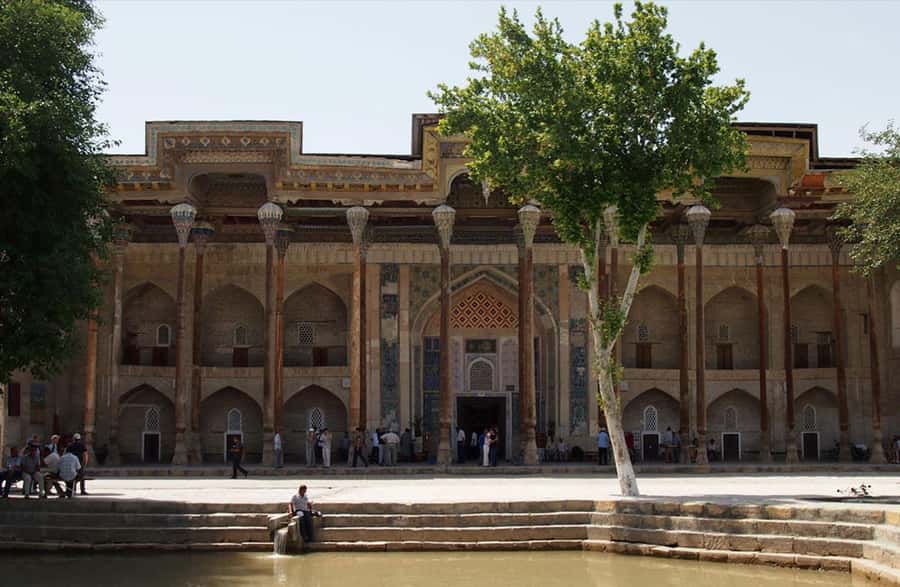
Bolo Haouz Mosque offers a gentler change of pace. Built in the early 18th century, it was the Emir of Bukhara’s official place of worship and is known for elegant wooden columns and a peaceful atmosphere.
The columns are the main visual feature to watch for. Their craftsmanship gives the mosque a different character from the brickwork of the Samanid Mausoleum and the blue tile of Poi Kalan. This variety is one reason the tour is stronger than a simple list of similar monuments.
I appreciate that Bolo Haouz is included after the Ark. The fortress presents authority in stone and earth, while the mosque offers a more intimate setting. Your guide can help connect the two sites to the emir’s public and religious life without reducing the history to a string of dates.
As at the other monuments, dress and behavior should suit a religious site. Photography is permitted, but do not use flash inside.
Returning to Lyabi Khauz at the end of the day
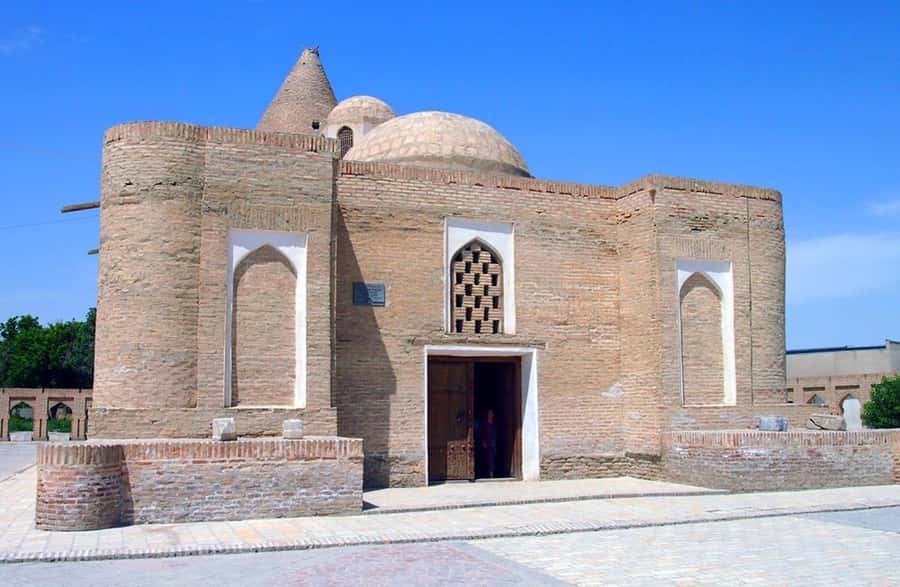
The tour finishes at Lyabi Khauz, where the pond and surrounding buildings provide a natural place to slow down. After a day of fortresses, mosques, minarets, and market halls, the square gives you room to reflect.
Your guide will explain how the area once served as a center of social life. That final stop ties together the themes of the day: water, trade, religion, conversation, and public space. Bukhara’s old city is easier to appreciate when you see that its monuments were part of ordinary life, not isolated attractions.
You may want to stay in the area after the tour for a meal or drink, though those costs are not included. Since food and beverages are not allowed inside the monuments, Lyabi Khauz is also a sensible place to plan a break before or after sightseeing.
Walking, weather, and what to bring
This is a full-day tour with a moderate amount of walking. Wear shoes that you can comfortably use for many hours, and expect historic surfaces rather than smooth modern paths.
Bukhara can be sunny, so bring a hat, sunscreen, and water. A camera is welcome, but flash photography is forbidden inside the monuments. Food and drinks must remain outside the historic interiors.
The tour is not suitable for wheelchair users or people with significant mobility impairments. If you have a smaller mobility concern, ask about the route and the individual sites before booking, since the tour covers several historic buildings in one day.
The guide speaks English, and Russian is also available. The experience is private, so you have a better chance of asking for clarification or adjusting the pace than you would on a large group outing. Still, private does not mean effortless. The route is ambitious, and you should plan for a long sightseeing day.
Who should book this Bukhara experience?
I would recommend it to first-time visitors who want a clear introduction to Bukhara’s main monuments without arranging each stop alone. It suits people who enjoy architecture, Silk Road history, religious buildings, and local handicrafts.
It is also a good fit if you value a guide who can answer questions. The strong praise for Lola, Paris, and Malika centers on friendliness, excellent English, practical suggestions, and detailed explanations. Those qualities can make a major difference in a city where signs may not tell the full story.
I would think twice if you dislike walking, want a slow day with only two or three sights, or expect admission tickets and transport to be included in the price. The $80 fee is best judged as the cost of a private guide, not as a complete package.
You can cancel up to 24 hours in advance for a full refund, and the reserve-now, pay-later option helps keep plans flexible. Confirm the extra costs before you go so the final budget does not surprise you.
Should you book the $80 private tour?
Book this tour if you want to see Bukhara’s major landmarks in one organized day and prefer personal explanations to wandering on your own. The route has a good mix of famous sights and less obvious details, especially the Samanid brickwork, Magok-i-Attari’s earlier religious use, the trading dome, and Bolo Haouz’s wooden columns.
I would book it with three expectations: you will walk a lot, pay separately for admission and other extras, and get the best value by asking questions. If that sounds right, a private guide can turn Bukhara’s remarkable buildings into a connected story rather than a day of disconnected photographs.
FAQ
Where does the Bukhara tour start?
The tour starts at Lyabi Khauz, near the Hodja Nasreddin monument.
Where does the tour end?
The activity ends back at the meeting point at Lyabi Khauz.
How much does the tour cost?
The price is $80 per person.
Is the tour private?
Yes. The tour is a private experience with a certified guide.
Which languages are available?
The available languages are English and Russian.
What is included in the price?
The price includes a certified English-speaking guide and the private tour. Suggestions are also included.
Are entrance tickets included?
No. Entrance tickets are not included and can be paid for on the spot.
Is transportation included?
Transportation during the tour with a driver is not included. Accommodation and flight or train tickets are also excluded.
What should I bring?
Bring comfortable walking shoes, a hat, a camera, sunscreen, and water. Flash photography is not allowed inside the monuments.
Recently added around Bukhara
- Uzbekistan 8 Days Private Guided Tour★ 4.6 · 3 reviews
- Bukhara: City Highlights Guided Tour with Pickup★ 5.0 · 3 reviews
- 9 Days Private Guided Tour to Uzbekistan★ 5.0 · 3 reviews
- Full-Day Private Guided Tour to Islamic 7 Saints of Bukhara★ 4.5 · 3 reviews
- 2 Day Ukhum Hiking Tour from Bukhara★ 5.0 · 4 reviews
- Bukhara in a Day History, Culture, and Local Insight Private Tour★ 5.0 · 4 reviews
- Legends of Bukhara: Exclusive Full-Day Tour★ 5.0 · 4 reviews
- Bukhara Walking Tour★ 5.0 · 4 reviews
Full-Day, compared.
Explore Amirsoy, Chimgan & Charvak – A Full-Day Mountain Tour
Read our review →
Full Day Private Tour in Seven Lakes from Samarkand
Read our review →
Tashkent Private Full-Day City Tour on a Premium Car
Read our review →Browse the lists this tour appears in