
Reviewed · BUKHARA TOURS
Bukhara day tour. Departure from Tashkent or Samarkand.
Bukhara in one long day. This private tour makes a demanding trip from Samarkand or Tashkent much easier, with hotel transfers, train tickets, and an English-speaking guide arranged for you. I especially like the door-to-door planning and the chance to see Bukhara’s main monuments plus quieter courtyards and artisan shops. The main drawback is the long day, which can run from 11 to 16 hours.
I also like the human touch. Guides such as Sunny, Lola, and Nur have helped visitors adjust the pace, find local food, and switch to an electric rickshaw when walking became tiring. You should know that museum tickets and meals are extra, and the high-speed train may occasionally be replaced by the most comfortable class of regular train.
In This Review
- Key points to know before booking
- Why this is a smart way to see Bukhara
- The early transfer and 100-minute train ride
- Lyabi-Hauz, where Bukhara slows down
- Poi Kalyan and Bukhara’s famous skyline
- The Ark Fortress and the city’s royal past
- The quieter lanes behind the main sights
- Tea, lunch, and a taste of local life
- Six hours in Bukhara: enough, but not everything
- The return train and the long ride home
- Who will get the most from this tour?
- Price, inclusions, and the costs to remember
- Should you book this Bukhara day tour?
- FAQ
- Where does the tour depart from?
- How long is the train journey?
- How long do I spend sightseeing in Bukhara?
- Are train tickets included?
- Are meals and museum tickets included?
- What happens if a high-speed train is unavailable?
Key points to know before booking
- Two cities, one ambitious day: Depart from Samarkand or Tashkent, spend about six hours exploring Bukhara, then return by train.
- The old city is the main event: Lyabi-Hauz, Poi Kalyan, and the Ark Fortress anchor the walking tour.
- Private guiding makes a difference: Your English-speaking guide can shape the day around your interests and energy.
- Rail travel keeps the trip practical: The scheduled train journey is about 100 minutes each way.
- Local details add value: Expect tea-house food, artisan workshops, old caravanserais, and lesser-known religious schools.
- Budget for extras: The $180 price includes transport, trains, guiding, and hotel transfers, but not meals or museum admissions.
Why this is a smart way to see Bukhara
Bukhara is not a side street you can casually squeeze between two other stops. It is one of Uzbekistan’s key Silk Road cities, with more than 140 historic monuments gathered across an old center protected as a UNESCO World Heritage Site.
If you are based in Samarkand and have not yet seen Bukhara, this tour solves a common problem: the cities are close enough to connect by train, but arranging the tickets, station transfers, local transport, and guiding takes time. Here, the moving parts are handled for you.
I see the price of $180 per person as reasonable for a private day trip if you value convenience. It covers the guide, transport, train tickets, hotel pickup and drop-off, and online support. A solo visitor may find it expensive, while two or more people can get better value from the private format.
The day is still a serious commitment. You may be away from your hotel for most of the day, with train travel on both ends and six hours in Bukhara. This is best for someone who prefers seeing one important city properly enough over skipping it altogether.
A few more Bukhara trips worth weighing up
- Bukhara: Walking Tour with a Small Group
★ 4.9 · 260 reviews - Best of Bukhara: All Day Private Old Town Tour
★ 5.0 · 66 reviews - Best of Bukhara: All Day Private Old Town Tour
★ 4.9 · 62 reviews
The early transfer and 100-minute train ride
The day begins with pickup at your hotel in Samarkand or Tashkent, followed by a transfer to the train station. The exact departure time depends on availability, so check the schedule when booking and be ready for an early start.
The train journey is listed at about 100 minutes. That is a far more sensible way to cover the distance than spending the morning in a road vehicle, especially when you have only one day. You can use the ride to rest, watch Uzbekistan pass by, and save your energy for Bukhara’s stone lanes.
High-speed train tickets are normally arranged. If that service is not available, the operator says it will provide the most comfortable class of regular train instead and tell you in advance. That is a useful safeguard, but you should still provide every passenger’s details immediately after booking. Missing information can lead to the booking being canceled.
On arrival, your guide meets you at Bukhara station and takes you to the starting point of the old-city walk. The transfer matters because Bukhara station is outside the historic core. You do not want to spend a large part of your limited day working out how to reach the monuments.
Lyabi-Hauz, where Bukhara slows down
Lyabi-Hauz is a good first stop because it gives you a calm introduction to Bukhara. The ensemble is arranged around a historic pool, with mulberry trees providing shade and several important buildings close by.
The Kukeldash Madrasah and Nadir Divan-Begi Khanaka frame the area. A guide can help you understand how the square functioned as a social and religious center rather than simply pointing out attractive façades.
One detail that adds character is the age of the mulberry trees. The tour includes the chance to hear about a tree said to date back to around 1400. Details like this make the site feel less like a set of monuments and more like a place that has been used, repaired, shaded, and passed through for centuries.
This is also a sensible place to settle into the pace of the day. You can ask your guide to focus on architecture, local customs, food, or photography. Past bookings have particularly praised guides for explaining the plan clearly and adjusting the experience to personal interests.
Poi Kalyan and Bukhara’s famous skyline
From Lyabi-Hauz, the route continues toward the Poi Kalyan Complex. This is the visual center of old Bukhara, with its celebrated minaret and mosque ensemble.
The Kalyan Minaret is one of the city’s most recognizable sights. Its proportions and decoration are easy to appreciate from the surrounding square, but the guide’s explanation gives the monument more meaning. You will learn how the minaret fits into Bukhara’s religious and civic setting, rather than treating it as an isolated photo stop.
The mosque and adjoining buildings create one of the most memorable spaces on the walk. Give yourself time to look upward, then back down at the patterned brickwork and broad open area. The contrast between the grand scale of Poi Kalyan and the smaller lanes nearby is part of Bukhara’s appeal.
Museum access is not included, so ask your guide which interior visits are worthwhile before paying separate admission. The tour includes skip-the-ticket-line service where applicable, but individual museum tickets remain your responsibility.
A completely different sort of day around Bukhara:
- From Bukhara: 2-Day Desert Yurt Camp Tour
★ 4.5 · 57 reviews - City Tour Around Bukhara
★ 5.0 · 55 reviews - Bukhara Full Day Old City Private Tour
★ 5.0 · 46 reviews - Bukhara: Historic Center Guided Sightseeing Tour
★ 4.8 · 44 reviews
The Ark Fortress and the city’s royal past
The Ark Fortress brings a different mood. This massive citadel served as a royal residence and defensive stronghold, making it a useful counterpoint to the religious buildings around Poi Kalyan.
Inside, the experience depends partly on which areas are open and which museum admissions you choose. The included guided visit gives you the setting and historical context, while optional museum tickets let you decide how much time and money to spend indoors.
I like having that choice on a fast day. Some people want every exhibit; others would rather stay outside, photograph the walls, and keep walking through the old city. Tell your guide early if the Ark is a priority, since six hours can disappear quickly.
The fortress also helps explain Bukhara’s layered character. This was not only a place of prayer and study. It was also a seat of power, a protected compound, and a working center of government.
The quieter lanes behind the main sights
The best part of a guided Bukhara walk may come after the famous monuments. The route is designed to include old caravanserais, small courtyards, lesser-known madrasahs, and passages away from the main sightseeing flow.
These places do not always announce themselves. A local guide can point out a doorway or courtyard that you might pass without noticing. You may see the plain working side of the old city, where the atmosphere feels less arranged for photographs.
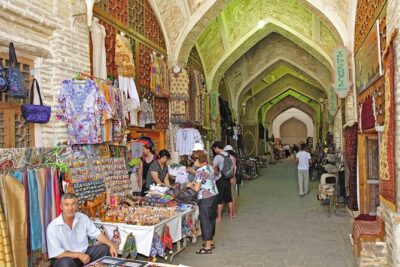
The tour also includes contact with local artisans. Silk weaving and miniature painting are specifically mentioned, giving you a look at skills tied to Uzbekistan’s long craft tradition. Buying is not presented as compulsory, which is important. You can ask questions, watch the work, and decide for yourself if something deserves space in your luggage.
Some past guides have been praised for steering people toward local shops rather than the most tourist-focused stops. That can make shopping feel more useful, especially if you want quality textiles or small artworks instead of generic souvenirs. Still, prices and product quality vary, so inspect anything carefully before buying.
Tea, lunch, and a taste of local life
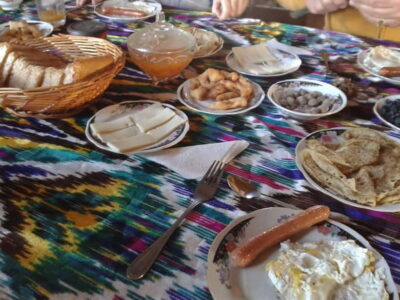
Food is not included in the $180 price, but the guide can help you choose where to eat. The day includes time to enjoy traditional delicacies at a tea house, and personal guidance can make this easier if you do not know what to order.
One particularly useful touch is the possibility of starting with morning coffee after meeting at the station. Nur has been praised for using that moment to explain the day and ask what the visitor wanted to prioritize. That is the kind of small planning conversation that can prevent the tour from feeling like a rigid march.
Lunch arrangements also appear flexible. A guide may recommend a restaurant suited to local cooking, and one visitor specifically received help finding a place to try regional food. Since the meal is paid separately, you retain control over how much you spend.
Do not expect a formal food tour. The central purpose is Bukhara’s architecture and old city, with food added along the way. If tasting local dishes matters greatly to you, tell the guide at the start so it receives enough attention.
Six hours in Bukhara: enough, but not everything
The scheduled sightseeing period in Bukhara is about six hours. That is enough to see the principal monuments, walk through several old quarters, eat a meal, and browse craft shops.
It is not enough to explore all 140-plus monuments or visit every museum. Bukhara rewards slow wandering, and this tour gives you an introduction rather than a full stay. If you have several days in Uzbekistan, I would prefer spending at least one night in Bukhara. If your schedule is tight, this day trip is a strong compromise.
The private format helps. Your guide can spend more time on the sights you care about and shorten less important stops. You are not waiting for a large group to take photographs or moving at the pace of the slowest person.
Walking is a major part of the experience, and the old center includes uneven surfaces and long stretches on foot. One useful example from a recent booking is that the guide arranged an electric rickshaw when the visitor became tired. That option should not be treated as an automatic inclusion, but it shows why a private guide can be valuable on a packed day.
The return train and the long ride home
At the end of the walking tour, you are transferred back to Bukhara station for the train to Samarkand or onward arrangements connected with Tashkent. The return ride is again listed at about 100 minutes, followed by hotel drop-off.
The coordination of drivers and guides is one of the strongest parts of this service. Several named guides and drivers have been praised for being punctual, helpful, and well organized. That matters most at the end of a tiring day, when missing a transfer would turn a good excursion into a stressful one.
Your total day can last anywhere from 11 to 16 hours. The wide range reflects different starting points, train times, and transfer arrangements. Ask for the precise pickup and return times before you commit, particularly if you have an evening reservation or an early departure the next morning.
Who will get the most from this tour?
I would recommend this experience to you if:
- You are staying in Samarkand or Tashkent and have only one open day.
- You want Bukhara’s main sights without arranging several separate services.
- You prefer a private English-speaking guide.
- You enjoy architecture, religious buildings, old city streets, and traditional crafts.
- You are comfortable with a long day and plenty of walking.
- You want help finding local food and less commercial shopping areas.
I would be more cautious if you dislike early starts, need a slow pace, or want to examine every museum in detail. Bukhara deserves more time than a day, and this schedule cannot change that.
The tour also suits people who like some flexibility but do not want to organize the practical side themselves. A private guide can explain the plan, answer questions, adjust the walking pace, and arrange a rickshaw if available when fatigue sets in.
Price, inclusions, and the costs to remember
At $180 per person, this is not the cheapest way to move between Uzbek cities. Its value comes from combining several services: hotel pickup and drop-off, station transfers, train tickets, private transportation, an English-speaking guide, and online support.
You should add money for meals, tea-house food, museum admissions, and shopping. Those exclusions are normal for a private city tour, but they affect the final cost. If you are traveling alone, compare the price with an independent train trip and local guide. If you are sharing the private vehicle and guide with companions, the package becomes easier to justify.
The free cancellation policy allows cancellation up to 24 hours before departure for a full refund, and the reserve-now, pay-later option gives you some flexibility. These are useful protections, but train tickets depend on receiving complete passenger details promptly.
Should you book this Bukhara day tour?
Book it if you have limited time, want Bukhara on your Uzbekistan trip, and value having the trains and transfers handled in one package. The strongest reasons are the private guiding, careful coordination, access to the main old-city sights, and the chance to see craft and food beyond the standard monument route.
Skip it if you have enough time to spend a night in Bukhara or if a full day of transport and walking sounds exhausting. For everyone else, this is a practical and well-supported introduction to one of Uzbekistan’s most rewarding historic cities. Just confirm the exact train times, provide passenger details immediately, and budget separately for food and museums.
FAQ
Where does the tour depart from?
Pickup is available from hotels in Samarkand or Tashkent. The day includes transfer to the relevant train station.
How long is the train journey?
Each train journey is listed at approximately 100 minutes.
How long do I spend sightseeing in Bukhara?
The guided visit in Bukhara lasts about six hours, including walking, sightseeing, shopping, and time for food.
Are train tickets included?
Yes. Train tickets, transportation, hotel pickup and drop-off, and a professional English-speaking guide are included.
Are meals and museum tickets included?
No. Meals and museum admission tickets are not included in the price.
What happens if a high-speed train is unavailable?
The operator says it will arrange the most comfortable class of regular train instead and inform you in advance. You must provide passenger details immediately after booking to secure the tickets.
Recently added around Bukhara
- Uzbekistan 8 Days Private Guided Tour★ 4.6 · 3 reviews
- Bukhara: City Highlights Guided Tour with Pickup★ 5.0 · 3 reviews
- 9 Days Private Guided Tour to Uzbekistan★ 5.0 · 3 reviews
- Full-Day Private Guided Tour to Islamic 7 Saints of Bukhara★ 4.5 · 3 reviews
- 2 Day Ukhum Hiking Tour from Bukhara★ 5.0 · 4 reviews
- Bukhara in a Day History, Culture, and Local Insight Private Tour★ 5.0 · 4 reviews
- Legends of Bukhara: Exclusive Full-Day Tour★ 5.0 · 4 reviews
- Bukhara: Full-Day Guided Tour with English-Speaking Guide★ 5.0 · 4 reviews
Bukhara Tours, compared.
Browse the lists this tour appears in