Reviewed · GUIDED
Samarkand: Private Guided Tour with a Local
Samarkand rewards curious feet. This seven-hour private tour links the city’s grandest monuments with everyday places, from Registan Square and Shah-i-Zinda to Siyob Bazaar and a traditional bread bakery. I especially like the mix of famous sights and working local culture, plus the personal touch of guide Anvarxon Mahdiyev, whose calm storytelling and thoughtful pacing earn strong praise. The main catch is that entrance tickets, meals, hotel pickup, and taxis between destinations are extra.
You begin at Registan, then follow Samarkand’s story through royal mausoleums, sacred buildings, an old observatory, handmade paper, and the modern Eternal City. I like that fresh non bread tasting is included, but you should wear good shoes and expect a fair amount of walking under the Uzbek sun.
In This Review
- Key points to know before booking
- Why this private Samarkand tour works well
- Starting at Registan Square
- Bibi-Khanym and the market beside it
- Shah-i-Zinda’s avenue of mausoleums
- Gur-e-Amir and the memory of Tamerlane
- Xo’ja Doniyor and Khazrati Khizr
- The Ulugbek Observatory and science in Samarkand
- Handmade paper at the Samarkand Paper Factory
- Eternal City and the modern face of Samarkand
- Fresh non bread and a local meal
- What the $50 price really buys
- Who should book this experience
- Should you book the Samarkand private tour?
- FAQ
- How long does the Samarkand private tour last?
- Where does the tour begin?
- Is hotel pickup and drop-off included?
- Are entrance tickets included in the price?
- Is food included?
- Which languages does the guide speak?
- Is this a private tour?
- Is the tour suitable for young children?
- What should I bring?
Key points to know before booking
- Anvarxon Mahdiyev is the named local guide, praised for clear English, warm hospitality, and adjusting the pace to suit the group.
- The seven-hour route covers major Samarkand landmarks, including Registan, Bibi-Khanym Mosque, Shah-i-Zinda, Gur-e-Amir, and the Ulugbek Observatory.
- Siyob Bazaar and the bread bakery add local flavor, giving you more than a parade of monuments and photo stops.
- Handmade silk paper at the Samarkand Paper Factory offers a look at an old craft that is easy to miss on a standard city visit.
- The price is $50 per person, good value for a private guide, though tickets, food, hotel transport, and some taxis are not included.
- The route involves moderate walking, and the information is mixed on wheelchair access, so guests with mobility concerns should confirm details before booking.
Why this private Samarkand tour works well
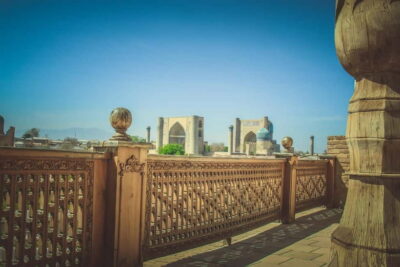
Samarkand can feel like two cities at once. One is the grand imperial center of turquoise domes, tiled facades, and royal tombs. The other is a living Uzbek city of bread ovens, market stalls, family traditions, and daily prayer.
This tour tries to show both. You get the famous monuments that brought Samarkand to the world’s attention, but you also see where people shop, bake, make paper, and spend time today. That combination gives the city more meaning than a quick run through the main squares.
The private format matters. You are not tied to a large group’s walking speed or forced to listen to a long speech at every doorway. Anvarxon Mahdiyev has been praised for explaining the past in a clear, story-led way rather than piling on dates. He is also described as attentive and willing to slow down when needed.
The tour has a top rating from four published ratings, with especially warm comments about Anvarxon’s English, care, and ability to make the day feel relaxed. That does not guarantee every departure will feel identical, but it gives you useful information about the guide’s strongest quality: personal attention.
There is one practical limit. A private tour does not mean all costs are covered. The $50 price pays for the guide, but you must budget separately for entrance tickets, lunch, personal purchases, and transport to destinations beyond the starting point. Ask how the day’s transfers will work before setting out.
A few more Samarkand trips worth weighing up
- Samarkand: Historical Monuments Guided Walking Tour
★ 4.8 · 446 reviews - Samarkand: Historical City Highlights Guided Walking Tour
★ 4.8 · 153 reviews - Private Samarkand City Tour With Transportation
★ 5.0 · 149 reviews
Starting at Registan Square
Registan is the right place to begin. It is the visual heart of Samarkand, a broad square framed by three monumental madrasahs with richly decorated facades. Even if you have seen countless photographs, the scale becomes clearer when you stand in the square and look from one building to the next.
Your guide can help separate the decoration from the story. Registan was not simply built to look impressive. It was a center of learning, religion, ceremony, and political power. The tilework draws your eyes first, but the buildings also show how rulers used architecture to express authority.
Give yourself time here. A rushed photograph from the center of the square misses much of the pleasure. Look closely at the geometric patterns, the monumental portals, and the changing color of the tile in the sun.
Entrance fees are not included, so the total cost depends partly on which interiors you enter. That is worth clarifying at the start. If you are trying to keep spending low, ask your guide which paid visits matter most.
Bibi-Khanym and the market beside it
The Bibi-Khanym Mosque brings a more dramatic story. Its tale combines love, ambition, and power, and Anvarxon’s storytelling is likely to be more useful here than a list of construction dates. The building’s size also helps you understand the ambition of the rulers who wanted Samarkand to look like the center of the world.
The mosque has endured damage and restoration, which gives the visit an honest edge. You are not looking at a perfectly untouched medieval building. You are looking at a monument that has survived earthquakes, time, changing rulers, and modern repair.
Nearby, Siyob Bazaar shifts the mood from imperial spectacle to daily life. The market is one of the best parts of the route for your senses, with the smells, colors, and food traditions associated with the old Silk Road. You may find piles of produce, sweets, bread, and other local goods, although the exact stalls and atmosphere can change from day to day.
This is a good place to ask questions and watch how people shop. You can also leave room in your budget for personal purchases, since those are not included. A private guide can help you understand what you are seeing, but the bazaar is still best enjoyed at an unhurried pace.
Shah-i-Zinda’s avenue of mausoleums
Shah-i-Zinda is among Samarkand’s most memorable places. The complex is a sacred avenue lined with mausoleums, each faced with detailed tilework in shades of blue, turquoise, white, and green.
The name is tied to a legendary figure and a story of spiritual survival. Your guide can explain the religious meaning of the site while also helping you notice the visual details. Look up as you walk. The most striking work is often around doorways, domes, and narrow passages rather than in one grand open room.
This stop includes walking, sightseeing, time for photographs, and some free time. That flexibility is useful because Shah-i-Zinda is not a place to rush through while trying to keep up with a group.
You should dress respectfully and follow instructions about photography. Photography is allowed, but flash photography is prohibited in certain areas. Comfortable shoes are important here, as the route includes a moderate amount of walking.
A completely different sort of day around Samarkand:
- A City Tour Of Samarkand: The Pearl Of The East
★ 5.0 · 133 reviews - Bukhara: Historical City Highlights Guided Walking Tour
★ 4.6 · 102 reviews - Full Day Private Tour in Seven Lakes from Samarkand
★ 5.0 · 94 reviews - Samarkand One Day Tour: one day walking & group tour
★ 4.4 · 87 reviews
Gur-e-Amir and the memory of Tamerlane
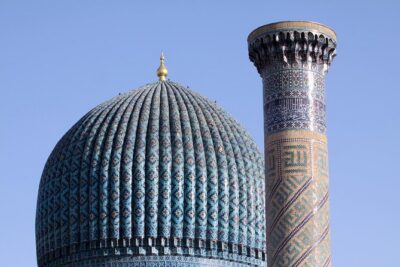
At Gur-e-Amir, you visit the final resting place of Tamerlane, the conqueror who made Samarkand his capital. The mausoleum is smaller in scale than Registan, but its interior and dome give it a strong sense of ceremony.
This is where a good guide can add real value. Tamerlane is often reduced to a single label, but his connection to Samarkand is more complex. He was a military ruler who also turned the city into a center of architecture, scholarship, and court culture.
The visit works best when you pay attention to the relationship between power and beauty. The monument honors a ruler who used conquest to build a capital that would impress allies, rivals, and future generations.
As with the other major monuments, entrance tickets are extra. If you want to keep the day moving, ask your guide to explain the ticket plan before the first paid site rather than stopping repeatedly to make decisions.
Xo’ja Doniyor and Khazrati Khizr
The route also includes the Xo’ja Doniyor Mausoleum, described as the legendary resting place of Prophet Daniel. This site has a different atmosphere from Samarkand’s grand royal monuments. It is connected to faith, local tradition, and the long layers of belief that have shaped the city.
You do not need to approach the visit as a simple architectural stop. Listen to how the guide explains the story and its place in local religious life. The value here comes less from a single spectacular facade and more from understanding why the site matters.
Khazrati Khizr Mosque offers another change of pace. It is described as a spiritual site with broad views, giving you a chance to look across the city after spending time among enclosed courtyards and tiled walls.
Bring water and a sun hat. Samarkand’s open spaces can feel hot, and the tour lasts most of the day. Sunscreen is also sensible, especially during the warmer months.
The Ulugbek Observatory and science in Samarkand
The Mirzo Ulugbek Observatory shows a different side of the city. Built in the 15th century, it reflects Samarkand’s role in astronomy and scholarship, not just royal display.
Ulugbek was a ruler with a serious interest in the sky. The observatory helps correct the usual picture of medieval Central Asia as a place known only for armies and trade. Here, the focus shifts to calculation, observation, and the patient work of studying the stars.
For many people, this is one of the most useful stops because it breaks up the succession of domes and mausoleums. If you enjoy science or the history of ideas, give this site your full attention.
If your group is more interested in architecture than astronomy, the observatory may feel less immediately impressive than Registan or Shah-i-Zinda. Anvarxon’s ability to explain the importance of the place clearly will matter here. The site works best when you understand what it represented, not only what remains today.
Handmade paper at the Samarkand Paper Factory
The Samarkand Paper Factory brings the Silk Road down to a practical level. Instead of seeing trade as an abstract idea, you see an old craft connected to writing, record keeping, art, and education.
Handmade silk paper requires time and care, and the factory visit gives you a look at how traditional production continues. It is a welcome contrast to the grand monuments because the focus is on materials and skill rather than rulers.
This stop can also help you understand Samarkand as a place of exchange. Goods, ideas, religions, and technologies moved across Central Asia, and paper was part of that process.
The exact demonstration length is not specified, so you should not assume this will be a long workshop. Think of it as a cultural stop where you can see a traditional craft and perhaps buy something if you wish. Purchases count as personal expenses.
Eternal City and the modern face of Samarkand
The Eternal City offers a modern setting designed to reflect older Central Asian traditions. Its appeal is the contrast: you step from ancient monuments into a newer space that presents regional culture through architecture, crafts, and public areas.
This is useful near the end of a long day. After several sacred and historic sites, you get a chance to see how Samarkand presents its past in a modern setting. It also keeps the tour from treating the city as a museum frozen in time.
I would keep your expectations balanced. The Eternal City is a contemporary attraction, not an untouched old quarter. Its value is in seeing the conversation between modern development and traditional identity.
The tour description places this stop alongside the paper factory and bakery, so the day’s exact order may vary. Ask Anvarxon how he plans to arrange the route, especially if you have a strong preference for visiting the market early or saving the bread tasting for later.
Fresh non bread and a local meal
The traditional bread bakery is one of the most appealing parts of the day. Uzbek non is more than a side dish. Bread has a respected place in daily life, and watching it being made helps you connect the food on the table with the people and routines behind it.
The included tasting is simple but worthwhile: you see how the bread is made and taste it fresh from the oven. That fresh texture is the point, so do not treat this as just another quick snack.
The final meal is described as authentic Uzbek cuisine and true hospitality, but meals are not included in the price. This is an important distinction. You may finish the tour with local food, but you should expect to pay for it yourself unless your guide gives you different arrangements.
Because no restaurant, menu, or meal price is specified, ask about the plan before the last stop. That lets you decide how much cash to carry and whether the meal fits your budget.
What the $50 price really buys
At $50 per person, this is a strong value if you want a private guide for a full seven hours. The price is especially reasonable for couples or small groups who prefer to ask questions, adjust the pace, and spend more time at the places that matter most to them.
It is less of a bargain if you expect an all-inclusive excursion. Entrance tickets are not covered. Hotel pickup and drop-off are not covered, meals are not covered, and taxis to other destinations are not covered.
The tour begins at Registan, so you need to reach that meeting point yourself. If your hotel is elsewhere, add the cost and time of getting there. You should also ask whether transport between the day’s sites is arranged or paid locally, since the activity information specifically excludes taxis to other destinations.
The reserve-now, pay-later option and free cancellation up to 24 hours before the start make the booking more flexible. Those policies are useful when your Uzbekistan plans are still shifting.
Who should book this experience
I would choose this tour if you want Samarkand’s major sights explained by one person who can connect monuments to local customs. It suits couples, friends, and families with children aged six or older who value conversation over a fixed group script.
It is also a good fit if you want more than architecture. Siyob Bazaar, the paper factory, the bakery, and the Eternal City give the day a wider range than a monument-only visit.
You should think twice if you dislike walking, sun, or a full day of sightseeing. The tour is not suitable for people with mobility impairments according to the provided conditions, even though another part of the information labels it wheelchair accessible. That conflict should be resolved directly with the provider before you book.
Children under six cannot join. Bring comfortable shoes, water, a sun hat, sunscreen, and a camera. Smoking is not allowed, and flash photography is prohibited in certain areas.
Should you book the Samarkand private tour?
Book it if you want a friendly, personal introduction to Samarkand and are happy to pay monument tickets and food separately. The strongest reason to choose it is Anvarxon Mahdiyev, whose praised qualities include clear English, patient pacing, warmth, and genuine care for the people he guides.
The route is broad and ambitious. In seven hours, you cover royal monuments, sacred sites, science, craft, food, a market, and a modern cultural attraction. You will not experience every stop at great length, but you will leave with a useful picture of Samarkand as both an imperial capital and a living city.
Before paying, confirm the starting time, which entrance tickets are planned, how you will move between distant sites, and what the final meal arrangement will be. If those extra costs fit your plans, this is a practical way to see a lot of Samarkand without losing the human side of the city.
FAQ
How long does the Samarkand private tour last?
The tour lasts seven hours. Starting times depend on availability.
Where does the tour begin?
The stated pickup location is Registan in Samarkand.
Is hotel pickup and drop-off included?
No. Hotel pickup and drop-off are not included.
Are entrance tickets included in the price?
No. Entrance tickets are an additional cost.
Is food included?
A traditional Uzbek bread tasting is included. Meals, including the described local meal at the end of the tour, are not included.
Which languages does the guide speak?
The available tour languages are English and Tajik.
Is this a private tour?
Yes. It is offered for a private group.
Is the tour suitable for young children?
Children under six are not permitted to join.
What should I bring?
Bring comfortable walking shoes, a sun hat, water, and a camera. Sunscreen is also recommended for sunny days.
Recently added around Samarkand
- Bird Watching Tours in Samarkand★ 3.6 · 3 reviews
- Penjikent Day Trip From Samarkand★ 5.0 · 3 reviews
- Samarkand: city tour★ 4.7 · 3 reviews
- Samarkand Capital of Amir Timur Private Tour with Transport★ 5.0 · 3 reviews
- Seven Lakes Panjakent: One-Day Adventure from Samarkand★ 5.0 · 3 reviews
- Ancient and Modern tour in Samarkand with Transport★ 5.0 · 3 reviews
- Samarkand: Cooking class with local family★ 5.0 · 3 reviews
- Amankutan Trek One Day Tour From Samarkand★ 3.9 · 3 reviews