
Reviewed · CITY TOURS
Samarkand: Private Tour of Ancient City and Traditional Art
Samarkand rewards a well-planned day. This six-hour private tour brings together the city’s grandest monuments, from Registan Square and Bibi Khanum Mosque to Shah-i-Zinda and Ulugbek Observatory, with hotel pickup and drop-off included. I like the efficient route and the chance to see traditional silk paper being made, a craft valued here since the eighth century.
I also like the flexible, personal format. Guides such as Adi, Sevinch, Adiba, Guli, and Shakhlo have been praised for clear explanations, local suggestions, and patience with questions. The main drawback is the pace: seven major stops in six hours can feel full, and entry fees cost an extra $11 per person. You will also walk on uneven ground, so this is not suited to people with limited mobility.
In This Review
- Key points to know before booking
- Why a private six-hour tour works in Samarkand
- Registan Square: Samarkand’s grand opening scene
- Bibi Khanum Mosque and the Timurid scale
- Shah-i-Zinda, where decoration becomes the main event
- Ulugbek Observatory and the science of the Timurid age
- Hojja Ahrar and Hodja Daniyar
- Making silk paper in the old Samarkand tradition
- What the guides add to the day
- Price, extra costs, and overall value
- Who should book this Samarkand tour?
- Final verdict: a strong first day in Samarkand
- FAQ
- How long does the Samarkand private tour last?
- What sites are included?
- Is hotel pickup included?
- What languages are available?
- Is this a private group tour?
- Are entrance fees included?
- Are food and drinks included?
- What should I bring?
- Is the tour suitable for people with limited mobility?
Key points to know before booking
- Registan Square anchors the day: You explore all three madrasahs, Ulugbek, Sher-Dor, and Tillya-Kari, while learning how the square served as a center of education and public life.
- The route covers Samarkand’s essential monuments: Bibi Khanum Mosque, Shah-i-Zinda, Hojja Ahrar, Ulugbek Observatory, and Hodja Daniyar are all included.
- Silk paper adds a hands-on cultural touch: The tour moves beyond tiled façades to show an old Samarkand craft.
- Private transport saves time: Hotel pickup, a driver, and a private guide make it easier to cover sites spread across the city.
- Guides are a major strength: Adiba, Sevinch, Adi, Guli, Shakhlo, and others have earned praise for history, language skills, flexibility, and practical help.
- Budget for admission: The listed tour price is $180 for a group up to one person, with entry fees of $11 per person not included.
Why a private six-hour tour works in Samarkand
Samarkand is not a single monument with a few nearby sights. Its major attractions are spread across the city, and a first-time visit can lose time to transport and route planning. This private format gives you a vehicle, a driver, and a guide who can keep the day moving.
The tour lasts six hours, which is enough to see the main historical sites without giving up an entire day. I would treat it as a highlights tour rather than a slow study of each monument. You get a strong overview, then you can return later to the places that deserve more time.
The private setup matters most if you have only one day in Samarkand, or if you want the guide to adjust the order of stops. Sevinch, for example, has been praised for changing plans when needed, while Adiba helped arrange a lunch break and offered assistance near Siyob Bozor. Guli also helped with food and shopping requests, showing how the day can include practical local help beyond formal sightseeing.
Hotel pickup and drop-off are included. You are asked to wait in the lobby 10 minutes before the scheduled pickup, with the driver holding a sign showing your last name. At the end, you can return to your hotel or continue from a central location.
More City Tours in Samarkand
- Samarkand: Historical City Highlights Guided Walking Tour
★ 4.8 · 153 reviews - Private Samarkand City Tour With Transportation
★ 5.0 · 149 reviews - A City Tour Of Samarkand: The Pearl Of The East
★ 5.0 · 133 reviews
Registan Square: Samarkand’s grand opening scene
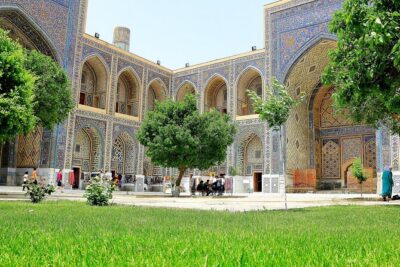
Registan Square is the natural centerpiece of the tour. Its three monumental madrasahs form one of Central Asia’s most memorable architectural groupings, and your guide explains the role of each building.
The Ulugbek Madrasah connects the square to Ulugh Beg, the Timurid ruler and astronomer whose interests reached far beyond court politics. The Sher-Dor Madrasah and Tillya-Kari Madrasah complete the square’s famous trio. Their tiled surfaces, monumental portals, and geometric decoration give you plenty to study, but the guide’s context helps explain why this was more than a photogenic plaza.
Registan was tied to learning, religion, and public life. That educational role is an important part of the visit, since Samarkand’s significance was not only political. You hear about the teachers, students, and intellectual work linked to the madrasahs.
Allow yourself time to look up. The scale can make small decorative details easy to miss, especially when you are focused on taking photographs. The tradeoff is that Registan can take a large share of the six-hour schedule, so you may not have unlimited time inside every building.
Bibi Khanum Mosque and the Timurid scale
Bibi Khanum Mosque shows the ambition of the Timurid period in physical form. The mosque is presented as a major example of Timurid architecture, with intricate designs and a scale that makes the building feel more like a royal project than an ordinary place of worship.
Your guide places the mosque within Samarkand’s period under Timur’s rule. That context is useful because the monument’s size and decoration make more sense when connected to the power and resources of the Timurid court.
This is another stop where comfortable shoes matter. You should expect walking between monuments and standing while listening to explanations. The tour operates in rain or shine, so practical clothing is more important than dressing only for photographs.
Shah-i-Zinda, where decoration becomes the main event
The Shah-i-Zinda memorial ensemble is one of the most visually detailed stops on the route. It is associated with the burial of royals and nobility, and its sequence of mausoleums creates a strong sense of ceremony and remembrance.
Here, I would slow down as much as the schedule allows. The tiled surfaces and repeated architectural forms reward close attention, not just a quick photograph from the entrance. A guide can help you understand who was commemorated and why the ensemble matters within Samarkand’s religious and political past.
The site also reinforces the need for good footwear. The tour is not recommended for people with mobility impairments, and that warning should be taken seriously. The overall route includes several major complexes, and the combination of walking, steps, and uneven surfaces may be tiring.
A few more Samarkand trips worth weighing up
- Samarkand: Historical Monuments Guided Walking Tour
★ 4.8 · 446 reviews - Bukhara: Historical City Highlights Guided Walking Tour
★ 4.6 · 102 reviews - Full Day Private Tour in Seven Lakes from Samarkand
★ 5.0 · 94 reviews - Samarkand One Day Tour: one day walking & group tour
★ 4.4 · 87 reviews
Ulugbek Observatory and the science of the Timurid age
Ulugbek Observatory gives the day a welcome change of subject. Instead of focusing only on rulers, tombs, and religious buildings, the visit turns to astronomy and measurement.
Ulugh Beg personally carried out astronomical research and calculations here. That detail makes the stop especially valuable. You see how Samarkand was connected to serious scientific work, not simply grand construction and royal ceremony.
I find this part of the tour useful for balancing the monument-heavy itinerary. After several decorated buildings, the observatory adds a clearer sense of Samarkand as an intellectual center. Ask questions here if you are interested in how observation and calculation shaped the work of Ulugh Beg, since guides such as Shohruh and Adi have been praised for making the city’s past understandable and engaging.
The observatory is also a reminder that Samarkand’s story is broader than Timur alone. The city’s cultural importance continued through scholars, teachers, artisans, and religious figures.
Hojja Ahrar and Hodja Daniyar
The Hojja Ahrar Ensemble brings together memorial, religious, spiritual, and educational buildings. It offers a different type of stop from Registan. Rather than one vast square designed to impress at first sight, this complex helps you consider the continuing religious life of Samarkand.
The Mausoleum of Hodja Daniyar is another culturally important visit. It is regarded as a sacred place by Muslims, Christians, and Jews, giving it a rare interfaith significance. Your guide can explain why this figure remains respected across three religious traditions.
These stops are valuable partly because they widen your understanding of the city. If you only visit the major Timurid monuments, Samarkand can seem like a collection of royal building projects. Hojja Ahrar and Hodja Daniyar bring in worship, memory, and living tradition.
Making silk paper in the old Samarkand tradition
The silk paper demonstration is the tour’s most unusual feature. You see the traditional applied art of producing silk paper, a craft valued since the eighth century.
This stop gives you something the monumental sites cannot: a view of making and manual skill. You are not only looking at finished architecture. You are seeing how an old local craft has been preserved and presented as part of Samarkand’s cultural identity.
I would pay attention to this part even if you have come mainly for the monuments. It helps connect the city’s past to a continuing cultural practice. The description does not promise that you will make paper yourself, so expect an observation of the production process rather than a guaranteed workshop class.
The craft visit also gives the day a change of rhythm. After large courtyards and decorated façades, watching paper production can make Samarkand feel less like an open-air museum and more like a place where traditions still matter.
What the guides add to the day
The guide is central to the value of this tour. The route includes places that you can visit independently, but the meaning of those places is much easier to grasp with a clear explanation of dates, people, and purpose.
Several guides have received especially warm praise. Adi has been described as flexible, personable, and an excellent communicator. Sevinch has been praised for fluent English, historical knowledge, photography tips, and a friendly manner. Adiba is noted for making the day fun, offering food suggestions, and helping adjust the schedule.
Other guide names include Guli, Shohruh, Lola, Esmira, Shakhlo, and Bekjon. The available languages are Uzbek, Russian, English, French, Italian, and German. Claudia specifically appreciated Shakhlo’s Italian, while other visitors valued the clear English explanations offered by Sevinch and Adiba.
You should not assume you will receive a particular guide unless the operator confirms it. Still, the repeated pattern is encouraging: the guide quality appears to be one of the experience’s strongest points. If language is important to you, select your preferred language carefully when booking.
The driver also matters. The vehicle is described as comfortable, and the driver waits while you visit each site. Utkur was praised for helping find suitable meals and shops, while another driver, identified as Ut, helped make the day run smoothly.
Price, extra costs, and overall value
The listed price is $180 per group up to one person. That is not a low-cost sightseeing option, especially once you add the $11 per person entrance fee and your own food and drinks.
The value comes from the private service. You are paying for hotel transfers, a dedicated guide, a driver, and a route that covers nearly all of Samarkand’s major highlights in six hours. If you are alone and have limited time, avoiding taxis, route planning, and separate guide arrangements may justify the cost.
For a couple or larger private booking, check the exact group pricing before you pay, since the supplied rate is described as applying to a group up to one person. The wording is unusual enough that I would confirm how the price changes for additional people.
The tour also offers free cancellation up to 24 hours before departure and a reserve-now, pay-later option. Those policies are useful if your Central Asia itinerary is still shifting, but they do not change the separate cost of admission or meals.
Who should book this Samarkand tour?
I would recommend it most strongly if you have one day in the city and want the major sights handled efficiently. It suits first-time visitors who want historical explanation rather than simply a driver who drops them at monuments.
It is also a good match if you prefer a private group, need one of the six listed languages, or value help with lunch and local shopping. The guide’s flexibility can make a difference, especially if you want to adjust the schedule or add a short stop such as Siyob Bozor when time allows.
I would hesitate if you prefer a slow pace and long independent visits. Seven principal stops plus a craft demonstration is a lot for six hours. You may need to accept shorter visits at some locations.
I would also avoid it if walking is difficult. The tour is specifically not suitable for people with mobility impairments, and the rain-or-shine policy means you should be ready for changing conditions. Wear comfortable shoes and bring clothing that works for the forecast.
Final verdict: a strong first day in Samarkand
This private Samarkand tour succeeds because it combines the city’s famous architecture with science, sacred sites, and traditional craft. Registan, Bibi Khanum, and Shah-i-Zinda deliver the grand visual moments, while Ulugbek Observatory and silk paper production add useful depth.
The strongest reason to book is the guide-led format. The high rating of 5 from 33 ratings, along with repeated praise for guides such as Adi, Sevinch, Adiba, Guli, and Shakhlo, suggests a consistently strong level of service. I would book it if you want to see the essentials in one organized day and still have enough local context to understand what you are seeing.
If you have several days in Samarkand, use this as your orientation day, then revisit your favorite monuments at a slower pace.
FAQ
How long does the Samarkand private tour last?
The tour lasts six hours.
What sites are included?
The route includes Registan Square, Bibi Khanum Mosque, Shah-i-Zinda, the Hojja Ahrar Ensemble, Ulugbek Observatory, the Mausoleum of Hodja Daniyar, and a traditional silk paper production visit.
Is hotel pickup included?
Yes. Hotel pickup and drop-off are included. You should wait in the hotel lobby 10 minutes before pickup, and the driver will hold a sign with your last name.
What languages are available?
The tour is available in Uzbek, Russian, English, French, Italian, and German.
Is this a private group tour?
Yes. It is offered as a private group experience.
Are entrance fees included?
No. Entry fees are not included. The listed additional cost is $11 per person.
Are food and drinks included?
No. Food and drinks are not included.
What should I bring?
You should bring comfortable shoes.
Is the tour suitable for people with limited mobility?
No. The tour is not recommended for people with mobility impairments. It operates in rain or shine.
Recently added around Samarkand
- Bird Watching Tours in Samarkand★ 3.6 · 3 reviews
- Penjikent Day Trip From Samarkand★ 5.0 · 3 reviews
- Samarkand: city tour★ 4.7 · 3 reviews
- Samarkand Capital of Amir Timur Private Tour with Transport★ 5.0 · 3 reviews
- Seven Lakes Panjakent: One-Day Adventure from Samarkand★ 5.0 · 3 reviews
- Ancient and Modern tour in Samarkand with Transport★ 5.0 · 3 reviews
- Samarkand: Cooking class with local family★ 5.0 · 3 reviews
- Amankutan Trek One Day Tour From Samarkand★ 3.9 · 3 reviews
City Tours, compared.
Private Samarkand City Tour With Transportation
Read our review →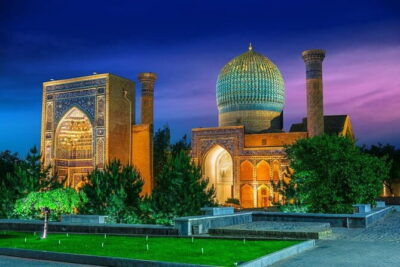
A City Tour Of Samarkand: The Pearl Of The East
Read our review →
Browse the lists this tour appears in