Reviewed · GUIDED
2 – Days Guided Tour of Samarkand and Bukhara from Tashkent
Two ancient cities, one long day. This fast-paced Uzbekistan trip gives you Samarkand’s grand monuments and Bukhara’s old-town sights without asking you to plan every train, transfer, meal, and hotel yourself. I like the efficient rail connections, and I like that entrance fees, guides, two lunches, breakfast, and one night in Bukhara are included. The main drawback is the pace: you spend nearly all of both days sightseeing or moving between cities.
The small group, limited to eight people, makes the schedule easier to manage than a large coach trip. Guides such as Ikrom, Nargiza, Aziz, and Narguiza have received especially warm praise for clear communication, kindness, and professional service. You should still expect plenty of walking, especially in Bukhara, and very early and late train transfers.
At $498 per person, the price is fair if you value convenience and have little time in Uzbekistan. It covers transport from Tashkent and back, a Bukhara hotel, meals, tickets, guides, and entry to the main sights. This is not a slow, lingering look at either city. It is a smart first taste of two major Silk Road centers.
In This Review
- Key points to know before booking
- Why this two-day route works
- Day one: a fast start from Tashkent to Samarkand
- Gur Emir and the power of a royal mausoleum
- Registan, Samarkand’s great public square
- Bibi Khanym Mosque and Siyob Bazaar
- Shah-i-Zinda and Ulugh Beg Observatory
- Day two: Bukhara’s old center on foot
- Lyab-i-Hauz and the madrasas
- The Ark and Bolo-khauz Mosque
- Poi Kalyan and the Kalon Minaret
- Chor-Minor and Ulugbek Madrasah
- What the $498 price really covers
- The train issue you should take seriously
- Who will enjoy this tour most
- Should you book the Samarkand and Bukhara tour?
- FAQ
- How long does the tour last?
- Where does the tour begin and end?
- Which cities are visited?
- What train routes are included?
- Is accommodation included?
- Are meals included?
- What languages can the guide speak?
- How large is the group?
- What should you bring?
- What happens if bullet train tickets are unavailable?
Key points to know before booking
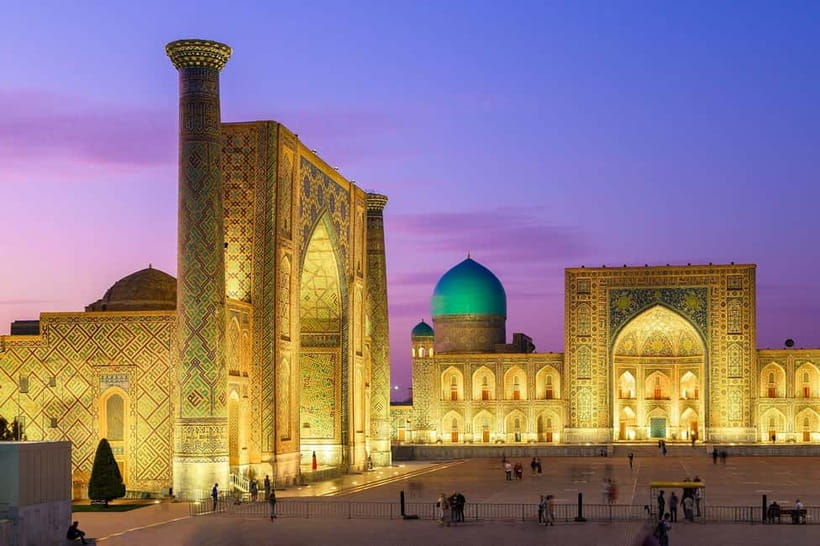
- Two cities in two calendar days: You visit the main sights of Samarkand on day one, then spend day two in Bukhara before returning to Tashkent that evening.
- A very full first day: The 07:24 train reaches Samarkand at 09:37, followed by about eight hours of sightseeing and a 21:43 train to Bukhara.
- Small groups make the schedule manageable: The group is limited to eight people, with hotel pickup and transfers arranged throughout.
- Most major entry fees are covered: Mausoleums, mosques, madrasas, museums, and other listed sights are included.
- Train availability needs attention: High-speed tickets may not be available when booked less than 60 days before departure.
- Walking shoes matter: Bukhara’s sightseeing includes many stops close together, but the day involves extended walking.
Why this two-day route works
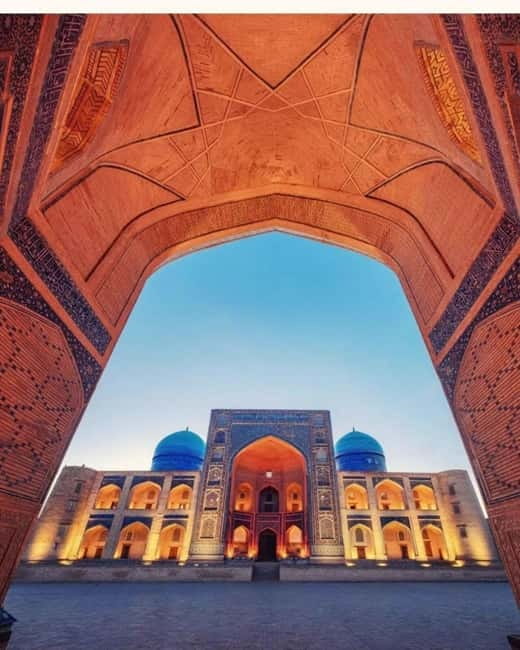
Uzbekistan rewards time, but not everyone has time to spare. If you are based in Tashkent for a short visit, reaching both Samarkand and Bukhara independently means sorting out several train tickets, station transfers, hotel arrangements, guides, and entrance payments. This trip bundles those moving parts into one plan.
The route also uses trains instead of putting you in a road vehicle for the whole journey. The Tashkent to Samarkand bullet train takes about two and a half hours, while the regular train from Samarkand to Bukhara takes about two hours and fifteen minutes. The return from Bukhara to Tashkent takes about four and a half hours.
That final train is long, but it is still a practical way to return to the capital after a full day in Bukhara. You are not changing hotels every night or dealing with local transport on your own. Hotel-to-hotel transfers and air-conditioned vehicle service are part of the arrangement.
One detail deserves attention before you pay. The activity information lists a duration of eight hours, but the actual plan covers two full days, including overnight accommodation and long train journeys. Read the schedule rather than relying only on the headline duration.
A few more Bukhara trips worth weighing up
- Bukhara: Walking Tour with a Small Group
★ 4.9 · 260 reviews - Best of Bukhara: All Day Private Old Town Tour
★ 5.0 · 66 reviews - Best of Bukhara: All Day Private Old Town Tour
★ 4.9 · 62 reviews
Day one: a fast start from Tashkent to Samarkand
Your first morning begins with breakfast at the hotel, followed by a 07:00 transfer to Tashkent railway station. The train departs at 07:24 and arrives in Samarkand at 09:37. That early start is necessary because the sightseeing schedule in Samarkand is dense.
You meet your guide at the station and begin a full-day visit to the city’s main monuments. This arrangement is useful because you do not need to find the first meeting point or work out station transport after arrival. The guide and driver handle the transition.
Samarkand is the more monumental stop on this route. Its famous buildings are spread across a city that has been shaped by rulers, scholars, merchants, and religious institutions. You will see the major highlights, but the schedule does not leave much room for wandering down side streets or returning to a favorite site.
Gur Emir and the power of a royal mausoleum
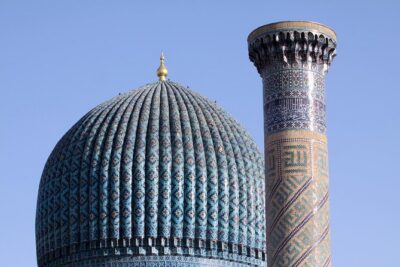
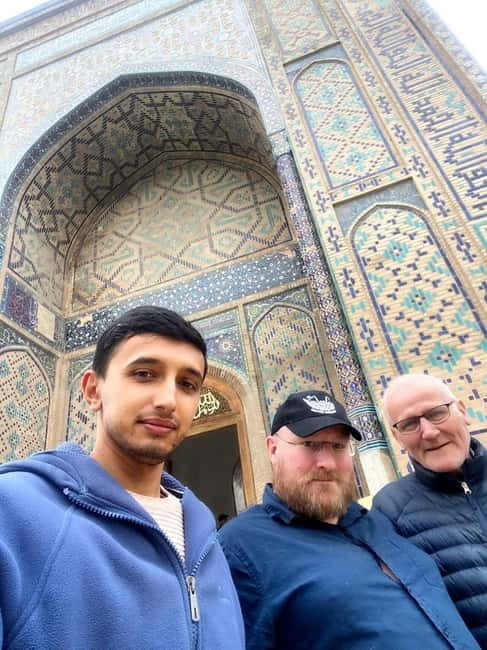
Gur Emir Mausoleum is one of Samarkand’s essential stops. The building is associated with Timur, the fourteenth-century ruler whose empire reached across large parts of Central Asia and beyond. Its blue-tiled exterior and formal design introduce you to the scale and ambition of Samarkand’s historic center.
A guide adds useful context here because the building is more than a photogenic tomb. It is tied to the city’s ruling dynasty and to the image Timur wanted to project. You can expect an explanation of the mausoleum’s role before moving on to the larger monuments.
Registan, Samarkand’s great public square
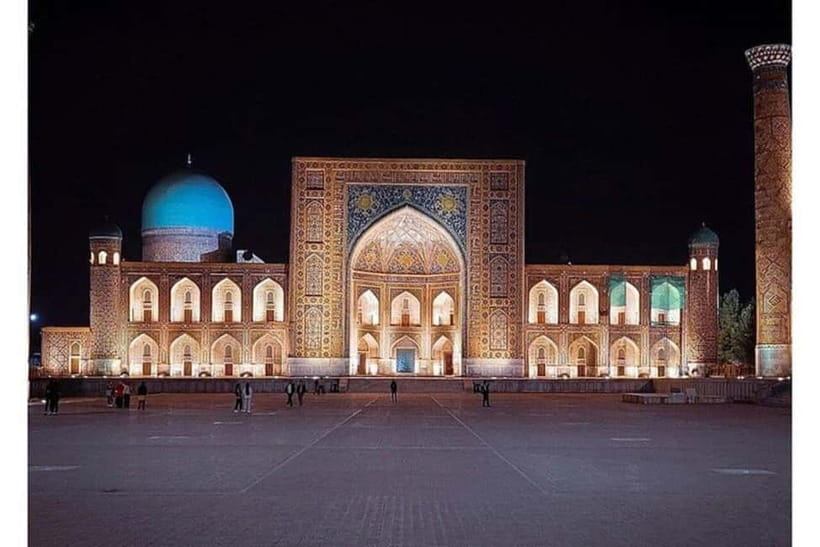
Registan is the visual centerpiece of Samarkand. Three large madrasas frame the square, with patterned tilework, monumental portals, and a sense of ceremonial order. This is the place where the city’s architectural drama reaches its peak.
I like that Registan comes early in the sightseeing program, when you still have energy for the details. Look beyond the broad view and examine the different patterns, colors, and shapes on each facade. The square is impressive at a distance, but a guide can help you notice how its buildings differ.
The tradeoff is time. You will see the square as part of a packed circuit, not as a place where you can sit for a long while and watch the light change.
A completely different sort of day around Bukhara:
- From Bukhara: 2-Day Desert Yurt Camp Tour
★ 4.5 · 57 reviews - City Tour Around Bukhara
★ 5.0 · 55 reviews - Bukhara Full Day Old City Private Tour
★ 5.0 · 46 reviews - Bukhara: Historic Center Guided Sightseeing Tour
★ 4.8 · 44 reviews
Bibi Khanym Mosque and Siyob Bazaar
Bibi Khanym Mosque brings another large-scale religious building into the day. Its history is connected with Timur’s reign, and its size reflects the ambitions of the period. The mosque gives you a different experience from Registan: instead of a carefully framed square, you encounter a massive structure with its own open space and imposing entrance.
Nearby, Siyob Bazaar adds a more everyday side of Samarkand. Markets are useful stops on a guided cultural trip because they show food, shopping, and ordinary city life alongside grand monuments. The included lunches also make the food side of the journey part of the plan rather than an afterthought.
The exact menu is not specified, so you should not book this expecting a particular dish. You can expect food to be included twice at lunch, with breakfast included at the Bukhara hotel.
Shah-i-Zinda and Ulugh Beg Observatory
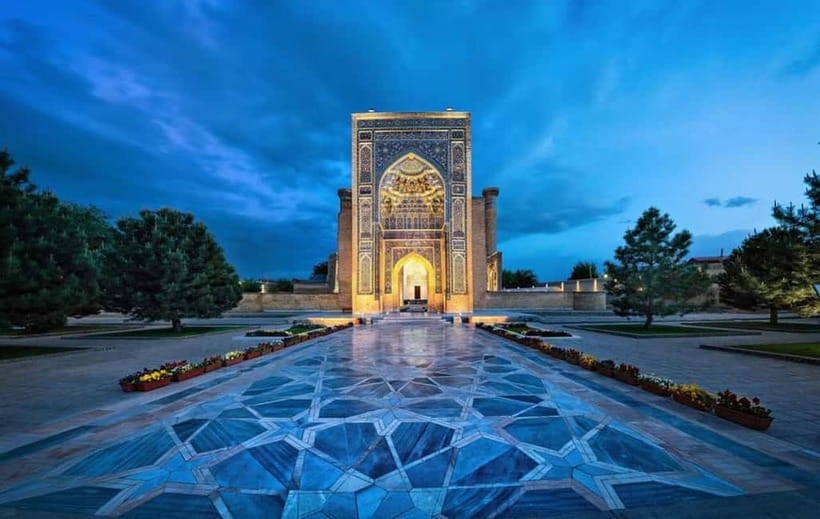
The Shah-i-Zinda Ensemble is one of Samarkand’s most memorable architectural groups. Its connected mausoleums and vivid tilework make it a stop where walking slowly would be tempting, even though your schedule may not allow much lingering.
Wear comfortable shoes and keep your passport or ID card with you. The identification requirement is simple, but it is important because you may need it during the organized travel and entry process.
Ulugh Beg Observatory shifts the focus from rulers and religious buildings to science. Ulugh Beg was a fifteenth-century astronomer and ruler, and the observatory reflects Samarkand’s role as a center of learning. After several grand monuments, this stop gives the day a different subject and helps explain why the city mattered beyond politics and trade.
Your Samarkand program ends with a transfer to the railway station. The train to Bukhara departs at 21:43 and arrives at 23:26. You then transfer to the hotel for the night. This is the point when the schedule feels most demanding: you have had a full day of sightseeing, followed by a late arrival and hotel check-in.
Day two: Bukhara’s old center on foot
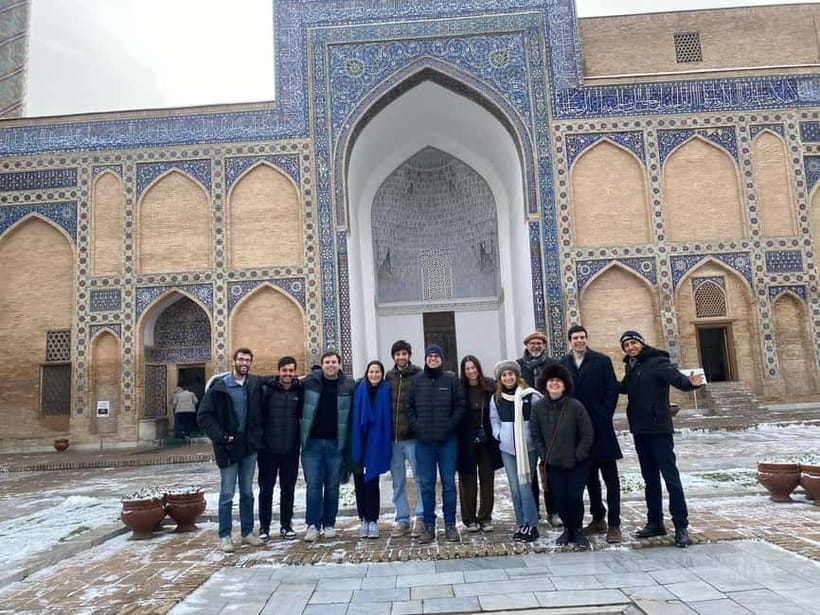
Breakfast comes at the hotel, with the guided Bukhara program beginning at 09:00. The late start is welcome after the previous night, but the day remains full. You transfer to Bukhara station at 15:00 for the 15:44 train back to Tashkent, so the sightseeing window is tightly controlled.
Bukhara is different from Samarkand in feel and scale. Samarkand gives you monumental squares and giant facades. Bukhara brings a denser sequence of mosques, madrasas, historic lanes, and small urban spaces. You move between many important stops, so the guide’s timing and local knowledge matter.
A Bukhara guide has also been praised for being especially kind and helpful during the walking portions. That is useful here because the day asks you to stay on your feet and keep moving.
Lyab-i-Hauz and the madrasas
Lyab-i-Hauz is one of Bukhara’s best-known gathering places. Its name refers to the pool at the center of the ensemble, around which historic buildings create a more intimate setting than Samarkand’s Registan.
The nearby Nodir Devon Begi Madrasah adds another layer of architecture and history. Together, these stops show how Bukhara’s public life was organized around water, religious schools, and social gathering places.
You will likely appreciate the contrast between looking at a single huge monument and moving through a cluster of buildings connected by daily life. The downside is that the itinerary gives you a broad survey rather than long free time at each location.
The Ark and Bolo-khauz Mosque
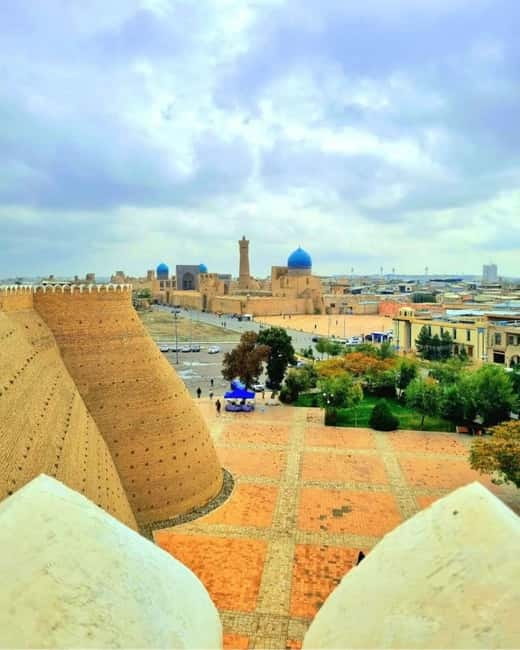
The Ark of Bukhara was the city’s fortified citadel and the seat of its rulers. It helps you understand Bukhara as a political center, not only a religious or commercial one. The broad walls and defensive purpose give the day a stronger sense of power and administration.
Moschea Bolo-khauz, also written as Bolo-khauz Mosque, offers a different architectural mood. Its columns and prayer hall details reward careful attention. Your guide can connect the mosque to the surrounding historic center, making it easier to understand how the city’s religious buildings fit into its public life.
Poi Kalyan and the Kalon Minaret
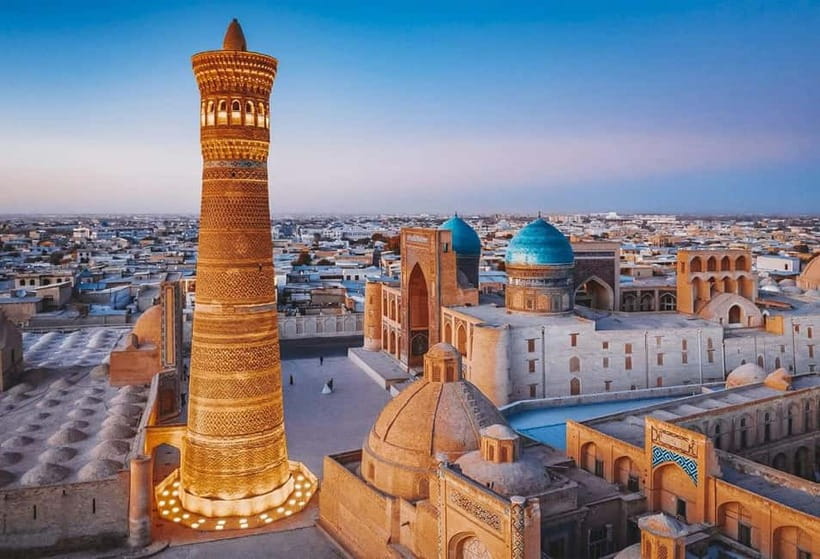
The Great Minaret of the Kalon is one of Bukhara’s signature sights. It rises above the old center and is closely tied to the Poi Kalyan complex. The minaret, mosque, and surrounding madrasa create one of the most powerful views in the city.
Poi Kalyan Mosque and Mir-i-Arab Madrasa are especially worthwhile for anyone interested in Islamic architecture. The space is large enough to feel grand, but it also shows the close relationship between worship, study, and city identity.
This is a good part of the day to listen closely rather than rush for photographs. The buildings can look similar if you only collect quick snapshots, but their different functions make the group more meaningful.
Chor-Minor and Ulugbek Madrasah
Chor-Minor is smaller and more unusual than many of Bukhara’s large religious buildings. Its four tower-like forms give it a distinctive appearance and make it a welcome change after the massive Poi Kalyan complex.
Ulugbek Madrasah connects Bukhara with the wider intellectual world of Timurid Central Asia. Seeing an institution associated with Ulugh Beg in both cities gives the route a useful thread. Samarkand presents his observatory, while Bukhara presents a madrasa linked to learning.
The day ends with the transfer to Bukhara railway station at 15:00. The train leaves at 15:44 and reaches Tashkent at 19:53, followed by a transfer to your hotel.
What the $498 price really covers
At $498 per person, this is not the cheapest way to see Samarkand and Bukhara. It is also not a simple sightseeing ticket. The cost includes:
- Hotel pickup and return transfer
- Air-conditioned vehicle transportation
- Economy bullet train tickets from Tashkent to Samarkand
- Economy regular train ticket from Samarkand to Bukhara
- Economy bullet train ticket from Bukhara to Tashkent
- English-speaking guide, with French, German, Italian, and Russian available
- Entrance fees to listed sights, museums, mausoleums, and monuments
- One night in Bukhara
- One breakfast and two lunches
That package gives the price real value if you would otherwise need to hire separate guides, buy several rail tickets, arrange station transfers, reserve a hotel, and pay entry fees on site. It also protects you from losing time to small transport problems.
The hotel is listed as Amiran Boutique Hotel, Asia Bukhara, or a similar property, with a double room arrangement. You should confirm the final hotel details when booking if room type matters to you.
The price makes less sense if you already have accommodation in Bukhara, prefer independent travel, or want long unplanned stretches. You are paying for coordination and coverage, not privacy or a relaxed pace.
The train issue you should take seriously
High-speed train tickets may be unavailable if you book less than 60 days before departure. In that case, the operator may replace them with the most comfortable class of regular train tickets or another form of transport.
This is an important point for anyone attracted to the bullet train connection. Ask what transport is confirmed before departure, especially if your schedule depends on arriving in Samarkand at the stated time.
Economy rail tickets are included. The route information describes air-conditioned vehicle transfers as part of the service, but you should still expect the train journeys themselves to be the main way you cover the long distances.
Who will enjoy this tour most
I would recommend this trip to you if you are staying in Tashkent for a short time and want to see the two most important historic cities without building the plan yourself. It suits people who value a guide, organized station transfers, included entry fees, and a small group.
It is also a good choice for first-time visitors to Uzbekistan. The guides named in the feedback, including Ikrom, Nargiza, Aziz, and Narguiza, have been praised for being professional, friendly, and easy to communicate with. That human support matters when two days contain this many moving parts.
You should think twice if you have mobility concerns, dislike early starts, or want free time for cafés, shopping, photography, or independent exploration. The activity is not suitable for people over 95, and the walking in Bukhara can be substantial.
Free cancellation is available up to 24 hours before departure, and you can reserve now and pay later. Bring your passport or ID card, and tell the operator where your hotel is located so pickup can be arranged.
Should you book the Samarkand and Bukhara tour?
Book it if your Uzbekistan schedule is tight and you want the main monuments handled by one organized provider. The strongest parts are the small group, the rail-based route, the wide list of included fees, and the consistently praised guides and drivers.
Do not book it expecting two restful days. This is a packed introduction, with a long first day, a late arrival in Bukhara, extensive walking, and a lengthy return train. For a short visit, I think that tradeoff is reasonable. You will see a great deal, learn the basic story of both cities, and return to Tashkent without having to manage the details yourself.
FAQ
How long does the tour last?
The experience covers two calendar days. The activity details also list a duration of eight hours, but the schedule includes overnight accommodation, sightseeing on both days, and several train journeys.
Where does the tour begin and end?
Pickup begins in Tashkent, and the tour returns to Tashkent after the Bukhara to Tashkent train arrives at 19:53, followed by a hotel transfer.
Which cities are visited?
You visit Samarkand on the first day and Bukhara on the second day.
What train routes are included?
The package includes Tashkent to Samarkand by bullet train, Samarkand to Bukhara by regular train, and Bukhara to Tashkent by bullet train, all in economy class.
Is accommodation included?
Yes. One night in Bukhara is included, with Amiran Boutique Hotel, Asia Bukhara, or a similar hotel listed as the expected accommodation.
Are meals included?
One breakfast and two lunches are included. Other services not listed in the included section are not included.
What languages can the guide speak?
Guides are available in English, French, German, Italian, and Russian.
How large is the group?
The tour is described as a small-group experience limited to eight participants.
What should you bring?
Bring your passport or ID card.
What happens if bullet train tickets are unavailable?
If you book less than 60 days before departure, high-speed tickets may be unavailable. They can be replaced with the most comfortable class of regular train tickets or another transport option.
Recently added around Bukhara
- Uzbekistan 8 Days Private Guided Tour★ 4.6 · 3 reviews
- Bukhara: City Highlights Guided Tour with Pickup★ 5.0 · 3 reviews
- 9 Days Private Guided Tour to Uzbekistan★ 5.0 · 3 reviews
- Full-Day Private Guided Tour to Islamic 7 Saints of Bukhara★ 4.5 · 3 reviews
- 2 Day Ukhum Hiking Tour from Bukhara★ 5.0 · 4 reviews
- Bukhara in a Day History, Culture, and Local Insight Private Tour★ 5.0 · 4 reviews
- Legends of Bukhara: Exclusive Full-Day Tour★ 5.0 · 4 reviews
- Bukhara: Full-Day Guided Tour with English-Speaking Guide★ 5.0 · 4 reviews