
Reviewed · WALKING TOURS
All You Need To Know About Bukhara. A Walk In The Town
Bukhara rewards curious walkers. This 4.5-hour tour gives you a clear introduction to the city’s UNESCO-listed Old Town, with stops at mosques, madrasas, mausoleums, bazaars, and the famous Kalon complex. I like the strong focus on history and architecture, and I like that guide Hamza explains how each building fits into Central Asia’s larger story. The main consideration is the group size: despite the private-group wording, the tour usually runs with about 10 to 15 people.
This is also a smart first-day activity. You learn the city’s layout, meet other people, collect useful restaurant and shopping tips, and can return later to the places that caught your eye. At $55 per person, it is good value for a guided walk, though entrance tickets, meals, and transport are extra.
In This Review
- Key points to know before booking
- Why this Bukhara walk works so well as an introduction
- Meeting at Nadir Divan Begi Madrasah and Lyabi Khauz
- From Toqi Sarrafon to the old trading domes
- Ulugbek Madrasa and the education of Bukhara
- Poi Kalan, Bukhara’s great architectural set piece
- Bolo Haouz Mosque and the northern monuments
- Chashma-Ayub and the Samanid Mausoleum
- What Hamza adds to the experience
- Is $55 good value for a 4.5-hour group walk?
- Who should book this Bukhara experience?
- FAQ
- How long does the Bukhara walking tour last?
- Where does the tour begin?
- Is this a private tour?
- What language is the tour offered in?
- Are entrance tickets included?
- What should I bring?
- Should you book this walk in Bukhara?
Key points to know before booking
- Start near the donkey statue: The meeting point is by the donkey statue near Nadir Divan Begi Madrasah, a central and easy place to begin.
- A history-first walking tour: Hamza focuses on dynasties, religious schools, Silk Road trade, architecture, and the way Bukhara developed over more than 2,000 years.
- Expect a group of about 10 to 15 people: The lower price comes from sharing the guide rather than taking a one-to-one private tour.
- Major sights are packed into 4.5 hours: You cover Lyabi Khauz, the trading domes, Poi Kalan, Bolo Haouz Mosque, Chashma-Ayub, and the Samanid Mausoleum.
- Shopping advice is part of the experience: The walk passes bazaars and trading domes selling carpets, hand-woven textiles, spices, and other Uzbek crafts.
- Plan for extras: Transportation, entrance tickets, lunch, dinner, accommodation, and train or flight tickets are not included.
Why this Bukhara walk works so well as an introduction
Bukhara can feel confusing at first. Its monuments are spread through a web of lanes, open squares, old trading routes, and modern streets. A good guide does more than point at attractive buildings. The guide shows you how the city connects.
That is the strongest reason to take this walk early in your stay. Hamza begins with the wider story of Central Asia before moving into Bukhara itself. That context helps you understand why the city mattered, how rulers shaped it, and why religious schools, caravan trade, mosques, and mausoleums appear so close together.
I especially like the tour’s emphasis on buildings as part of a timeline. The stops are not treated as a string of unrelated photo opportunities. You get an explanation of how Bukhara grew along the Silk Road and how different ruling periods left their mark.
The format also leaves room for questions. That matters in Bukhara, where a madrasa may look like a simple courtyard from outside, but its purpose, layout, and religious role require explanation. Hamza’s style, based on the experience described by past customers, is relaxed, clear, and occasionally funny rather than stiff or overly academic.
More Walking Tours in Bukhara
- Bukhara: Walking Tour with a Small Group
★ 4.9 · 260 reviews - Bukhara Walking Tour
★ 4.7 · 25 reviews - Bukhara Historical City Highlights Guided Walking Tour
★ 4.5 · 16 reviews
Meeting at Nadir Divan Begi Madrasah and Lyabi Khauz
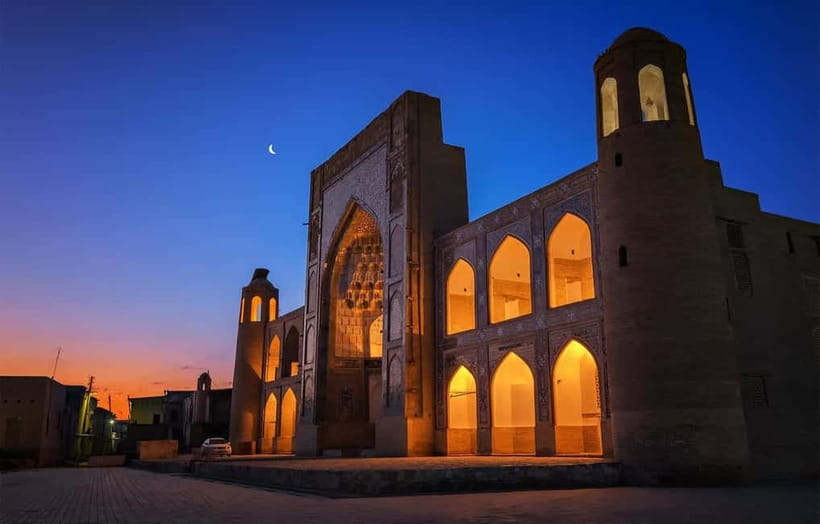
The walk starts near the donkey statue by Nadir Divan Begi Madrasah. This places you beside Lyabi Khauz, one of the best-known gathering areas in the Old Town.
Lyabi Khauz is a useful opening stop because it gives you an immediate feel for Bukhara’s public life. The setting brings together historic buildings, a pool, pedestrian areas, restaurants, and people out enjoying the center. The guided portion here is short, about five minutes, so do not expect a full architectural lecture at the start. Instead, this opening helps orient you before the route moves into the old commercial quarter.
If you arrive in Bukhara in the morning, the tour’s timing can be especially convenient. One person used it as an early introduction after arriving in the city, then used the rest of the stay to revisit the places that deserved more time. That is a good strategy. This is an overview walk, not a replacement for a slow afternoon inside every monument.
The start is also practical for meeting fellow visitors. The group format can be a social plus if you are exploring Uzbekistan alone or want company for a meal afterward. If you prefer to ask constant questions or set your own pace, a group of 10 to 15 will feel less flexible than a private booking.
From Toqi Sarrafon to the old trading domes
From Lyabi Khauz, the route continues toward Toqi Sarrafon Bazaar. The stop itself is brief, but the wider idea is important. Bukhara’s trading domes were built around commercial life on the Silk Road, and they remain associated with crafts and shopping today.
This is where the walk becomes particularly useful for anyone who wants souvenirs but does not know where to begin. You can expect to see hand-woven textiles, carpets, spices, and local handicrafts in and around the old market areas. The guide can help explain what you are looking at and suggest where to browse.
Keep your shopping expectations sensible. A guided walk is not a dedicated buying tour, and the market visits are short. You will get an introduction rather than hours of bargaining. Still, it is much better than wandering into shops without knowing how the commercial quarter fits into the city.
The route then passes Magok-i-Attari Mosque, with a guided explanation of about five minutes. This stop adds another layer to Bukhara’s built past. It is one of the places where the city’s long religious and urban development becomes easier to understand through a guide’s explanation.
Several short stops follow, listed as roughly one or two minutes each. The available details do not identify those stops by name, so you should think of them as quick commentary points rather than full visits. They help connect the main monuments, but the tour’s strongest attention goes to the better-known sites later in the walk.
Ulugbek Madrasa and the education of Bukhara
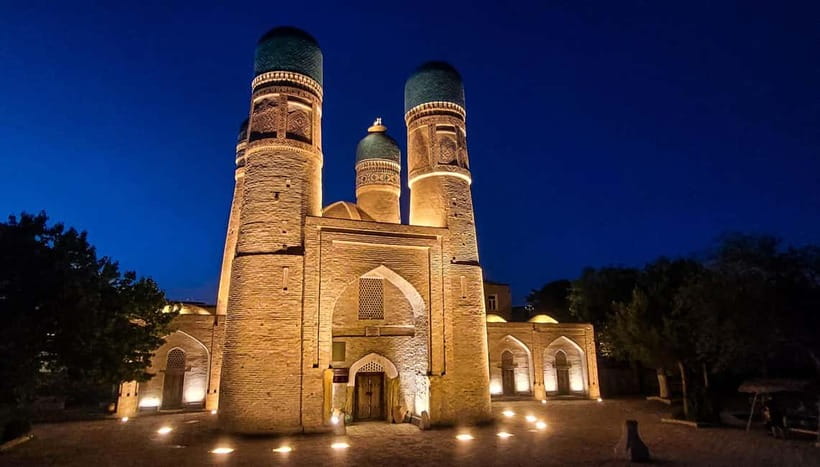
Ulugbek Madrasa receives about five minutes of guided time. This is a key stop for understanding the role of madrasas in the city.
The word can sound familiar to modern ears, but these institutions were not simply decorative schools. The tour explains that madrasas included teaching spaces and a mosque, giving you a better sense of how education and religious life worked together.
This kind of explanation is one of the tour’s best features. One former participant found that the guide clarified how madrasa layouts worked, including the presence of a lecture hall and mosque. That practical detail can change the way you look at the many similar-looking facades around Bukhara.
You may also notice Uzbek textiles and handicrafts as you move through the old lanes. They are part of the visual character of the center, not just items for sale. If you want to shop later, make a note of places that interest you instead of trying to make every purchase while the group is moving.
A completely different sort of day around Bukhara:
- Best of Bukhara: All Day Private Old Town Tour
★ 5.0 · 66 reviews - Best of Bukhara: All Day Private Old Town Tour
★ 4.9 · 62 reviews - From Bukhara: 2-Day Desert Yurt Camp Tour
★ 4.5 · 57 reviews - City Tour Around Bukhara
★ 5.0 · 55 reviews
Poi Kalan, Bukhara’s great architectural set piece
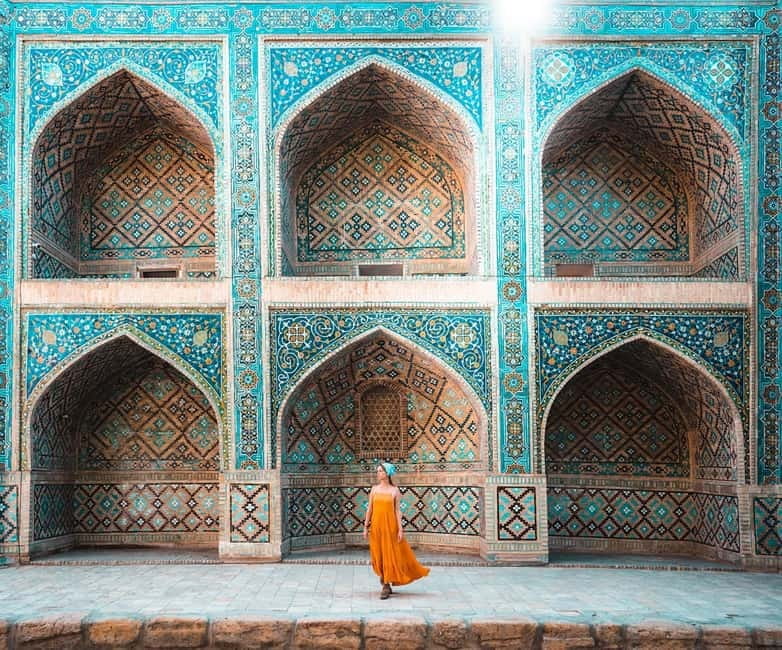
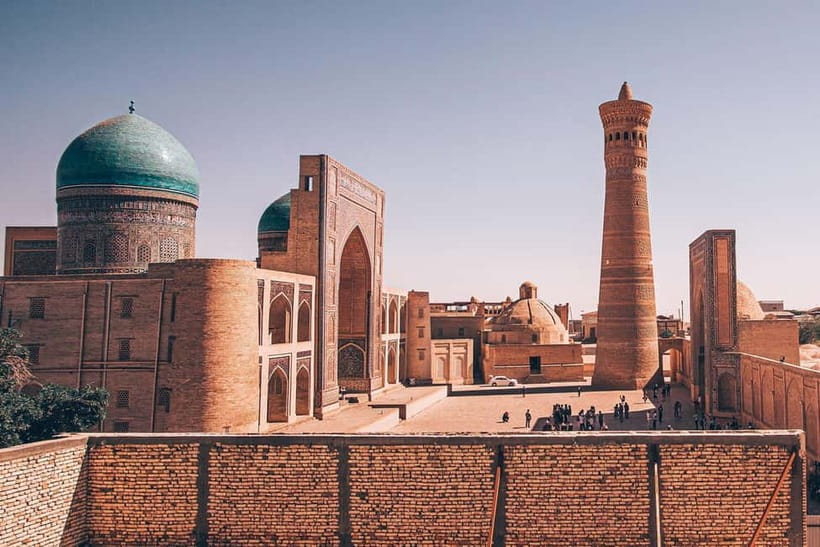
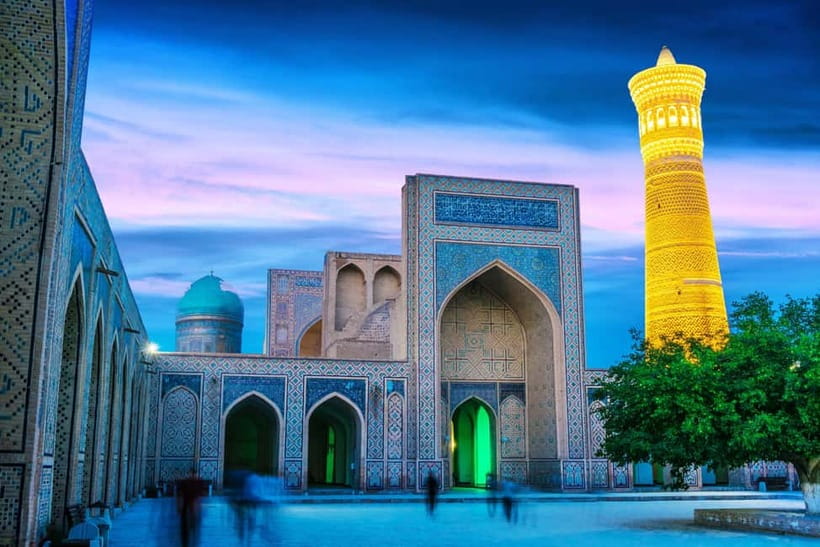
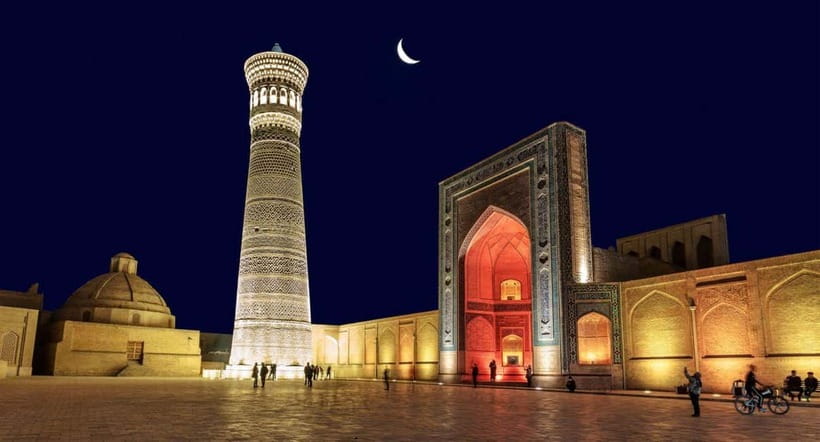
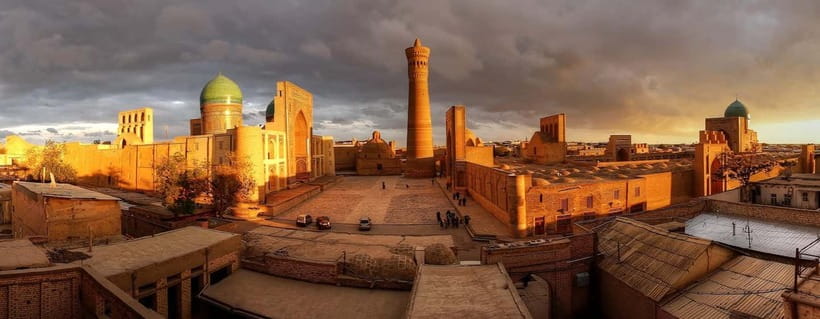
The Poi Kalan area is likely the visual high point of the walk. Here you see the Kalan Mosque, the Mir-i-Arab Madrasa, and the Great Minaret of Kalan, one of Bukhara’s most recognizable landmarks.
The itinerary gives about five minutes to Poi Kalan Mosque and two minutes to Mir-i-Arab Madrasa, with additional time nearby. Those exact timings should be read as rough estimates, not a promise that you will have only a few minutes at each monument. The route includes several places close together, and the guide can spend more or less time depending on questions and group pace.
The Kalan Minaret is especially important to the city’s identity. Its scale and careful brickwork make it easy to understand why it has become Bukhara’s signature image. The guide’s role here is to place the minaret and surrounding buildings into the city’s religious, political, and commercial story.
Do not assume that every building is fully open for interior visits. Entrance tickets are not included, and access can vary by site. The tour information says you can skip the ticket line, but it also says entrance fees are paid separately on the spot. I would confirm which entries are included in the route and what skip-the-line access means before you go.
This part of Bukhara is also where photographs can take over. Try to listen before reaching for your phone. The architecture is impressive on its own, but the explanation of how the buildings relate to each other is what makes the square more than a pretty backdrop.
Bolo Haouz Mosque and the northern monuments
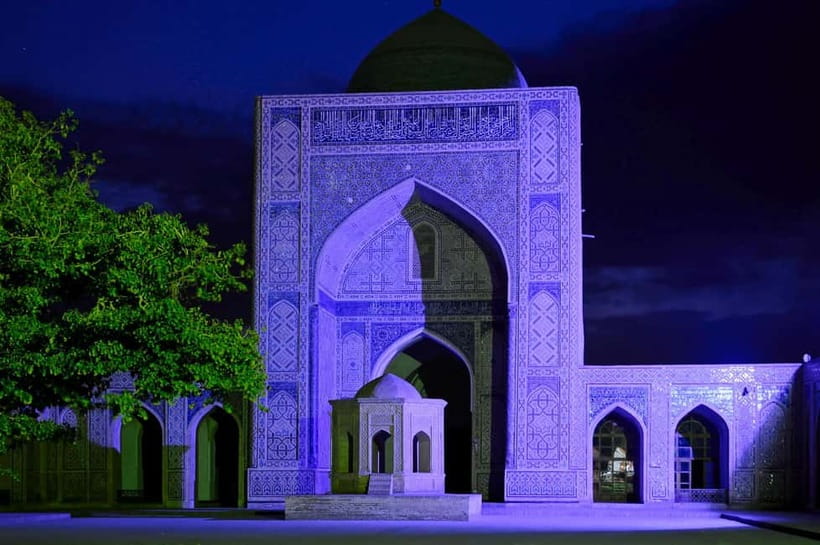
The walk continues to Bolo Haouz Mosque, where the guided visit lasts about five minutes. This mosque is known for its striking timber columns and carefully finished details, giving you a change of scale and style after the monumental Poi Kalan complex.
Bolo Haouz is also useful as part of the city’s broader layout. The route does not stay only around the busiest central monuments. It moves toward the Ark Fortress area and then onward to additional historic sites, helping you understand that Bukhara is more than the main trading square.
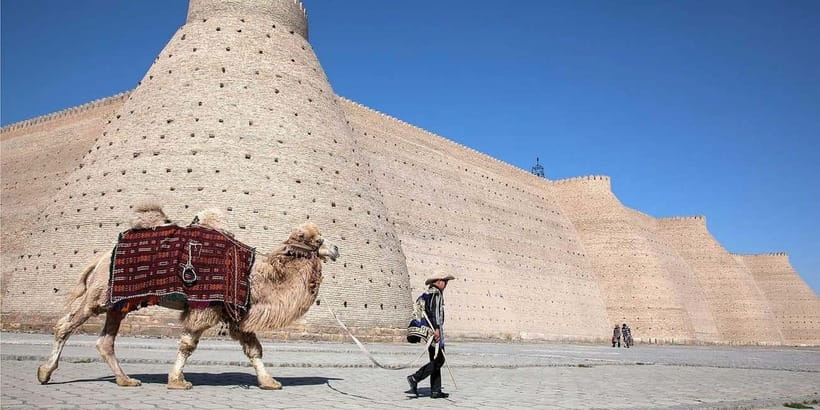
The Ark Fortress is named in the overall tour description as one of the major sights covered, although the timed itinerary does not list a separate stop for it. That means you should clarify whether you will enter the fortress or view and discuss it from outside. Since entrance tickets are extra, do not assume an interior visit is included in the $55 price.
This is one of the few points where the tour description could be clearer. The route promises all the major sights, but the exact balance between seeing, entering, and discussing each monument may depend on opening hours, tickets, and the group’s pace.
Chashma-Ayub and the Samanid Mausoleum
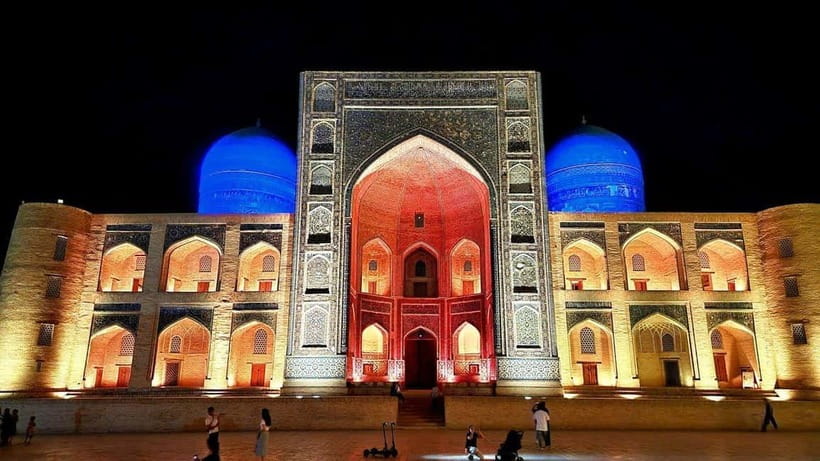
The route then reaches Chashma-Ayub Mausoleum, with about five minutes of guided time. Its name is tied to the tradition of the Prophet Job, and the stop gives the walk another chance to connect belief, local tradition, and architecture.
The final destination is the Samanid Mausoleum. This is a fitting place to finish because it belongs to an earlier period of Central Asian history than many of the grander medieval structures in the center. Its design and brickwork show a different architectural language, and the contrast helps you see that Bukhara was shaped over many centuries rather than built in one grand campaign.
The itinerary lists the ending point as Ismail Samani Mausoleum, while also naming the Samanid Mausoleum on the route. These refer to the same final monument in the information provided. The tour finishes here rather than returning you to your accommodation, so plan your onward route.
The total walking time is listed as 4.5 hours. The route includes many stops, some of them very short, and there is no transportation with a driver included. Bring water, a sun hat, a camera, and a charged phone. Bukhara’s sun can be strong, and a long historic-center walk is easier when you are prepared.
What Hamza adds to the experience
The guide is the most praised part of this tour. Hamza is repeatedly described as fluent in English, well prepared, funny, and able to explain Bukhara’s history without turning the walk into a list of dates.
That balance matters. You get enough information to understand the dynasties, monuments, and cultural changes, but the tone remains conversational. One participant particularly liked the focus on broad history and culture rather than an endless recital of building names.
Hamza also adapts well to conditions. A booking made at short notice during the quiet season still went ahead even when only one person had reserved. Another walk continued in rainy weather and remained enjoyable and informative. That suggests a serious approach to keeping the appointment, though weather will still affect how comfortable the walk feels.
Practical advice is another strength. Hamza has recommended local restaurants and offered suggestions for shopping. Those tips can save you time, especially on a first visit when every lane seems to offer something worth investigating.
The English-language guiding is an important point for this experience. The stated language is English, and the feedback describes Hamza’s English as fluent. If you want detailed historical explanation rather than a silent escort between monuments, this is a strong match.
Is $55 good value for a 4.5-hour group walk?
At $55 per person, the price makes sense if you want a structured introduction without paying for a fully private guide. You receive a professional guide, all-day support, suggestions, 24-hour assistance, and the chance to meet other people on a group walk.
The value is strongest when you use the tour as a foundation for the rest of your visit. You learn the layout, identify the places you want to enter later, and get advice on food and shopping. If you already know Bukhara well, the route may feel too introductory.
The word private needs careful reading. The information also says the tour is not private and normally has 10 to 15 participants. If you want a personal pace, detailed one-on-one questions, or control over the route, contact the provider about a genuinely private option. The group setup is the reason the price is lower.
Entrance tickets are separate, as are transport, meals, accommodation, and travel to Bukhara. You should also budget for lunch or dinner independently. The guide may recommend a restaurant, but the meal is not part of the tour.
Free cancellation is available up to 24 hours before the start for a full refund, and you can reserve now and pay later. Those terms are useful if your Uzbekistan route is still changing.
Who should book this Bukhara experience?
I would choose this walk if you are visiting Bukhara for the first time, enjoy historical explanation, and want to understand the city before exploring it alone. It suits solo visitors, couples, and small parties who do not mind sharing a guide.
It is also a good choice for people who prefer a moderate-length introduction rather than a full day of continuous sightseeing. The 4.5-hour schedule gives you a clear tour without using every hour of your stay.
You may want a different option if you dislike group tours, need to spend long periods inside each monument, or expect every major site to include an entrance. The group size and extra ticket costs are the main limitations.
The tour is listed as wheelchair accessible, but the route is a walking tour through the Old Town. If you use a wheelchair, confirm the exact route and access conditions before booking, especially for individual historic buildings.
FAQ
How long does the Bukhara walking tour last?
The tour lasts 4.5 hours. It covers a sequence of historic monuments, bazaars, mosques, madrasas, and mausoleums in the Old Town.
Where does the tour begin?
The meeting point is near the donkey statue by Nadir Divan Begi Madrasah.
Is this a private tour?
No. Although the booking information uses the term private group, the tour normally has about 10 to 15 people. A separate private option may be available by contacting the guide.
What language is the tour offered in?
The live guided tour is offered in English.
Are entrance tickets included?
No. Entrance tickets are not included in the price and can be paid for on the spot.
What should I bring?
Bring water, a sun hat, a camera, and a charged smartphone.
Should you book this walk in Bukhara?
Book it if you want a strong first look at Bukhara’s monuments, Silk Road past, architecture, and shopping areas, especially with clear English explanations. Hamza’s calm style, humor, historical detail, and useful restaurant advice make the $55 group price reasonable.
For the best experience, schedule it near the beginning of your stay. Take notes on the places you want to revisit, then return later for slower visits and interior exploration. Just remember that this is a shared walking tour, not a fully private day, and that tickets and meals cost extra.
Recently added around Bukhara
- Uzbekistan 8 Days Private Guided Tour★ 4.6 · 3 reviews
- Bukhara: City Highlights Guided Tour with Pickup★ 5.0 · 3 reviews
- 9 Days Private Guided Tour to Uzbekistan★ 5.0 · 3 reviews
- Full-Day Private Guided Tour to Islamic 7 Saints of Bukhara★ 4.5 · 3 reviews
- 2 Day Ukhum Hiking Tour from Bukhara★ 5.0 · 4 reviews
- Bukhara in a Day History, Culture, and Local Insight Private Tour★ 5.0 · 4 reviews
- Legends of Bukhara: Exclusive Full-Day Tour★ 5.0 · 4 reviews
- Bukhara: Full-Day Guided Tour with English-Speaking Guide★ 5.0 · 4 reviews
Walking Tours, compared.
Samarkand One Day Tour: one day walking & group tour
Read our review →Browse the lists this tour appears in