
Reviewed · ANCIENT FORTRESSES TOURS
Ayazkala, Toprakkala & Kizilkala Fortress Tour From Khiva
Ancient walls rise from the Khorezm desert. This private five-hour trip takes you from Khiva to three striking fortresses in Karakalpakstan, with round-trip air-conditioned transport for up to three people. I like the small private format and the chance to see a side of Uzbekistan far beyond Ichan Kala. I also like the varied scenery, from cotton fields to open desert and weathered mud-brick ruins.
The main catch is simple but important: a guide is not included. You get a driver, not a historian, and English ability may be limited or absent. That makes the trip easy logistically, but less rewarding if you want the story behind every wall and courtyard.
In This Review
- Key points to know before you book
- Why these fortresses matter in the Khorezm desert
- Leaving Khiva for Toprakkala
- Toprakkala, the former capital of Khorezm
- Kizilkala, the red garrison fortress
- Ayazkala and the climb above the plain
- The driver and language issue
- What the $90 price really buys you
- Who will enjoy this trip most
- What to bring for a better day
- Should you book the fortress tour?
- FAQ
- How long does the Ayazkala, Toprakkala and Kizilkala tour last?
- What is the route?
- Where can pickup take place?
- Can I return to Urgench instead of Khiva?
- Is the tour private?
- What does the $90 price include?
- Are entrance tickets included?
- Is a guide included?
- What languages may the driver speak?
- Is Ayazkala difficult to reach?
Key points to know before you book
- Three major fortresses in five hours: Toprakkala, Kizilkala, and Ayazkala fit into a half-day from Khiva.
- Private transport for up to three people: At $90 per group, the price works best when shared.
- Toprakkala has unusual archaeological importance: It is linked with an early Khorezm capital, written records, a calendar, and plaster figures of singers.
- Ayazkala requires physical effort: Expect a walk across sand and an uphill climb to reach the higher ruins.
- The driver may not speak English: English and Russian are listed, but language ability can vary, so prepare an offline translation tool.
- Entrance fees are extra: Allow about $1 to $2 per monument per person, in addition to the tour price.
Why these fortresses matter in the Khorezm desert
Karakalpakstan is home to a remarkable group of ancient defensive sites. The Khorezm oasis once contained so many fortresses that the area became associated with the name Ellikkala, meaning 50 fortresses.
That number is a useful way to picture the region. These are not isolated ruins dropped randomly across the desert. They formed part of a wider defensive system, with fortified settlements and garrisons protecting the oasis from raids by nomadic groups from the north.
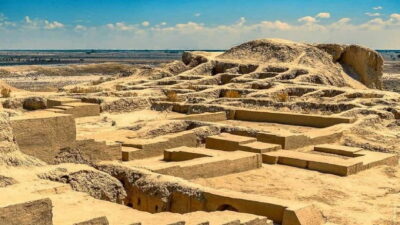
The appeal here is not polished restoration. You will see broad earthen walls, broken towers, exposed rooms, and remains shaped by wind and weather. The sites feel stark and open. The absence of a busy city around them is part of the experience.
I like this excursion because it gives you a physical sense of distance. Khiva’s Ichan Kala is compact and richly decorated. These fortresses are the opposite: open, spare, and spread across a huge plain. You get to see how power and settlement once worked outside the famous blue-tiled cities of Uzbekistan.
More desert fortress trips from Khiva:
- Transfer: Bukhara – Khiva via Ancient Fortresses
★ 4.5 · 101 reviews - Daytrip From Khiva To Ancient Fortresses
★ 4.6 · 60 reviews - Private Daytrip to 7 Ancient Fortresses of Khorezm
★ 5.0 · 25 reviews
Leaving Khiva for Toprakkala
Pickup is available at the Ata Darwaza, the western gate of Ichan Kala, and hotel pickup in Khiva is also possible. You can also arrange pickup or drop-off at Khiva Railway Station, Urgench Airport, or Urgench Railway Station.
That flexibility is useful if you are connecting between Khiva and Urgench. It can save you from returning to your hotel before catching a train or flight. Confirm the exact meeting point and timing in advance, especially if your transport connection is tight.
The trip uses a private air-conditioned vehicle. For three people, this is a much better arrangement than paying for three separate seats in a larger group. At $90 for the vehicle, the cost comes to $30 per person before entrance fees if the group is full. For one person, the same price is much harder to justify, though the privacy and flexible pickup still have value.
The drive brings a change in scenery as Khiva gives way to agricultural fields and open desert. Cotton fields are part of the view, followed by increasingly dry ground and wide horizons. Bring sunglasses and a hat. Shade is limited at the fortresses.
Toprakkala, the former capital of Khorezm
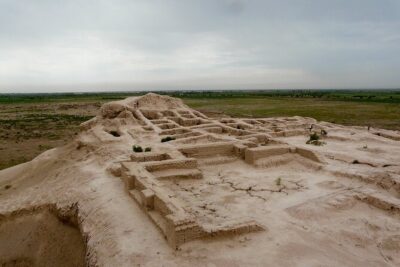
Toprakkala is usually the most important stop for understanding the ancient Khorezm state. Its name means Clay Fortress, an appropriate name for a site built largely from earthen material.
The fortress is associated with the first capital of Khorezm and with early examples of planned urban design. The site is especially significant because excavations uncovered written sources from Khorezm, a calendar, and plaster statuettes of singers.
Those finds make Toprakkala more than a dramatic ruin. Its value is in what archaeologists found beneath and among the walls. The layout suggests organized government and urban planning, while the written material gives a rare glimpse into administration and culture.
You should not expect a modern museum-style visit here. The main experience is walking around the remaining structures and trying to read the shape of the old city. Without a guide, it helps to have basic background notes saved on your phone. Otherwise, it can be difficult to understand which areas were residential, ceremonial, or administrative.
The ruins can look similar at first glance, especially under strong sunlight. Take your time with the overall plan rather than searching for one perfect building. From the higher parts, the broad setting helps explain why an ancient capital could be placed here.
Kizilkala, the red garrison fortress
Kizilkala is a smaller and more defensive stop along the route. Its name means Red Fortress, referring to the color of the clay.
The site functioned as one of the oasis garrison fortresses. That role gives it a different character from Toprakkala. Instead of imagining a capital with courts and offices, you are looking at a fortified position tied to defense and movement through the region.
Kizilkala works well as a middle stop because it breaks up the journey to Ayazkala. It also gives you another example of how local building material shaped the appearance of these sites. The color of the walls changes with the light, and the dry setting makes the red earth especially noticeable.
Do not expect a long guided visit unless you arrange a guide separately. The driver can take you to the site, but the historical explanation may be brief. I would treat this stop as a chance to see the defensive pattern of the oasis, not as a fully interpreted archaeological park.
A few more Khiva trips worth weighing up
- Khiva: Historical City Highlights Guided Walking Tour
★ 4.8 · 156 reviews - Khiva Historical City Highlights Guided Walking Tour
★ 5.0 · 30 reviews - Aral Sea Adventures (2 day)
★ 5.0 · 30 reviews - Master Class – Shivit Osh Traditional Food Of Khiva
★ 4.2 · 27 reviews
Ayazkala and the climb above the plain
Ayazkala is the dramatic finish. The fortress group has three parts and is among the most important defensive sites in the oasis. The ruins were positioned around the borders of the oasis to help protect settled communities from raids coming from the north.
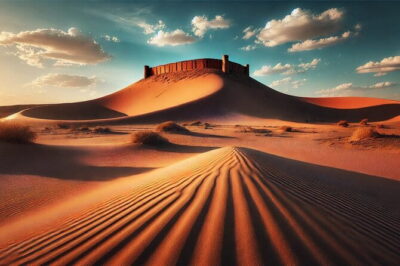
The name means Severe Frost Fortress. The explanation is tied to the bitter cold of the steppe in winter. You do not need to visit in winter to understand the name completely, though the exposed position makes the site feel harsh even in warmer weather.
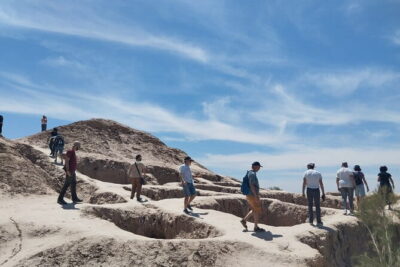
The climb is the main practical issue. Reaching the higher ruins involves walking over sand and going uphill. One account describes the climb as difficult, and that is worth taking seriously if you have limited mobility, poor balance, or little experience walking on loose ground.
Wear proper shoes rather than smooth-soled sneakers or sandals. Comfortable clothing, a sun hat, and sunglasses are also sensible. Carry water, though the supplied information does not specify whether refreshments are provided, so you should arrange your own before leaving Khiva.
The reward is the setting. From Ayazkala, the open plain and desert make the fortress feel separate from modern life. The walls are not merely old buildings to inspect. They show why height, distance, and visibility mattered to the people who built them.
Because Ayazkala is the most remote and physically demanding stop, it is also the one that benefits most from a proper guide. A driver can get you there, but an English-speaking guide could explain the three-part structure, the defensive purpose, and how the site fit into the wider oasis.
The driver and language issue
This experience is sold with a driver rather than a guide. That distinction should shape your expectations from the start.
The listed languages are English and Russian, but actual communication depends on the person assigned. Some drivers speak very little English, and some may not speak it at all. One highly praised driver named Sascha was described as friendly and an excellent driver, while another booking had a driver who could not communicate in English.
This is not automatically a problem if you mainly want transport. A private car, direct pickup, and freedom to explore the ruins at your own pace can be enough. It becomes a problem if you want detailed explanations, help identifying structures, or support during the Ayazkala climb.
Before departure, download a translation app and save key place names in both Latin and Cyrillic script if possible. Write down the names of the three fortresses and the planned return point. Confirm whether your driver speaks English before the day of the trip, rather than relying only on the general language description.
Driving quality may also vary. Some experiences have involved smooth, punctual service, while one account described fast driving and a flat tire. That does not define every departure, but it is fair advice to ask the driver to slow down if you feel uncomfortable. You are spending several hours on the road, so a calm journey matters.
What the $90 price really buys you
The $90 rate covers a private, round-trip air-conditioned vehicle for a group of up to three people. All listed taxes and vehicle-related fees are included.
The best value comes when three people share the car. At $30 each, the transport cost is reasonable for reaching three remote sites without arranging separate taxis or negotiating each leg of the journey. For two people, it is still a practical private excursion. For one person, it is a convenience purchase rather than a bargain.
Entrance tickets are not included. The expected cost is about $1 to $2 per monument per person. Since the route includes Toprakkala, Kizilkala, and Ayazkala, budget roughly $3 to $6 per person for site entry, while allowing for local price changes.
A guide is also not included. If you want historical interpretation, ask whether a guide or guide-driver can be added and what the extra cost will be. This is especially worthwhile if the fortresses are a main reason you came to the region.
The booking offers free cancellation up to 24 hours before departure and reserve-now, pay-later terms. That is useful when train and flight plans are still moving, but it does not change the need to confirm pickup details.
Who will enjoy this trip most
I would recommend this tour to anyone with an extra day in Khiva who wants to see ancient sites beyond the city walls. It suits people who enjoy ruins, open scenery, archaeology, and unusual stops that do not feel staged for tourism.
It is also a good choice for couples or small groups who value privacy. You avoid waiting for a large group and can return directly to Khiva, Urgench Airport, or an Urgench railway station if arranged in advance.
The trip is less suitable if you want a full historical lecture at each stop. It is also a poor match for anyone who cannot comfortably walk over sand or climb to Ayazkala. The vehicle is listed as wheelchair accessible, but that should not be confused with wheelchair-friendly access across the fortress terrain.
Families with older children may enjoy the sense of exploration, though the heat, lack of shade, and rough footing require attention. I would be cautious with young children unless your group is prepared to supervise them closely.
What to bring for a better day
The basics matter here more than fancy equipment.
- Comfortable shoes with a secure grip
- Sunglasses
- A sun hat
- Loose, comfortable clothing
- Water and any personal snacks you need
- An offline translation app
- Phone battery power for photos and directions
The supplied advice specifically calls for comfortable shoes, sunglasses, a sun hat, and comfortable clothes. I would not skip any of these. Ayazkala is exposed, and the combination of sand, sun, and climbing can make a short visit feel much harder than expected.
Try to keep your schedule flexible after the tour. The advertised duration is five hours, but road conditions, stops, communication, and a flat tire can affect the timing. If you are heading to an airport or train station, allow a sensible buffer rather than planning a connection immediately after the stated return time.
Should you book the fortress tour?
Book it if you want a private way to reach three of Khorezm’s most important ancient fortresses and you are comfortable exploring with limited interpretation. The scenery is compelling, the sites are unusual, and the price is fair when shared by three people.
I would pay special attention to two questions before confirming: Can an English-speaking guide be added, and what language will the driver actually speak? If the answer is no guide and little English, bring your own background notes and translation app.
For the strongest experience, go with two or three people, wear sturdy shoes, and plan for the Ayazkala climb. If your main goal is historical understanding rather than transport, spend extra for a guide if possible. If your main goal is getting out of Khiva to see vast desert ruins, this is a practical and worthwhile half-day trip.
FAQ
How long does the Ayazkala, Toprakkala and Kizilkala tour last?
The tour lasts about five hours.
What is the route?
The route runs from Khiva to Toprakkala, Kyzykkala or Kizilkala, Ayazkala, and back to Khiva.
Where can pickup take place?
Pickup is available at Ata Darwaza, the western gate of Ichan Kala, or at your hotel in Khiva. Pickup can also be arranged at Khiva Railway Station, Urgench Airport, or Urgench Railway Station.
Can I return to Urgench instead of Khiva?
Yes. Return transport can be arranged to Urgench Airport or Urgench Railway Station.
Is the tour private?
Yes. It is a private group experience for up to three people.
What does the $90 price include?
The price includes round-trip air-conditioned vehicle transport and all listed fees and taxes.
Are entrance tickets included?
No. Entrance tickets cost about $1 to $2 per monument per person and are paid separately.
Is a guide included?
No. The tour includes a driver, but not a guide.
What languages may the driver speak?
English and Russian are listed, but English ability may vary. Confirm the actual language of your assigned driver before departure.
Is Ayazkala difficult to reach?
Ayazkala requires walking across sand and climbing uphill to reach the ruins. Comfortable shoes and suitable clothing are important.
Recently added around Khiva
- Khorezm Fortress and KyzylKum Desert Private Tour★ 5.0 · 3 reviews
- A Night In The Kyzylkum Desert [2] From Khiva★ 4.5 · 3 reviews
- Best of Khiva: Exclusive Private Tour!★ 5.0 · 3 reviews
- Khiva: City Highlights Guided Walking Tour★ 4.6 · 3 reviews
- Khiva: classic Half-Day Tour★ 3.7 · 3 reviews
- Master Class – Uzbek Bread (Khiva)★ 3.5 · 4 reviews
- Uzbekistan 6 Days Private Tour Khiva-Bukhara-Samarkand by Train★ 5.0 · 4 reviews
- Traditional Khiva Cooking Class with Market Visit & Lunch★ 5.0 · 4 reviews
Ancient Fortresses Tours, compared.

Private Bukhara-Khiva Transfer via Ancient Fortresses
Read our review →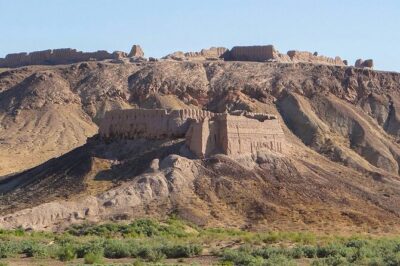
Ayaz Kala & Toprak Kala private fortress daytrip from Khiva
Read our review →Browse the lists this tour appears in