
Reviewed · ANCIENT FORTRESSES TOURS
Daytrip from Khiva to Five Ancient Fortresses
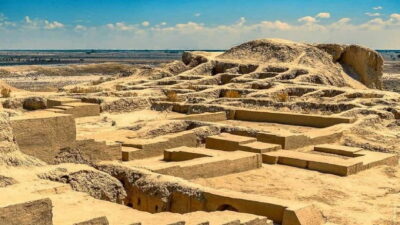
Ancient walls rise from the desert. This private day trip gives you a practical way to reach five far-flung Khorezm fortresses without arranging several taxis or dealing with regional transport. I especially like the private air-conditioned vehicle and the freedom to start from Khiva or Urgench. Ayaz-Kala and Toprak-Kala offer the strongest sights, while the broad route gives you a fine taste of Karakalpakstan beyond Khiva.
The main drawback is that this is transport with sightseeing stops, not a fully guided archaeology tour. Your driver may speak little English, and two or three of the fortresses can feel like low ruins rather than grand citadels. Driving standards have also been uneven, so I would confirm the pace before setting off and bring lunch rather than rely on a restaurant stop.
In This Review
- Five things to know before you go
- What the $115 private price really buys
- Leaving Khiva for Karakalpakstan
- Guldursun-Kala: a huge first stop with little left standing
- Ayaz-Kala: the clearest fortress experience
- Kavat-Kala: an archaeological puzzle
- Toprak-Kala: the royal center of the route
- Kyzyl-Kala: a smaller fort with smart defenses
- The driver matters more than the brochure
- Who should book this five-fortress day?
- Should you book it?
- FAQ
- How long does the five-fortress trip take?
- Where can pickup and drop-off take place?
- How many people can join the private group?
- Is a guide included?
- Are fortress entrance tickets included?
- Is lunch included?
- Can I cancel the booking?
Five things to know before you go
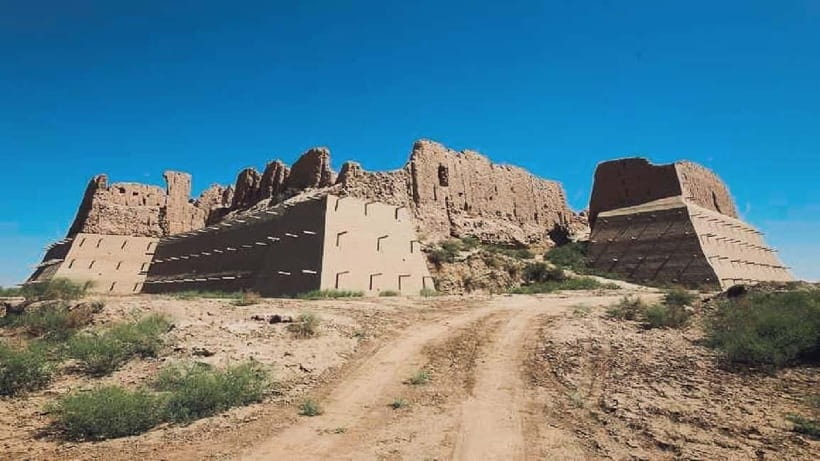
- Ayaz-Kala is the visual highlight: This is a group of three fortresses around a hill, with the clearest sense of a desert citadel.
- Toprak-Kala adds royal scale: Its remains once formed a residence for Khorezmian rulers and produced coins, ceramics, fabrics, ornaments, and other finds.
- Kavat-Kala is vast but hard to read: The site stretches for about 15 kilometers, though much of what you see may be difficult to recognize without explanation.
- You pay entry fees separately: The $115 rate covers the private vehicle and transfers, not fortress tickets.
- Language can shape the day: Drivers are trained to follow the route, but English may be limited and detailed historical explanations are not guaranteed.
- Bring food and water: Lunch is optional, and one reported restaurant stop involved unclear prices and poor quality.
What the $115 private price really buys
The price is $115 per group of up to three people, not per person. That makes the arithmetic attractive for a small party. Three people would pay about $38 each before entrance fees and lunch, while a solo guest carries the full cost.
For that price, you get pickup at a Khiva hotel, or from Urgench Airport or train station, plus round-trip transport in an air-conditioned vehicle. Parking fees are included, and the driver can return you to Khiva or Urgench. You also have a private group rather than sharing a vehicle with strangers.
The value is strongest if you are traveling with two companions. Hiring separate transport to five remote archaeological sites would be more complicated, and the flexible departure time lets you fit the outing around your Khiva plans. The price is less compelling for one person, especially once you add entry tickets.
Site fees are not included. One recent account reported paying 20,000 Uzbek som at three separate sites, though you should confirm the current charges locally because the amount and collection practices may vary. Carry Uzbek som in small notes so a small admission payment does not become a hunt for change.
A guide is not included either. The driver will take you from stop to stop and may share some basic information, but you should not book this expecting a lecture on Kushan coins, Zoroastrian burial customs, or fortress construction. If you want detailed interpretation, arrange a specialist guide separately or read up before leaving Khiva.
More desert fortress trips from Khiva:
- Transfer: Bukhara – Khiva via Ancient Fortresses
★ 4.5 · 101 reviews - Daytrip From Khiva To Ancient Fortresses
★ 4.6 · 60 reviews - Ayazkala, Toprakkala & Kizilkala Fortress Tour From Khiva
★ 4.3 · 33 reviews
Leaving Khiva for Karakalpakstan
The day starts with pickup from your hotel in Khiva. Urgench is also possible, including the airport and train station. You are asked to wait at the address from 10 minutes before the scheduled time, a sensible habit in a region where the exact meeting point can matter.
The stated duration is seven hours. That is enough for a brisk circuit, but five sites spread across a large area leave little room for long walks, leisurely photography, or a relaxed meal. The itinerary includes sightseeing and free time at each stop, yet the actual time at each fortress will depend on road conditions and the driver’s schedule.
The route takes you away from Khiva’s polished historic center and into the open country of Karakalpakstan. The change of setting is part of the reward. You see why these forts were placed where they were, with long views across dry open ground and channels that once supported settlements.
The vehicle is one of the strongest practical features. Air conditioning matters in this part of Uzbekistan, especially when you climb exposed walls or walk across bare ground. Still, two accounts describe fast driving, including one serious complaint about safety and another concern about poor roads. I would politely ask the driver to slow down if needed. A beautiful ruin is not worth an uncomfortable ride.
Guldursun-Kala: a huge first stop with little left standing
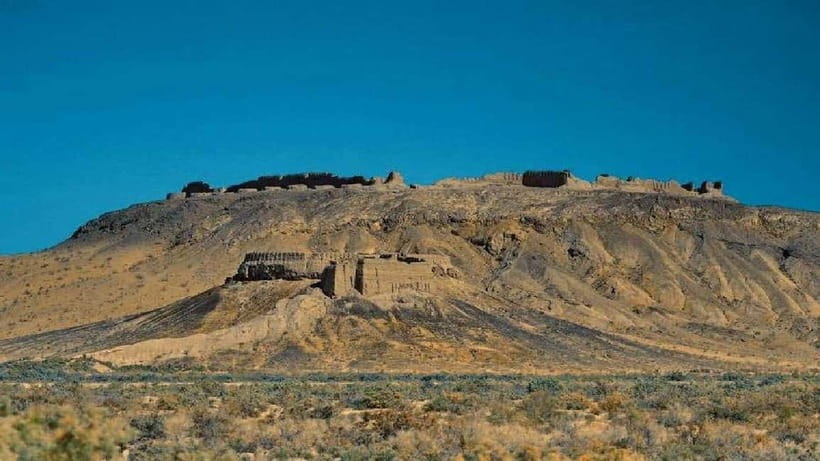
Guldursun-Kala dates from the second or first centuries BC and covers about 35 hectares. Its rectangular defensive plan was built with thick adobe walls arranged in two rows, with openings for defenders.
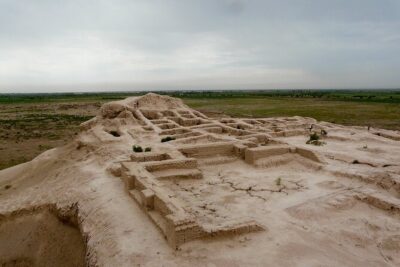
That scale is difficult to grasp from ground level. You are not entering a restored palace. You are reading a broad fortified enclosure, with earthen walls that have endured for centuries in a dry climate. The site is useful as an introduction to the military side of ancient Khorezm, where fortifications protected settlements and controlled movement across the oasis.
The fortress was later abandoned for reasons that remain uncertain. Archaeological evidence points to occupation around 1220, during the rule of Shah Ala ad-Din Muhammad, close to the Mongol invasions of the Khorezmian Empire. That date gives the ruins a sharp historical edge. Guldursun-Kala was not simply an ancient relic forgotten in a distant age. It was still part of a living political world before the region was hit by war.
You can expect a photo stop, a walk, and self-guided sightseeing. Without a guide, look for the double wall arrangement and the rectangular shape. This is one of the places where prior reading helps, since the remains can otherwise look like weathered earth banks.
Ayaz-Kala: the clearest fortress experience
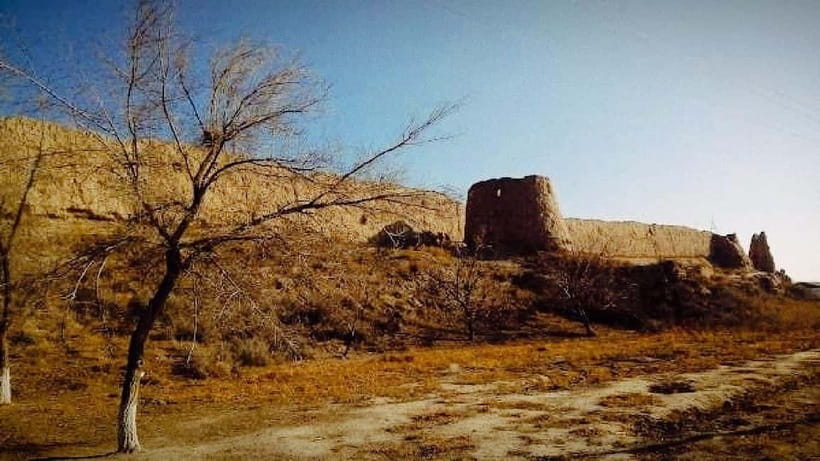
Ayaz-Kala is usually the emotional high point of the route. It is not one fortress but a group of three, arranged around a hill on the eastern side of the Sultan Uizdag ridge. The site is about 96 kilometers from Khiva and 30 kilometers from Buston settlement.
The name is linked to a Turkic word meaning frosty or cold. The setting is the real star. You approach a high, isolated fortification and gain wide views over the surrounding plain. The walls are more immediately legible here than at the less preserved stops, and the hill gives the complex a strong presence.
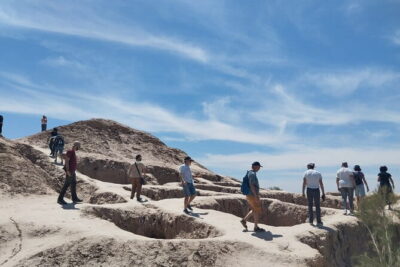
You will have time for photos, walking, and free exploration. Wear shoes with a firm sole. The itinerary includes walking at every fortress, and Ayaz-Kala is not a place to rush in smooth city footwear. Bring a hat and water as well, since the site is exposed and shade may be limited.
Ayaz-Kala also helps explain the defensive network of ancient Khorezm. From a high position, watchtowers and walls could monitor approaches across open country. The point was not comfort. It was warning, delay, and survival.
If your time or energy runs short, this is one stop I would protect. It provides the strongest visual payoff and the best sense of a fortress rising from an otherwise open setting.
A few more Khiva trips worth weighing up
- Khiva: Historical City Highlights Guided Walking Tour
★ 4.8 · 156 reviews - Khiva Historical City Highlights Guided Walking Tour
★ 5.0 · 30 reviews - Aral Sea Adventures (2 day)
★ 5.0 · 30 reviews - Master Class – Shivit Osh Traditional Food Of Khiva
★ 4.2 · 27 reviews
Kavat-Kala: an archaeological puzzle
Kavat-Kala is the most difficult stop to judge from a quick visit. The site forms part of a larger complex along the Gavhore Channel, stretching about 15 kilometers and measuring roughly 2 to 3 kilometers across in places.
From the 12th to 13th centuries, the central area was heavily settled, with as many as 90 estates. The central fortress itself measures about 160 by 190 meters. Those numbers suggest a busy oasis zone, not a lone outpost.
The trouble is that much of the wider settlement is now hard to identify. You may see low clay remains and traces of residential buildings rather than dramatic walls. A driver can point out the general area, but the site benefits greatly from an archaeological guide who can explain where the estates, channels, and central fortification once fit together.
The itinerary allows a break and self-guided sightseeing here. Treat Kavat-Kala as a context stop rather than a guaranteed visual spectacle. If you enjoy trying to reconstruct vanished towns from faint remains, you may find it rewarding. If you want five instantly recognizable castles, this is likely to be one of the weaker stops.
Toprak-Kala: the royal center of the route
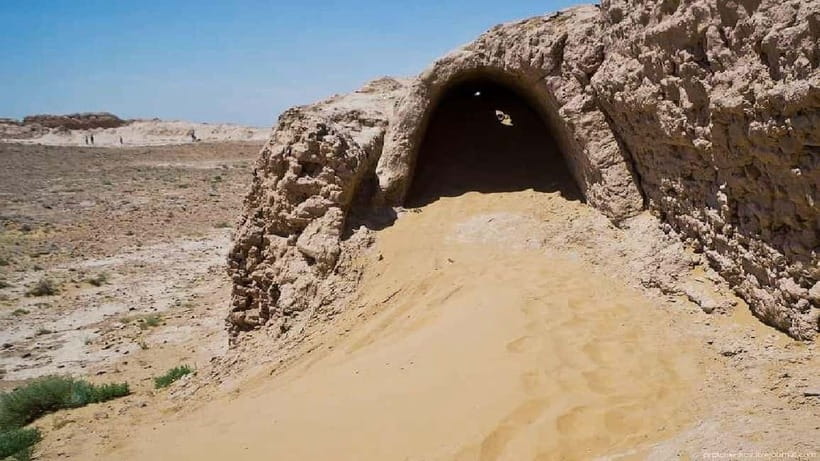
Toprak-Kala is the historical heavyweight. Built in the third century, it served as a residence for the Khorezmian rulers until about AD 305. Aggressive wars eventually forced the rulers to leave, and the city declined.
The remaining walls and rooms let you picture a planned royal settlement rather than just a defensive mound. Excavations found coins, Zoroastrian ossuary fragments, finely made ceramics, wool and silk fabrics, gold ornaments, and a necklace with 300 beads made from glass paste, amber, and coral.
Those finds matter because they show the range of life connected to the fortress. Toprak-Kala was tied to government, belief, craft, trade, and ceremony. The site’s value is not only its walls. It is the evidence that this remote part of Central Asia supported courtly life and skilled production.
You will have time to walk and take photos, with a break built into the visit. The walls are exposed, and the ground can be uneven. As at Ayaz-Kala, give yourself enough time to look beyond the first photo point. The plan of the settlement is easier to appreciate when you pause and compare the different sections of the ruin.
For many people, Toprak-Kala and Ayaz-Kala will justify the day. One gives you the best defensive setting, while the other gives you the clearest connection to royal power.
Kyzyl-Kala: a smaller fort with smart defenses
Kyzyl-Kala served as a refuge during raids by nomadic forces. Its defenses included a double wall, corner watchtowers, and a citadel where local people could seek shelter.
The site also had a warning system. Smoke signals could announce an approaching army, giving people time to gather inside. Ceramic pipes supplied water to the fort, an important detail that makes the defensive design feel practical rather than purely monumental.
You can walk around, take photos, and receive a safety briefing before exploring. The safety note is useful because these are old adobe structures, not restored museum buildings. Keep away from unstable edges and follow any instructions from the driver or site staff.
Kyzyl-Kala may not have the same immediate drama as Ayaz-Kala, but the water pipes and signaling system give it a clear story. I find that useful on a self-guided visit. You have specific features to look for instead of simply circling a ruin and wondering what happened there.
The driver matters more than the brochure
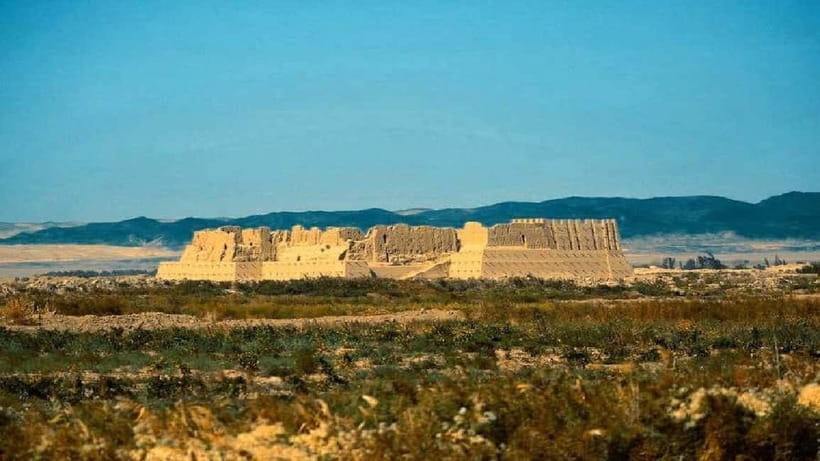
Your driver shapes this experience. A friendly and flexible driver can make the day feel easy, stopping when you want photos and helping bridge the language gap. Izzat received especially warm praise for his good humor, cultural conversation, and helpful attitude despite limited shared language.
English ability varies. Some drivers may offer basic details, but you should plan as if the tour is self-guided. Download or print a short note about each fortress before leaving Khiva. That small bit of preparation will add much more meaning to low walls and scattered clay remains.
Flexibility is another plus. The driver can stop where requested, and the departure time is flexible. That helps if you want more time at Ayaz-Kala or Toprak-Kala and less time at Kavat-Kala. Still, the total seven-hour schedule limits how much you can adjust without arriving back late.
Food deserves caution. Lunch is optional and not included. One account described pressure to visit a poorly rated restaurant, followed by another restaurant with a menu lacking prices. I would bring a packed meal and snacks from Khiva or Urgench. If you choose to eat at a roadside restaurant, ask for prices before ordering.
Who should book this five-fortress day?
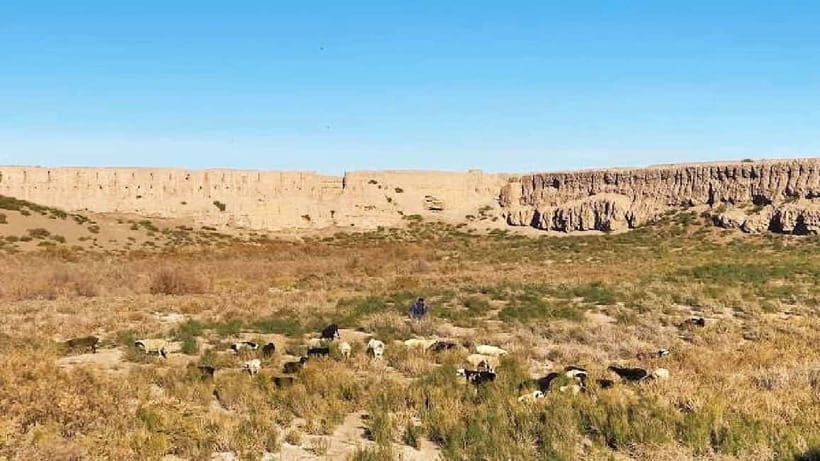
I would recommend this trip to a small group that wants to see remote Khorezm sites without arranging its own car. It is also a good fit if you enjoy ruins in open country, accept some self-guided exploration, and want a flexible private schedule.
You should think twice if you need polished guiding in English, careful archaeological explanation, or a slow photography day. Three sites may feel modest, and fast driving would be a serious concern for anyone uncomfortable with rough regional roads.
The best plan is to treat the route as a survey of the ancient fortress zone. Protect your time at Ayaz-Kala and Toprak-Kala, enjoy Guldursun-Kala for its scale, and regard Kavat-Kala and Kyzyl-Kala as supporting chapters. That approach keeps expectations realistic.
The activity has a 4.4 rating from 15 bookings, with strong praise for friendly drivers, flexible stops, and the chance to see places far beyond Khiva. The criticism is consistent enough to take seriously: limited English, rushed driving in some cases, uneven value among the five stops, and questionable meal suggestions.
Should you book it?
Book it if you are three people sharing the $115 vehicle cost and want an efficient private outing to the Khorezm fortresses. Ayaz-Kala and Toprak-Kala make the strongest case, while the other stops add scale and historical context.
Before departure, confirm the driver’s language ability, ask for a moderate driving pace, bring food, carry cash for entry fees, and download your own site notes. With those precautions, this is a worthwhile way to trade Khiva’s tiled monuments for the stark adobe strongholds of Karakalpakstan.
FAQ
How long does the five-fortress trip take?
The stated duration is 7 hours. The actual time spent at each fortress can vary because the route includes five sites, walking, photo stops, and breaks.
Where can pickup and drop-off take place?
Pickup is available from hotels in Khiva, as well as Urgench Airport and Urgench train station. Drop-off is available in Khiva or Urgench.
How many people can join the private group?
The listed price of $115 covers a private group of up to 3 people.
Is a guide included?
No. A guide is not included. The driver takes you between the sites, and some drivers may provide limited information, but English ability can be limited.
Are fortress entrance tickets included?
No. Entry tickets are not included in the price. Separate charges may apply at the sites.
Is lunch included?
No. Lunch is optional and costs extra. Bringing your own food is a practical choice.
Can I cancel the booking?
Yes. You can cancel up to 24 hours in advance for a full refund. You can also reserve now and pay later.
Recently added around Khiva
- Khorezm Fortress and KyzylKum Desert Private Tour★ 5.0 · 3 reviews
- A Night In The Kyzylkum Desert [2] From Khiva★ 4.5 · 3 reviews
- Best of Khiva: Exclusive Private Tour!★ 5.0 · 3 reviews
- Khiva: City Highlights Guided Walking Tour★ 4.6 · 3 reviews
- Khiva: classic Half-Day Tour★ 3.7 · 3 reviews
- Master Class – Uzbek Bread (Khiva)★ 3.5 · 4 reviews
- Uzbekistan 6 Days Private Tour Khiva-Bukhara-Samarkand by Train★ 5.0 · 4 reviews
- Traditional Khiva Cooking Class with Market Visit & Lunch★ 5.0 · 4 reviews
Ancient Fortresses Tours, compared.

Private Bukhara-Khiva Transfer via Ancient Fortresses
Read our review →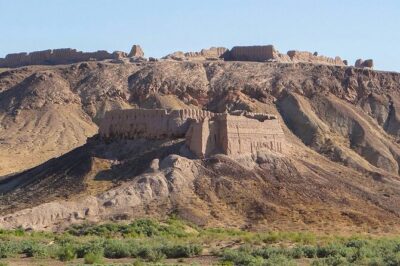
Ayaz Kala & Toprak Kala private fortress daytrip from Khiva
Read our review →Browse the lists this tour appears in